 St. Petersburg Window
 Windows Built for the Euclid-St. Paul Climate
Euclid-St. Paul sits inside St. Petersburg, in Pinellas County, which means every window on every house here is doing more work than a window in most other parts of the country. Between hurricane-force wind events, wind-driven rain, intense year-round UV, and the salt-laden air that comes with living on a peninsula, the windows protecting a home in this neighborhood are under constant, low-grade attack even in a quiet year. Most of the time none of that is dramatic — it shows up slowly, as a stiff sash, a foggy insulated glass unit, or a frame that's chalked out and gone soft at the corners. By the time it's obvious, the window has usually been struggling for a while.
We approach window work in this area the way we'd want it done on our own homes: match the product to the actual exposure, install it correctly the first time, and be honest about what a repair can and can't fix. That's true whether we're replacing a single failed unit or handling a full-home window package alongside siding, roofing, or deck work on the same property.
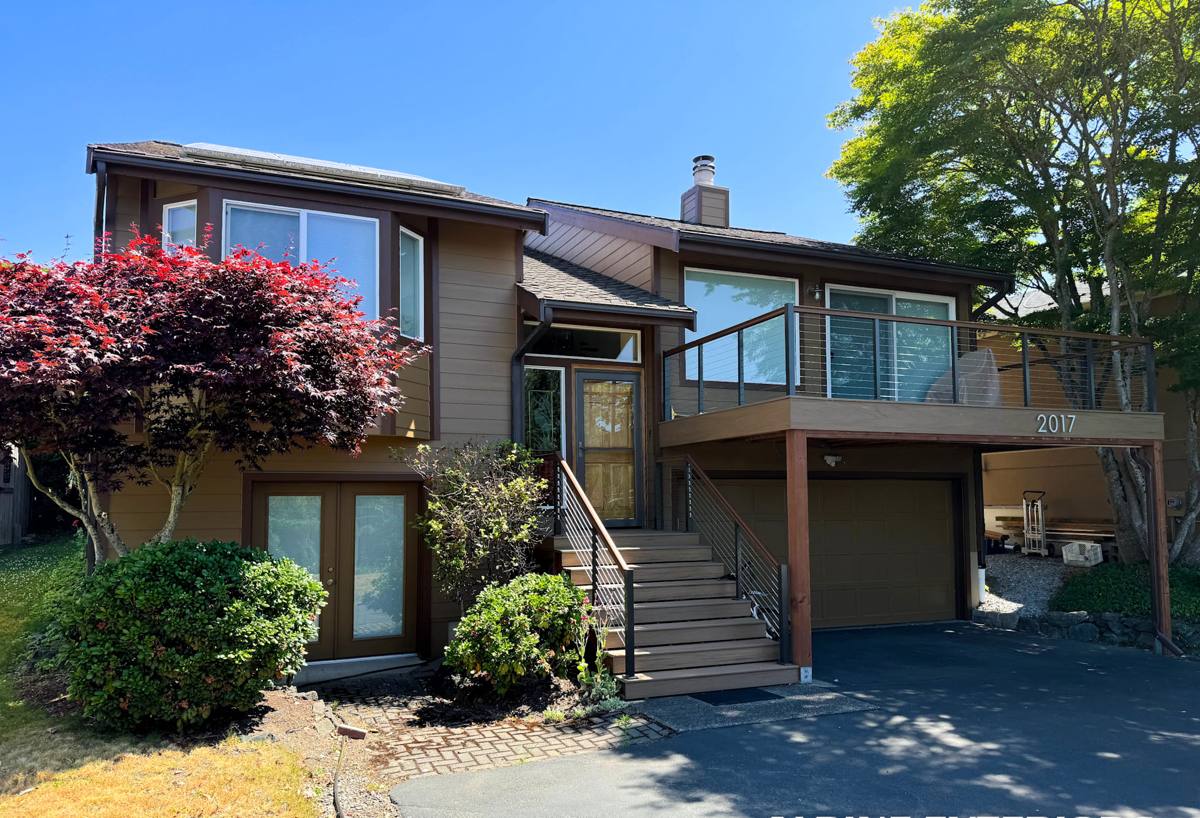
What Local Homes Are Actually Dealing With
Wind and Pressure
St. Petersburg sits inside a wind-borne debris region, and homes in Pinellas County are built and permitted with that in mind. Window products installed here need to meet Florida Building Code requirements for wind load and, depending on the specific location and structure type, impact resistance. Older homes in established St. Petersburg neighborhoods sometimes still have windows that predate current code — those units aren't necessarily unsafe, but they weren't tested to today's standard, and that's worth knowing before the next storm season rather than after.
Wind-Driven Rain
A window doesn't have to fail outright to let water in. Wind-driven rain during a tropical system or even a strong summer storm can push moisture past aging weep systems, worn weatherstripping, or a frame that's shifted slightly out of square. That moisture usually goes somewhere unseen first — into the sill, the framing, or the wall cavity — before it ever shows up as a stain inside the house.
UV Exposure
Florida sun is a year-round condition, not a summer one. UV breaks down vinyl frames, dries out seals and gaskets, and fades interior finishes faster than in most other climates. It's a slow degrading force rather than a sudden one, but it's constant, and it's a major reason window components here have a shorter working life than the same products would see in a milder climate.
Salt Air
Proximity to Tampa Bay and the Gulf means salt is in the air even a few miles inland, and Euclid-St. Paul is close enough to feel it. Salt accelerates corrosion on hardware, screws, hinges, and metal reinforcement inside frames. It's a slower process on window components than it is on, say, exposed roofing fasteners, but it adds up over the life of a window and is part of why we favor corrosion-resistant hardware on replacements in this area.
Signs a Window Needs Attention
- Sash is hard to open, close, or lock, or doesn't sit flush in the frame
- Fogging or a visible haze between panes of an insulated glass unit — the seal has failed
- Soft, discolored, or crumbling material at the frame corners or sill
- Visible daylight or a draft around the frame when the window is closed
- Water staining on the interior wall or sill below or beside a window
- Chalky, faded, or brittle exterior frame finish
- Noticeably higher energy bills without another clear cause
- Outside noise (traffic, neighbors, storms) coming through more than it used to
Any one of these on its own might be minor. Several together, or any sign of water intrusion, usually means it's time for a proper inspection rather than a guess.
Repair or Replace: How We Make the Call
Not every window on a job needs to come out. We look at the frame material and condition, whether the glass seal has failed, how the hardware is functioning, and whether there's any sign of water having gotten into the surrounding wall structure. A single failed seal on an otherwise sound frame is often a repair. A frame that's soft, warped, or has let water into the framing behind it usually isn't worth chasing with patches — replacement is the more honest answer, both for cost over time and for what it does for the home's storm readiness.
| Factor | Repair Usually Makes Sense | Replacement Usually Makes Sense |
|---|---|---|
| Frame condition | Solid, no rot or warping | Soft, cracked, or visibly warped |
| Glass seal | Single unit fogged, frame otherwise fine | Multiple units failed across the house |
| Hardware | Sticky lock or crank, otherwise functional | Corroded or broken beyond adjustment |
| Water history | No signs of intrusion | Staining, soft drywall, or wood rot nearby |
| Storm rating | Meets current code for the property | Pre-dates current wind/impact requirements |
| Age | Under roughly 10-15 years | Original to an older home, well past that range |
Window Options for This Area
Impact-Rated Windows
For homes in wind-borne debris regions, impact-rated windows are worth serious consideration even where they're not strictly required. A laminated impact glass unit stays intact under wind pressure and flying debris, which protects the opening and helps preserve the building envelope during a storm — that matters for both safety and for keeping wind from getting inside and lifting a roof from underneath.
Vinyl Frame Windows
Vinyl is a common, cost-effective choice in Florida because it doesn't rust and handles humidity well. The trade-off is UV sensitivity — lower-grade vinyl can chalk and become brittle faster under constant Florida sun, which is why frame quality and UV-stabilized formulations matter more here than in a milder climate.
Aluminum Frame Windows
Aluminum is strong and holds up structurally, but it conducts heat and can corrode near salt air if it isn't properly treated or finished. We're straightforward with homeowners about that trade-off rather than glossing over it — it's a maintenance and coating question, not a reason to write off the material entirely.
Glass Packages
Low-E coatings and insulated (often dual-pane) glass units reduce solar heat gain, which matters directly for cooling costs in a climate that runs air conditioning most of the year. The right glass package depends on which side of the house the window is on and how much direct afternoon sun it gets.
How We Handle a Window Project
- On-site inspection of existing windows, frames, and any signs of water intrusion into the surrounding structure
- Honest repair-versus-replace recommendation for each opening, not a blanket sales pitch
- Product selection matched to sun exposure, storm exposure, and the home's existing style
- Proper flashing and sealing at installation — this is where most long-term window failures actually start, not with the window unit itself
- Final walkthrough so the homeowner understands what was done and what to watch for going forward
Installation quality matters as much as the product. A high-end impact window installed with poor flashing or an inconsistent sealant bead will leak eventually, and a mid-grade window installed correctly will often outperform it. We treat the installation detail as the actual job, not a formality after the sale.
Windows Alongside Siding, Roofing, and Decks
Window failures rarely happen in isolation. A leaking window can damage siding or trim around the opening, and a roof that's letting water into the attic can show up as staining near an upper-floor window that has nothing wrong with it. Because we handle siding, roofing, windows, and decks, we can look at a property as one system instead of treating each trade as a separate call — that matters most on older homes in established neighborhoods where several of those systems are original and aging together.
Maintenance That Actually Extends Window Life
- Rinse frames and glass periodically to clear salt residue, especially on sides facing prevailing wind
- Check and clear weep holes so water can drain out of the frame instead of pooling
- Inspect and replace weatherstripping and caulking when it looks dried out or cracked
- Operate locks and cranks periodically even on windows that aren't used often, so hardware doesn't seize
- Have windows checked after any major storm, even if nothing looks obviously wrong from inside
Why a Local Crew Matters Here
A window sold and installed by someone unfamiliar with Pinellas County's code requirements, wind exposure, and salt-air conditions is a window that's more likely to underperform when it's actually tested by weather. We work in this climate every day, so we're not guessing at how a frame material or glass package will hold up in St. Petersburg's specific mix of sun, salt, and storms — we've seen how these products age here, not just how they're rated on a spec sheet. That local knowledge shapes every recommendation we make for a Euclid-St. Paul home.
If you're dealing with a window that's sticking, leaking, fogged, or just original to a much older house, we're happy to take a look. Reach out for a free, no-pressure estimate using the form below — we'll walk the property, give you a straight assessment, and let you decide from there.