 St. Petersburg Window
 Building New in Crescent Lake? The Windows Have to Work as Hard as the Foundation
Crescent Lake is one of St. Petersburg's older, tighter-knit neighborhoods, and what's happening there right now is a mix of careful renovations, additions, and a steady trickle of true ground-up new construction on infill lots. Whether you're building a new home from the slab up or adding a second story or bump-out addition that needs its own set of windows, the window package is not something to leave as a line item you pick last. In new construction, the windows are structural partners with the wall assembly — they get built into the rough opening, flashed into the weather barrier, and sealed as part of the envelope before drywall or stucco ever goes on. Get that sequence wrong and you're not looking at a squeaky sash in five years; you're looking at hidden water intrusion behind finished walls, which is a far more expensive fix.
St. Petersburg sits in Pinellas County, a peninsula with full exposure to Tampa Bay and the Gulf. That means new-construction windows here are doing four jobs at once: standing up to hurricane-force wind loads, resisting UV that runs strong essentially year-round, shedding wind-driven rain that hits glass and frames at an angle instead of straight down, and holding up against salt-laden air that accelerates corrosion on hardware and fasteners. A window that's rated fine for a landlocked climate can still underperform here if the installation doesn't account for all four.
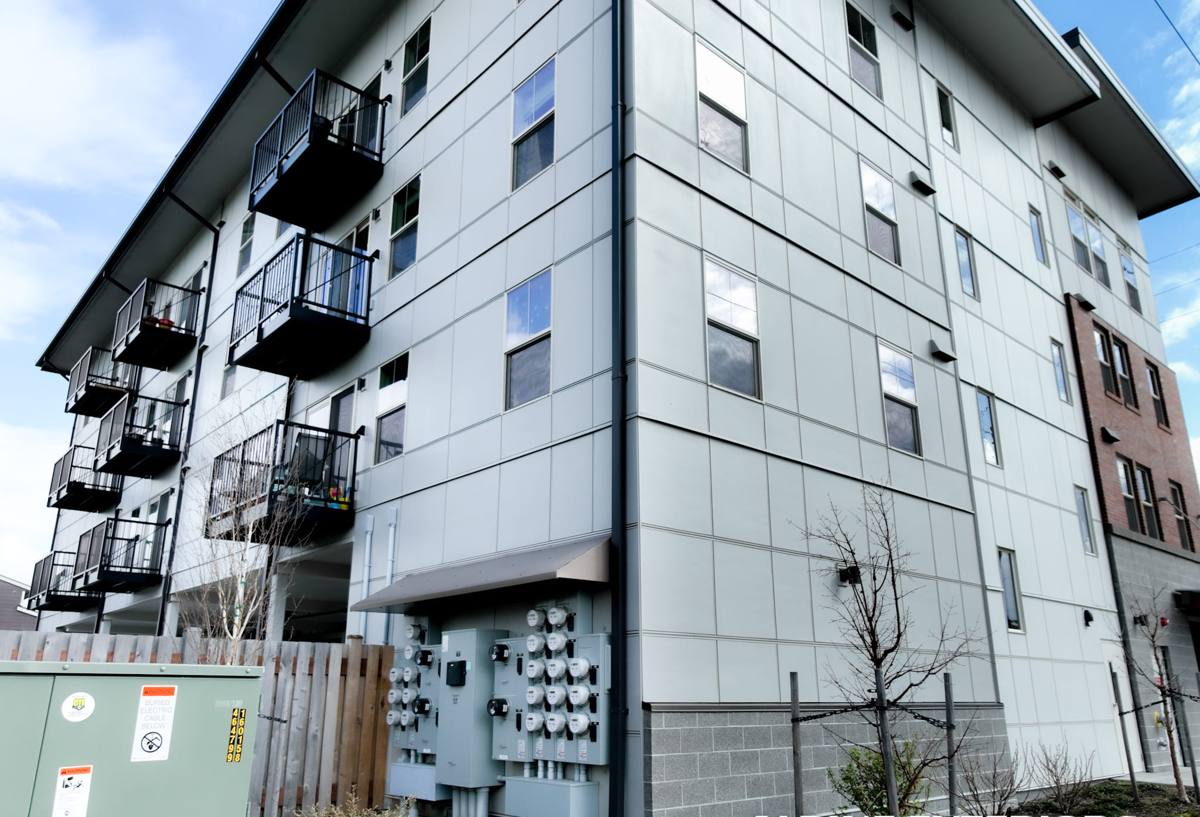
New Construction vs. Replacement: Why the Distinction Matters
New-construction windows and replacement windows are not the same product installed two different ways — they're genuinely different builds, and mixing them up on a project causes real problems.
Nail-Fin (New Construction) Windows
These have a flange around the perimeter of the frame that gets fastened directly to the wall sheathing before the exterior weather-resistive barrier and cladding go on. This is the standard approach for a true new build or an addition where the wall is open down to the studs. It gives us full access to integrate the window flashing with the house wrap and, on masonry construction common in this area, with the block or stucco system.
Block-Frame / Insert Windows
These install into an existing finished opening without disturbing the exterior wall — the right call for a straight replacement, but the wrong call when you're framing new. Using an insert-style unit in a new-construction opening skips the flashing integration that new construction is supposed to get, and it shows up later as a weak point in the water management plan.
For a Crescent Lake new-build or addition, we spec nail-fin construction so the window becomes part of the wall's drainage plane, not something bolted in after the fact.
Florida Building Code and Wind Requirements in Pinellas County
New construction gives us one advantage over a retrofit: the window can be selected and installed to meet current Florida Building Code requirements from day one, rather than working around what's already there. Pinellas County enforces High-Velocity Hurricane Zone-adjacent wind pressure standards, and every new-construction window on a permitted project needs a Florida Product Approval or Miami-Dade NOA number matching the specific design pressure for that wall location — corner openings typically see higher pressure ratings than field-wall openings, so not every window on the house carries the same rating.
A few things we account for on every Crescent Lake project:
- Design pressure (DP) rating matched to the wall zone — corners, gable ends, and lower floors often need higher ratings than mid-wall openings
- Impact resistance — either impact-rated glass or code-compliant shutters/covering, since this area falls within the wind-borne debris region
- Egress sizing for bedroom windows, which new construction lets us get exactly right at the framing stage instead of compromising around an existing rough opening
- Energy code compliance (U-factor and SHGC) tied to Florida's climate zone, which affects both comfort and cooling costs in a place where AC runs most of the year
- Permit and inspection sign-off, including the product approval documentation the building department will ask for at final
What a Correct New-Construction Installation Actually Involves
Rough Opening and Flashing
Before a window ever goes in, the rough opening gets checked for square, level, and correct sizing against the manufacturer's specs. A sill pan flashing goes in first — this is the single most important step for long-term water management, because it gives any water that gets past the window a way out instead of a place to collect. Then the window integrates with the house wrap in the correct shingle-lap order: flashing tape at the sill, window set, then jamb and head flashing lapped over it so water always sheds outward and downward, never into the wall cavity.
Fastening and Shimming
Nail-fin windows get fastened per the manufacturer's schedule — skipping fastener spacing to save time is one of the most common causes of wind-load failure, and it's invisible until a storm tests it. Shimming at the jambs keeps the frame square under load so the sash operates correctly for the life of the window, not just on install day.
Sealing and Weatherproofing
The interior and exterior get sealed separately with the right sealant for each side — exterior sealant has to handle UV and thermal movement, interior sealant is about air sealing. On masonry or stucco construction, we coordinate the window's flashing with the stucco control joints and weep system so the wall can dry out if it ever does take on moisture.
Choosing a Window Line for This Climate
Frame material matters more here than in most parts of the country because of the combination of heat, UV, and salt air. Here's how the common options stack up for a Crescent Lake new-construction project:
| Frame Type | Salt-Air & Corrosion Behavior | UV / Heat Behavior | Typical Fit for This Project |
|---|---|---|---|
| Vinyl (impact-rated) | Won't corrode; hardware is the only metal exposed | Modern formulations resist fading well; dark colors absorb more heat | Strong all-around choice for most new-construction openings |
| Aluminum (impact-rated) | Needs a quality marine-grade finish or it will pit over time near the coast | Handles heat well structurally; conducts more energy without a thermal break | Common on larger openings and coastal-style architecture |
| Fiberglass | Very good corrosion resistance | Low expansion/contraction, holds paint well | Premium option where budget allows |
| Wood/wood-clad | Poor without diligent maintenance in salt air | Needs regular refinishing to resist UV breakdown | We generally steer new builds away from bare wood exteriors here — the maintenance burden in this climate is real, not a knock on the material itself |
Glass package matters as much as frame material. For new construction we typically spec laminated impact glass with a low-E coating — the lamination is what gives you wind-borne debris protection, and the low-E coating is what keeps year-round Florida sun from turning the interior into a greenhouse. Tint and coating choices affect both the cooling bill and how much natural light gets through, so we walk through the tradeoffs room by room rather than defaulting to one spec for the whole house.
What a Cost Estimate Actually Depends On
We don't quote new-construction window packages off a flat per-window number, because the variables genuinely change the price. The factors that move a quote:
| Factor | Why It Matters |
|---|---|
| Design pressure rating required | Corner and high-load openings need heavier-rated (and pricier) units than field-wall windows |
| Frame material | Vinyl, aluminum, and fiberglass sit at different price points before you even add impact glass |
| Glass package | Impact-rated, low-E, and tint options each add cost but address different problems |
| Opening size and configuration | Large openings, sliders, and custom shapes cost more to engineer and fabricate |
| Coordination with the builder's schedule | Installing on-schedule with the framing crew avoids delay costs and rework |
We'll give you a real number once we know the plan set, not a guess before we've seen the openings.
How We Work With Your Builder or Your Project
On a new-construction job, the window installer isn't operating alone — we're one trade in a sequence that includes the framer, the weather barrier crew, and often the stucco or siding crew. Before install day, we review the plan set for opening sizes and design pressure zones, confirm product approvals match what the Pinellas County building department expects, and coordinate timing so windows go in right after the weather barrier is up and before cladding closes in behind them. If you're the general contractor or owner-builder coordinating trades yourself, we'll work directly off your schedule and flag anything in the rough openings that needs correcting before we set glass — catching a framing issue before the window goes in is a lot cheaper than after.
Why Local Experience on This Job Actually Matters
A crew that's worked in and around Crescent Lake and greater St. Petersburg knows the practical realities that don't show up on a spec sheet: which inspectors want to see the flashing before it's covered, how tight some of these infill lots run and what that means for staging and crane access on larger openings, and how quickly Gulf weather can turn during install season. That local familiarity translates into fewer surprises, fewer callbacks, and a smoother permit and inspection process — which matters on new construction, where a failed inspection can hold up the whole build's timeline, not just one window.
A Practical Checklist Before You Sign Off on a Window Package
- Confirm every window's design pressure rating matches its actual wall zone, not just a house-wide average
- Confirm impact glass or code-compliant covering is specified for the wind-borne debris region
- Confirm bedroom egress windows meet minimum clear opening dimensions
- Ask whether nail-fin (new construction) units are specified for every open-wall opening, not insert units
- Ask to see the sill pan flashing detail and fastener schedule before install begins
- Confirm U-factor and SHGC values meet Florida energy code for your climate zone
- Get the Florida Product Approval or NOA documentation in writing for your permit file
Keeping New-Construction Windows Performing Long After Move-In
Once the house or addition is built and closed in, the window's job shifts from installation integrity to maintenance. In this climate, that means rinsing accumulated salt residue off frames and hardware periodically, checking exterior sealant joints annually for cracking or separation as the building settles and materials expand and contract with heat cycles, and keeping weep holes on operable units clear of debris so water has somewhere to drain. None of this is heavy work, but skipping it is how a well-installed window starts showing problems years earlier than it should.
If you're planning new construction or an addition in Crescent Lake and want windows specified and installed correctly the first time, we're happy to walk the plans with you and put together a straightforward, no-pressure estimate — just use the form below to get started.