 St. Petersburg Window
 Why Decks Take a Beating on St. Pete Beach
A deck on St. Pete Beach lives a harder life than the same deck ten miles inland. The barrier island sits right against the Gulf, which means salt-laden air moves through the wood and hardware every single day, not just during a storm. Add in Pinellas County's intense year-round UV, frequent wind-driven rain that gets pushed sideways under railings and through board gaps, and the occasional hurricane-force wind event, and you have a structure that's fighting four kinds of damage at once: corrosion, sun degradation, moisture intrusion, and wind stress on connections.
Most decks aren't destroyed by one big storm. They're worn down gradually — a loose ledger bolt here, a rusted joist hanger there, boards that cup and split from repeated wet-dry cycling — until something finally gives, usually right when you're standing on it with a cooler full of drinks. Our job is to catch that wear before it becomes a safety problem, and to repair it in a way that actually holds up to the next few years of Gulf-front weather, not just patch what's visible.
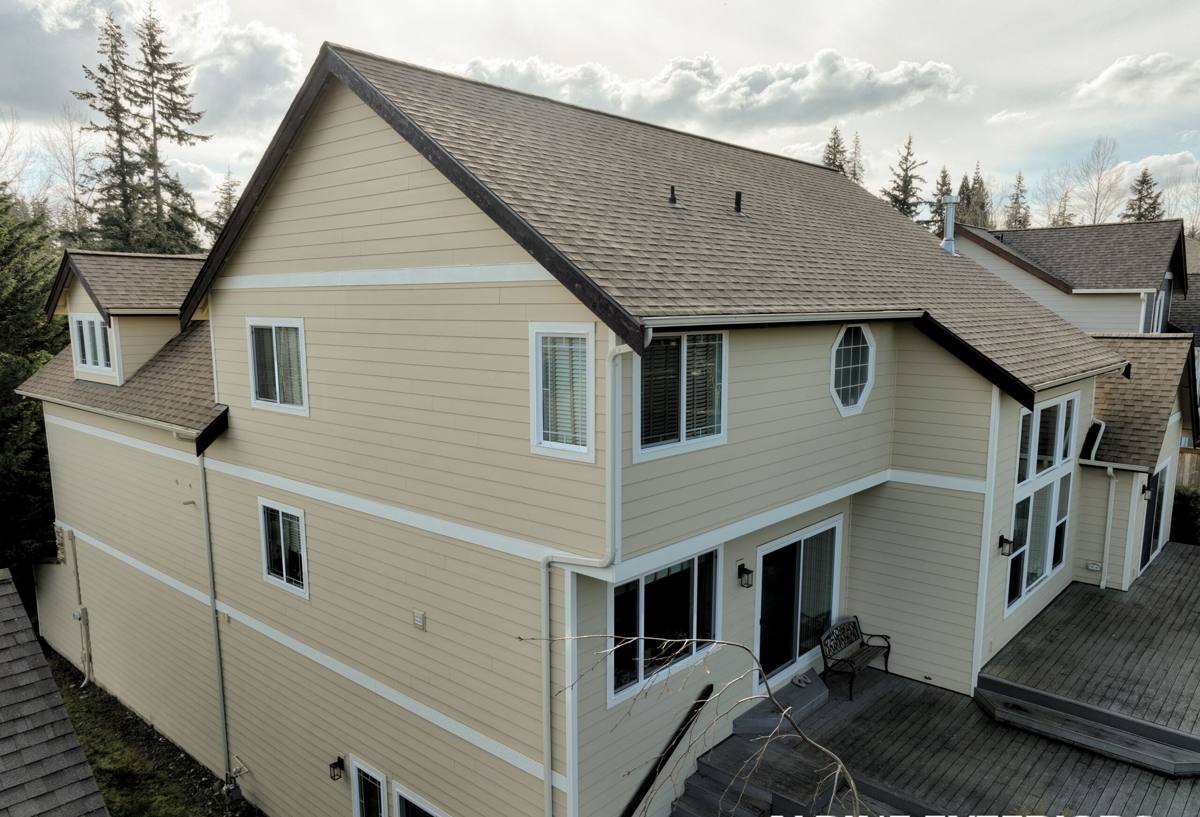
Common Deck Damage We Find in St. Pete Beach Homes
Every deck is different, but on the barrier island the failure patterns repeat. Here's what we run into most often, and why it happens here specifically.
Fastener and Hardware Corrosion
Standard galvanized nails, screws, and joist hangers were never designed for a salt-air environment. Even a light coating of galvanization can start breaking down within a few years this close to the Gulf, leaving rust streaks on the decking and, more importantly, weakened connections you can't see from the top. A deck can look structurally sound while the hardware holding it together is quietly failing underneath.
Ledger Board Separation
The ledger board — where the deck attaches to the house — takes on water that runs off the roof and siding, plus whatever wind-driven rain gets pushed against the wall. If it wasn't flashed correctly when the deck was built, moisture gets trapped between the ledger and the house framing. That's one of the most serious issues we find, because a separating ledger means the whole deck is losing its primary connection to the structure.
Sun-Damaged and Cupped Decking Boards
Pinellas County gets some of the most consistent, intense sun exposure in the country. UV breaks down the lignin in wood fibers and dries out the surface faster than the interior, which causes cupping, splitting, and splintering — even on treated lumber. Composite boards resist this better but aren't immune, especially older composite products that predate today's UV-stabilized formulas.
Wind-Loosened Railings and Posts
Railings take direct wind load, and repeated gusts loosen post connections over time even without a named storm. We regularly find posts that flex more than they should, or railing brackets with fasteners backed halfway out — a fall hazard that's easy to miss on a quick visual check.
| Problem | What Causes It Here | What Happens If Ignored |
|---|---|---|
| Rusted fasteners/hangers | Salt air corrosion | Joist connections weaken, deck can shift under load |
| Ledger separation | Poor flashing, wind-driven rain intrusion | Deck pulls away from house — major structural risk |
| Cupped, splitting boards | UV exposure plus humidity cycling | Splinters, tripping hazards, water pooling |
| Loose railings/posts | Repeated wind load over time | Fall hazard, code non-compliance |
| Soft or spongy framing | Trapped moisture, rot at joists/beams | Localized or full structural failure |
What a Proper Deck Repair Actually Involves
A lot of "deck repair" in this market amounts to swapping a few obviously bad boards and calling it done. That's not a repair, it's a patch. A proper repair starts underneath, not on top.
We inspect the substructure first — joists, beams, posts, and the ledger connection — because that's where the real integrity of the deck lives. Surface boards can look fine while the framing underneath is compromised, and replacing decking over rotten or corroded framing just means paying for the same repair again in a year or two. We check for:
- Soft spots or give in joists and beams (a screwdriver test tells us a lot)
- Rust staining or pitting on hardware, hangers, and bolts
- Gaps or movement at the ledger-to-house connection
- Post base condition, especially where wood meets concrete or grade
- Flashing condition behind the ledger and around any posts through the decking
- Railing post connections and baluster spacing against current code
Only after that inspection do we scope the actual repair — which boards need full replacement versus which framing members need sistering or swapping, what hardware needs upgrading, and whether the ledger flashing needs to be redone. We'll walk you through exactly what we find and why each item matters before any work starts.
Choosing the Right Materials for a Coastal Repair
Material choice matters more here than it would inland, because whatever we install is going to face the same salt air and UV that damaged the original deck. We're not going to tell you a product is garbage — every option has trade-offs, and the right call depends on your budget, how the deck gets used, and how much upkeep you want to take on.
| Material | Coastal Durability | Maintenance | Trade-Offs |
|---|---|---|---|
| Pressure-treated pine | Good if properly sealed and maintained | Needs re-sealing every 1-2 years in this climate | Lower upfront cost, more ongoing labor |
| Composite decking | Very good — resists rot and splintering | Low — occasional cleaning | Higher upfront cost; quality varies by product line |
| Coastal-rated stainless/ceramic-coated fasteners | Excellent for this environment | None | More expensive than standard galvanized hardware |
| Standard galvanized hardware | Fair — degrades faster near the Gulf | Needs periodic inspection | Lower cost but shorter usable life here |
For framing and hardware, we lean toward hardware rated for coastal or high-corrosion environments even when it costs more than standard galvanized, because on a barrier island the cost difference over the life of the deck usually favors the better hardware. For decking boards, we'll give you a straight comparison of wood versus composite for your specific deck and use case rather than pushing one product line.
Our Repair Process
- Inspection and scope. We check the full structure — framing, ledger, hardware, decking, and railings — and document what's failing versus what's still sound.
- Written estimate. You get a clear breakdown of what needs replacing, what can be repaired, and why, with no vague line items.
- Structural repairs first. Any compromised framing, ledger flashing, or post connections get addressed before cosmetic work begins.
- Hardware upgrade where needed. Corroded fasteners and hangers get replaced with hardware suited to the coastal exposure.
- Decking and railing work. Damaged boards, railings, and balusters are replaced to match your existing deck or upgraded per your preference.
- Final check against code. Railing height, baluster spacing, and stair requirements are verified against current Pinellas County requirements.
- Walkthrough. We show you what was done and give you honest maintenance guidance so the repair lasts.
Permits, Codes, and Barrier Island Considerations
Deck work in St. Petersburg and on St. Pete Beach can require a permit depending on the scope — generally, structural repairs and railing replacement are more likely to need one than a simple board swap, but the threshold varies by jurisdiction and the extent of the work. We handle that determination and any permitting for the work we do, so you're not left guessing whether your repair is compliant.
Barrier island properties can also fall under flood zone or elevation considerations that don't apply the same way a few miles inland, and building requirements here account for the higher wind exposure a Gulf-front or near-Gulf property faces. None of this needs to be complicated on your end — it's our job to know it — but it's worth understanding that a "quick deck fix" on St. Pete Beach can involve more code awareness than the same job in a different part of the county.
Repair Now or Wait? Signs to Watch For
Not every issue is urgent, but some are. Here's a rough guide to what we consider go-now versus keep-an-eye-on-it:
- Repair now: Soft or spongy decking, visible gap or movement at the ledger, rusted-through hardware, a railing that flexes noticeably when leaned on, or any post that wobbles at its base.
- Schedule soon: Surface cupping or splitting on a handful of boards, minor rust staining without pitting, fasteners backing out but still holding.
- Monitor: Faded finish with no structural symptoms, cosmetic weathering on composite boards, small hairline checking on wood that hasn't opened into splits.
If you're not sure which category your deck falls into, that's exactly what an inspection is for — it costs you nothing to find out, and it's a lot cheaper than finding out the hard way.
Maintaining Your Deck After Repair
A good repair buys you years, but only if the deck gets basic upkeep afterward. This climate doesn't forgive neglect the way a drier, inland one does.
- Rinse salt spray and debris off the deck surface periodically, especially after windy stretches off the Gulf
- Reseal or re-stain wood decking on the schedule your material actually needs in this climate — usually more often than the can suggests
- Check railing and post connections for movement a couple times a year
- Keep gutters and downspouts clear so runoff isn't dumping extra water onto or near the deck structure
- Look under the deck occasionally, not just on top — framing problems usually show themselves from below first
- Address small issues (a loose board, a rust spot) before the next storm season rather than after
Why a Local Crew Matters for St. Pete Beach Deck Repair
Deck repair advice that works for a shaded, inland Pinellas County yard doesn't always hold up on the open Gulf side of St. Pete Beach. A crew that regularly works this specific stretch of coastline already knows which fastener grades hold up, which flashing details actually keep ledger boards dry against wind-driven rain, and which repairs are truly structural versus cosmetic on a barrier island property. That local pattern recognition is the difference between a repair that lasts and one you're redoing in two years.
We're a St. Petersburg-based crew, and St. Pete Beach is part of our regular service area — not a once-in-a-while trip. That matters for follow-up too: if something needs a second look after a big blow comes through, we're close by and familiar with your deck already.
Get an Honest Look at Your Deck
If your St. Pete Beach deck has visible wear, a soft spot, loose railings, or you just haven't had it checked since the last big storm season, we're glad to take a look. The estimate is free, there's no pressure, and you'll get a straight answer about what actually needs to happen — whether that's a targeted repair or just a heads-up to keep watching it. Fill out the form below to get started.