 St. Petersburg Window
 Board & Batten's Place in Old Northeast's Architecture
Old Northeast is one of St. Petersburg's older, more architecturally distinct neighborhoods — a mix of bungalows, Craftsman-style homes, Mediterranean Revival details, and cottage-style construction under a heavy canopy of mature oak trees. Board and batten siding fits naturally into that mix. It's the wide, flat panel with narrow strips covering the seams that gives gables, dormers, porch gables, and cottage-style facades that clean, vertical shadow line. In a neighborhood where homes are visually distinct from block to block, board and batten is often used as an accent — a gable end, a second-story pop-out, a porch feature — rather than wall-to-wall siding, though full-facade applications aren't uncommon either.
Because so many homes in this part of St. Petersburg were built decades ago with traditional wood siding details, homeowners here are often trying to match or update that original look without taking on the maintenance burden that came with the original material. That's the real design challenge on a board and batten job in this neighborhood: get the proportions and shadow lines right, without installing something that will need to be repainted, patched, or partially replaced every few years.
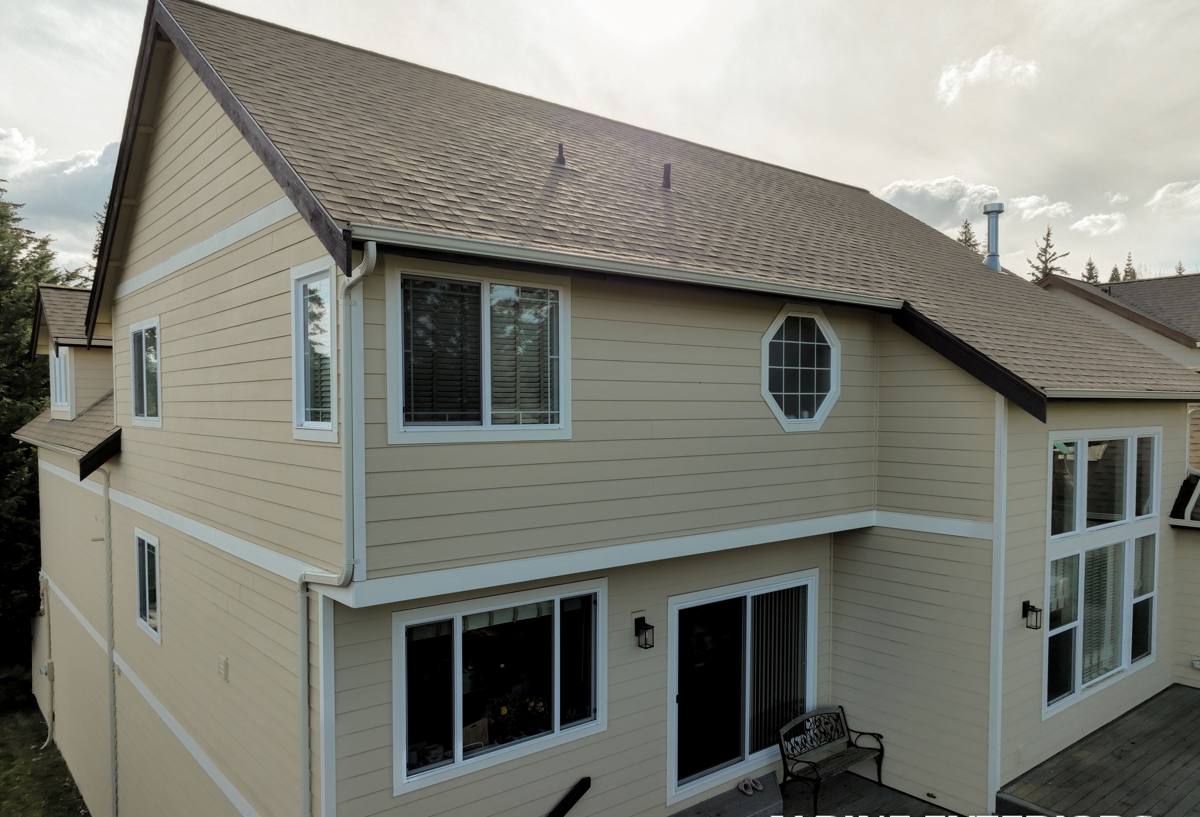
What Pinellas County's Climate Does to Vertical Siding
Board and batten has more seams and more edge exposure than standard horizontal lap siding, which makes material choice matter more here than it does almost anywhere else on the house. St. Petersburg sits on a peninsula between Tampa Bay and the Gulf, and that location brings a specific combination of stresses to bear on exterior materials.
Hurricane-Force Winds and Wind-Driven Rain
Pinellas County sits in a high-wind coastal zone, and board and batten's vertical panel joints and batten strips are natural points where wind-driven rain tries to force its way behind the cladding. If the panels aren't fastened to the correct schedule, or the seams and battens aren't detailed correctly, that's exactly where water intrusion starts — and it's a slower, harder-to-spot problem than a single storm doing visible damage.
Intense, Year-Round UV
Florida sun is hard on painted wood and engineered wood products in particular. UV breaks down field-applied paint and primer coatings over time, and on a batten or panel edge that isn't factory-sealed, that breakdown starts right where moisture is most likely to get in.
Salt Air and Humidity
Proximity to Tampa Bay means a steady low-level exposure to salt air, on top of Florida's baseline humidity. That combination accelerates corrosion on fasteners and trim, and it keeps moisture in the wall assembly longer after every rain event — which matters a great deal for any siding material that isn't dimensionally stable or that can absorb water.
Why We Only Install Board & Batten in James Hardie Fiber Cement
We install James Hardie fiber cement exclusively — including for board and batten work — and it's worth explaining why, rather than just stating it. For a board and batten profile specifically, we use James Hardie's vertical panel system with HardieTrim battens, built on Hardie's HZ10 formulation, which is engineered specifically for the humidity, heat, and moisture cycling of the Southeast Gulf Coast. The panels are non-combustible, dimensionally stable (they don't swell, cup, or split the way wood does), and come with ColorPlus Technology — a factory-applied, baked-on finish that holds color and resists fading far better than a field-applied paint job, backed by a warranty against that finish.
We get asked why we don't offer alternatives, and it's a fair question, since there are several other board and batten options on the market:
- Solid wood board and batten looks the part and has real historic authenticity, but real wood in this climate is exposed to constant moisture cycling, and it's the material most likely to need scraping, repainting, and board replacement within a few years of installation.
- Engineered wood siding (LP SmartSide and similar products) is more affordable and lighter to install, but it relies on field-applied caulking and paint at every seam and butt joint to stay sealed. In a climate with this much UV and wind-driven rain, that field-sealed joint is the weak point, and it needs to be maintained on a schedule to avoid moisture getting into the substrate.
- Vinyl board and batten is the lowest cost and lowest maintenance in mild climates, but Florida's UV intensity fades and embrittles vinyl faster than in most parts of the country, and it doesn't hold up as well to wind-driven debris in a storm. It also doesn't read as convincingly on a historic-style bungalow or cottage front as a heavier, more substantial material does.
None of these are bad products in every context — they're just not what we're willing to put our name behind on a coastal Florida home, and especially not on the kind of architecturally distinct homes common in Old Northeast, where the material needs to look right for decades, not just on install day.
Material Comparison for This Climate
| Material | Moisture/Rot Resistance | Wind & Storm Performance | Maintenance | Typical Field Lifespan |
|---|---|---|---|---|
| James Hardie fiber cement | Excellent — won't rot or absorb water like wood | Engineered and rated for high-wind installation | Low — no repainting needed with ColorPlus | 30+ years with correct install |
| Solid wood | Poor without constant upkeep | Fair — dependent on fastening and finish | High — repaint/reseal every few years | 10–20 years before major repair |
| Engineered wood | Fair — vulnerable at unsealed edges/joints | Fair to good | Moderate — joint and paint maintenance | 15–25 years |
| Vinyl | Good — doesn't rot, but can warp | Fair — can crack/blow off in high wind | Low | 15–25 years, less in intense UV |
What a Correct Board & Batten Installation Involves
Board and batten is less forgiving of shortcuts than lap siding, because there are more seams and more places for water to find its way behind the cladding. A correct installation on a Pinellas County home includes:
- A continuous weather-resistant barrier behind the panels, with all seams properly lapped and taped.
- A drainage plane (rainscreen gap) so any moisture that does get behind the panel can drain and dry out rather than sitting against the sheathing — important given the humidity here.
- Correct panel and batten spacing per manufacturer specification, not eyeballed for appearance only.
- A fastening schedule rated for the wind exposure at this house's location, not a generic schedule pulled from a lower wind zone.
- Properly flashed and sealed penetrations — light fixtures, hose bibs, vents — since these are common leak points on vertical siding.
- Factory-finished panel and trim edges wherever possible, minimizing field-cut, unsealed edges exposed to weather.
Skipping any one of these doesn't usually cause an obvious problem on day one — it shows up as a moisture issue a year or two later, which is exactly why the install matters as much as the material.
Our Process for a Board & Batten Project in This Neighborhood
We start with an on-site assessment of the specific area getting board and batten — a full facade, a gable, a dormer — and look at the existing substrate, trim details, and any moisture or rot already present under the current siding, which is common to find on older Old Northeast homes once the old material comes off. From there we walk through panel and batten spacing options and ColorPlus color selections so the finished look matches the scale and style of the house, pull any required permit, and schedule the work. On the day of installation, our crew handles removal of the old material, correct barrier and flashing detail, panel and batten installation to the fastening schedule the wind exposure calls for, and a final walkthrough with the homeowner before we consider the job done.
Why a Crew That Already Works Old Northeast Matters
Older neighborhoods like this one come with older-home realities that a crew unfamiliar with the area can miss: original wood sheathing that isn't perfectly flat, framing that's shifted slightly over decades, and in some cases, architectural review guidelines that govern what changes are allowed on the exterior of a home in a historic district. A crew that's worked in Old Northeast before knows to check for those conditions up front rather than discovering them mid-project, and knows how to work around mature landscaping and narrow lots without turning a siding job into a bigger disruption than it needs to be. That local experience is part of what keeps a board and batten project on schedule and free of surprises.
Keeping Board & Batten Looking Right for the Long Term
- Rinse the siding periodically to clear salt residue and airborne grit, especially on sides of the house facing open exposure.
- Check that gutters and downspouts are directing water away from the base of the siding rather than letting it pool or splash back.
- Keep landscaping and irrigation heads from spraying directly onto the siding or trapping moisture against it.
- Inspect caulking at trim, penetrations, and transitions once a year, and have any gaps resealed before a storm season.
- Trim back tree limbs and vegetation that stay in constant contact with a wall — that kind of contact holds moisture longer than open air exposure.
If you're weighing board and batten for a home in Old Northeast — whether it's an accent gable or a full facade — we're glad to come take a look and walk you through what it would take on your specific house. The estimate is free, there's no pressure attached to it, and you'll get a straight answer about what the job actually involves.