 St. Petersburg Window
 Siding Replacement Built for a Crescent Lake Home
Crescent Lake is one of St. Petersburg's older, tree-canopied neighborhoods, and that history shows up in the housing stock: a mix of 1920s-through-1950s bungalows, Mediterranean Revival homes, and mid-century additions, many of them re-sided at least once already. A siding replacement here isn't a generic exterior job — it has to account for original wall framing that predates modern building codes, decades-old repairs layered on top of each other, and a climate that has been working against the exterior the entire time the house has stood. Getting the replacement right means understanding both the house and the conditions it sits in, not just showing up with a truckload of material.
This page is about one service, in one neighborhood: full siding replacement for Crescent Lake homes. Not a repair, not a patch, and not a generic citywide overview — what a correct tear-off-and-reside job actually involves here, and why the crew doing it matters as much as the material going up.
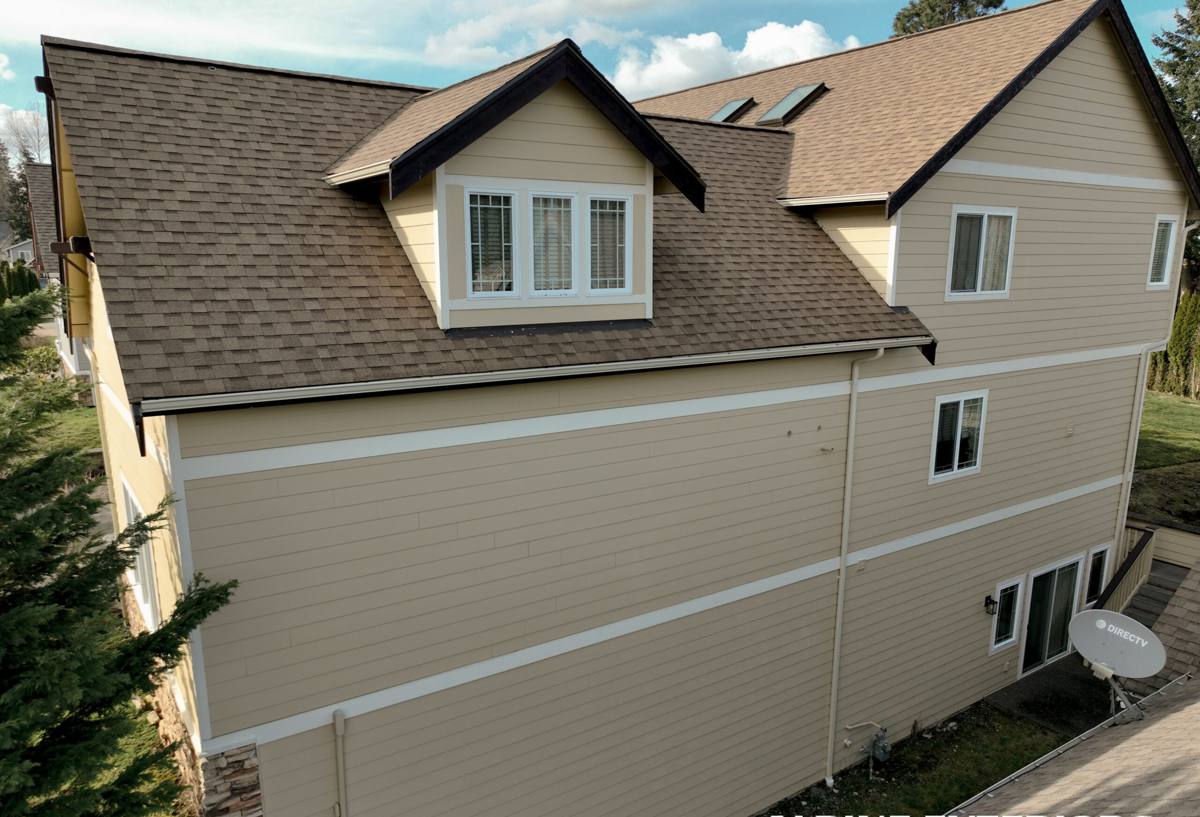
What Pinellas County's Climate Does to Siding Over Time
St. Petersburg sits in a climate that pushes exterior materials harder than most of the country, and Crescent Lake's older homes have usually absorbed decades of it before anyone calls for a replacement.
Hurricane-Force Wind
Sustained hurricane-force wind events test every seam, lap, and fastener in a wall at once. Older siding — especially original wood siding or a vinyl overlay installed decades ago — often has fastener patterns and flashing details that were never built to a modern wind-load standard, and that gap becomes obvious the first time a real storm rolls through.
Wind-Driven Rain
Rain that comes in sideways behaves nothing like rain falling straight down. It gets pushed into laps, trim joints, and corners that were only ever detailed to shed water moving downward. On a home that's been re-sided or patched more than once, those joints tend to multiply, and each one is a potential entry point if it wasn't flashed correctly the last time someone was up on that wall.
Intense, Year-Round UV
Florida's sun exposure runs close to twelve months a year, not a few summer months. UV breaks down caulk, chalks unstabilized paint finishes, and dries out wood-based siding faster than it would in a milder climate, accelerating exactly the wet-dry cycling that causes cupping and cracking.
Salt Air
Crescent Lake sits inland from the immediate coastline, but Tampa Bay and Gulf-influenced salt air still reaches this far into the city and works on every exposed fastener, flashing, and piece of trim behind the siding. Corrosion in fasteners is slow and easy to ignore until a plank starts working loose.
None of these four forces act alone — they compound. A wall that's already lost some caulk integrity to UV is more vulnerable to wind-driven rain, and a fastener that's started to corrode from salt air loses holding strength right when a wind event needs it most. That compounding effect is why siding on an older Crescent Lake home often looks fine from the street for years, then fails faster than expected once the underlying damage finally catches up.
Signs a Crescent Lake Home Needs a Full Replacement, Not a Repair
Not every siding problem calls for a full reside. But on older homes in this neighborhood, a handful of signs usually mean patching is postponing the inevitable rather than solving it:
- Soft or spongy spots when you press on the siding, especially near the bottom courses or below windows
- Visible cupping, warping, or cracking across multiple sections rather than one isolated board
- Paint that keeps failing in the same spots no matter how often it's redone
- A musty smell or staining on interior walls that back up to exterior siding
- Siding that's been patched with mismatched material or repaired more than once in the same area
- Visible gaps at seams, corners, or trim that weren't there a few years ago
- Any sign of pest activity at the base of wood-based siding
If a home shows two or more of these, a full replacement is usually the more honest recommendation, because a wall assembly that's failing in one spot has typically been under stress everywhere else too — it just hasn't announced itself yet.
What a Correct Siding Replacement Actually Involves
A siding replacement is not just removing old material and nailing up new material in its place. Done correctly, it's a full rebuild of the water-management system behind the wall, and the sequence matters as much as the products used.
Tear-Off and Inspection
Every job starts with full removal of the existing siding, which is also the only point in the project where the sheathing and framing underneath are actually visible. This is where hidden rot, old water staining, or a compromised water-resistive barrier gets found — and on a Crescent Lake home that may be seventy or more years old, finding something back there is common enough that it should be planned for, not treated as a surprise change order sprung on the homeowner at the last minute.
Repair Before Re-Cover
Any damaged sheathing or framing gets repaired or replaced before anything new goes up. Sealing new siding over compromised wood just hides the problem for a few more years and guarantees a harder, more expensive fix later.
Water-Resistive Barrier and Flashing
A new, continuously lapped water-resistive barrier goes on next, integrated with correctly sequenced flashing at every window, door, and wall penetration. Kick-out flashing at every point where a roofline meets a wall is non-negotiable in this climate — it's one of the most common missing details behind hidden wall rot on older homes.
Fastening and Clearances
Corrosion-resistant fasteners, sized and spaced to the manufacturer's installation schedule, go in at the correct depth and pattern. Bottom edges of the siding are held clear of grade, decks, and roof lines so they're never sitting in splash-back or standing water — a detail that's especially easy to get wrong on older lots with mature landscaping crowding the foundation.
Trim and Final Detailing
Corners, window and door trim, and any transition pieces get installed to shed water outward, not trap it. Caulked joints are sealed with a product rated for sustained UV and humidity exposure, since this is one of the first things to fail if it's rushed.
Why We Install Only James Hardie Fiber Cement
We standardized on James Hardie fiber cement and don't install vinyl, LP SmartSide, cedar, primed spruce, Cemplank, or Allura. That's a professional standard, not a claim that every other product is unusable — it's the product line that gives a wall the most margin for error in a climate that combines hurricane-force wind, wind-driven rain, intense UV, and salt air more aggressively than most of the country sees.
| Material | Where It Falls Short Here |
|---|---|
| Vinyl siding | Expands, contracts, and can distort under Florida heat and direct sun; seams and J-channels give wind-driven rain a place to collect |
| LP SmartSide / engineered wood | Wood-fiber core absorbs moisture readily at cut edges; carries an ongoing moisture-management burden in high humidity |
| Cedar / primed spruce | Absorbs and releases moisture with every humidity swing, leading to cupping and checking; needs frequent repainting |
| James Hardie fiber cement | Dimensionally stable, doesn't swell or wick like wood-based products, non-combustible, engineered climate-specific product line (HZ5) for heat and humidity |
Fiber cement isn't magic — it still depends entirely on correct flashing, fastening, and sealed cut edges to perform. But the base material itself isn't the moisture sponge that wood-based products can become, and that matters on a coastal Florida home that gets very little downtime between wet and dry conditions. ColorPlus, James Hardie's factory-applied finish, adds a cured, UV-stable color coat with a 15-year finish warranty against peeling, chipping, and cracking — a real advantage in a climate this hard on field-applied paint.
What Drives the Cost of a Reside on an Older Crescent Lake Home
Every house prices on its own, and a firm number requires walking the walls in person. As a broad, honest range, a full reside on a typical single-story Crescent Lake home tends to land in the mid-to-upper five figures, with the specifics shaped by a handful of factors:
| Cost Factor | Why It Moves the Price |
|---|---|
| Wall area and story height | Total square footage is the base driver of material and labor |
| Condition found at tear-off | Sheathing or framing repair on an older home is common and adds real cost — this is where surprises live |
| Existing siding material | Removing multiple past layers or brittle old material takes more labor than a single clean tear-off |
| Trim and architectural detail | Older Crescent Lake homes often carry more window trim, eave, and porch detail than a newer build |
| Finish choice | ColorPlus factory finish versus field-primed-and-painted changes both material cost and the maintenance ahead |
| Site access | Mature trees, narrow side yards, and close lot spacing common in this neighborhood can slow staging and material handling |
Why a Crew That Already Works Crescent Lake Matters
Older, established neighborhoods like this one reward a crew that has already seen the housing stock rather than one encountering it for the first time. Framing dimensions, wall assemblies, and past repair habits from different decades all show up repeatedly on these blocks, and recognizing them quickly at tear-off — instead of guessing — is what keeps a job on schedule and on budget. A crew that already understands how these homes were built, and what's usually hiding behind a few decades of prior repairs, catches problems at the tear-off stage instead of after the new siding is already up.
Local familiarity also matters for the mundane logistics that affect every project: permitting through the city, navigating tight side-yard access and mature tree canopy for material staging, and being genuinely available for a callback if a question comes up after the job is done — not a crew that's moved two counties away by the time a warranty question arises.
Your Pre-Contract Checklist
Whoever you hire for a Crescent Lake reside, run through this before signing anything:
- Verify the contractor's Florida license is active and matches the name on the contract
- Get in writing how hidden sheathing or framing damage found at tear-off will be priced and approved before work continues
- Ask specifically which water-resistive barrier and flashing sequence will be used, including kick-out flashing at roof-to-wall joints
- Confirm fastener type and spacing are suited to a coastal, salt-influenced climate
- Ask whether the crew is trained specifically on James Hardie's installation requirements, not general siding installation
- Clarify whether trim will be replaced, reused, or wrapped, and get that scope in writing
- Ask how disposal of old siding material is handled and whether it's included in the quote
Maintenance After the Reside
A correctly installed fiber cement reside is a low-maintenance exterior, but low isn't zero. Rinse the walls once or twice a year to clear pollen, dust, and the mildew film that grows easily in this humidity — a soft brush and mild detergent handle stubborn areas; skip the pressure washer, which can force water into joints rather than just cleaning the surface. Keep sprinklers aimed away from the walls, keep mulch and dense plantings from crowding the siding, especially given how mature the landscaping tends to be in this neighborhood, and make sure gutters are directing water away from the foundation rather than sheeting down the walls. Recheck caulked joints every few years, since that's the first thing UV and time work on.
If your Crescent Lake home is due for a siding replacement, we're glad to walk the property with you, look at the walls up close, and put together a free, no-pressure estimate. The form below is the easiest way to get started.