 St. Petersburg Window
 Why Siding Takes a Beating in Disston Heights
Disston Heights homes sit inland from Tampa Bay's open water, but "inland" in Pinellas County still means salt-laden air, punishing UV exposure, and the same hurricane-force wind risk that the rest of St. Petersburg deals with every storm season. Siding here isn't decorative trim — it's the single layer standing between your framing and a climate that works against it twelve months a year. A product or installation that would hold up fine in a milder region can fail early once it's dealing with Florida humidity, afternoon downpours, and salt air day after day.
Year-Round UV and Heat
Florida sun is relentless, and it doesn't take a summer off. Constant UV exposure breaks down pigments and resins in lower-grade siding, leading to fading, chalking, and surface degradation years before a homeowner expects to think about replacement. Heat cycling — hot days, cooler nights, sudden afternoon storms — also stresses any material that expands and contracts more than the substrate underneath it.
Wind-Driven Rain and Humidity
Afternoon thunderstorms in this part of Florida rarely fall straight down. Wind pushes rain sideways into wall assemblies, testing every seam, joint, and piece of flashing on a house. Combine that with Pinellas County's year-round humidity, and any gap in the water management behind the siding becomes an invitation for moisture to sit against wood framing and sheathing instead of draining away.
Salt Air Corrosion
St. Petersburg's proximity to the Gulf and Tampa Bay means salt air travels farther inland than most homeowners realize. Salt accelerates corrosion of fasteners, hardware, and unprotected trim, and it degrades some siding finishes faster than manufacturers' standard warranty testing accounts for. A siding system and installation method chosen for a landlocked climate often isn't built with this in mind.
Hurricane-Force Wind Loads
Pinellas County's building code reflects the real risk of tropical storms and hurricanes making landfall or passing close enough to bring damaging wind gusts. Siding has to be rated, and installed, to stay attached and intact under sustained wind loads and flying debris impact — not just look good on a calm day.
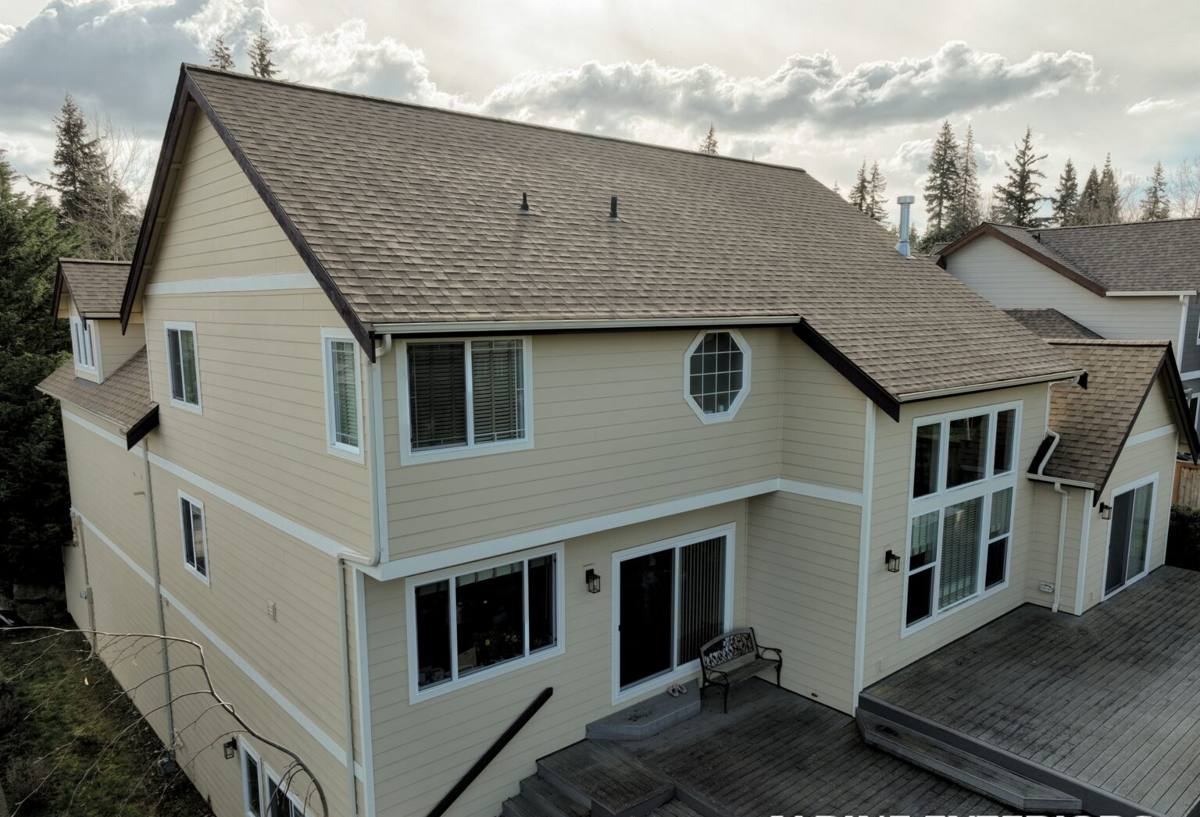
Why We Install Only James Hardie Fiber Cement Siding Here
We made a deliberate decision as a company: we install James Hardie fiber cement siding, and only James Hardie. We don't install vinyl, LP SmartSide, Cemplank, Allura, or unfinished wood siding like primed spruce or cedar. That's not a marketing angle — it's a standard we hold because of what we've seen these products do (and not do) once they're actually installed on Florida homes and left to face real weather for years.
Fiber cement is non-combustible, which matters in a state where wind-driven embers and lightning-sparked fires are a real consideration. James Hardie's HZ product lines are engineered specifically for humid, high-moisture climates like ours — they're formulated to resist moisture-related swelling, cracking, and the rot risk that comes with organic materials like wood-based siding in a wet climate. The factory-applied ColorPlus finish is baked on and warranted separately from the substrate, which means the finish is engineered to resist UV fading and doesn't rely on a field-applied paint job holding up against Florida sun for fifteen years.
We also stand behind installation with a workmanship warranty that pairs with Hardie's product and finish warranties, giving Disston Heights homeowners layered coverage instead of a single manufacturer's promise. When we say we only put Hardie on a home, it's because it's the product we're comfortable putting our name behind in this climate.
What a Correct Siding Installation Actually Involves
Fiber cement siding is only as good as the installation behind it. Most siding failures we get called out to inspect aren't a materials problem — they're a workmanship problem: wrong fastener placement, missing flashing, or clearances that were never set to spec. A correct installation on a Disston Heights home includes several non-negotiable steps.
Tear-Off and Substrate Inspection
Old siding comes off down to the sheathing so we can actually see what's underneath. Any rot, water staining, or compromised framing gets addressed before new siding goes up — covering damaged substrate with new siding just hides a problem that keeps getting worse.
Weather-Resistive Barrier and Flashing
A continuous weather-resistive barrier goes on before siding, with proper flashing at every window, door, and penetration. This is the layer doing the real work of keeping wind-driven rain out of your wall assembly — siding is the second line of defense, not the first.
Fastening and Clearances
James Hardie specifies fastener type, spacing, and placement for a reason — get it wrong and you risk cracking, blow-off in high wind, or voided warranty coverage. Proper clearance from grade, roofing, and decking also has to be maintained so water has somewhere to go instead of wicking up into the bottom edge of the siding.
Finish Details
Caulking at joints, factory-mitered or properly sealed corners, and correctly installed trim all affect how well the system sheds water over time. These are the details that separate a job that looks fine on day one from one that still looks and performs well after several hurricane seasons.
Our Process, Start to Finish
- On-site assessment: We walk the exterior with you, check the current siding and substrate condition, and talk through what your home actually needs.
- Written estimate: You get a clear scope of work and price — what's included, what siding profile and color options fit the home, and a realistic timeline.
- Tear-off and prep: Old siding comes down, substrate gets inspected and repaired as needed, and the weather-resistive barrier goes on correctly the first time.
- Installation to Hardie spec: Fastening, flashing, and clearances are done to manufacturer specification, not shortcuts.
- Finish work and walkthrough: Trim, caulking, and touch-up details get finished, then we walk the job with you before calling it done.
What Siding Installation Costs Depend On
Every home is different, so we don't quote a number until we've actually looked at yours — but these are the factors that typically move the price up or down on a Disston Heights siding job.
| Factor | How It Affects Cost |
|---|---|
| Home size and wall area | More square footage means more material and labor hours |
| Substrate condition | Rot or water damage found during tear-off adds repair time before new siding can go on |
| Siding profile and plank width | Lap siding, shingle-style panels, and board-and-batten each install differently |
| Trim and architectural detail | Homes with more corners, gables, and trim work take longer to finish correctly |
| Number of stories and access | Second-story work and tight lot lines require more setup and safety equipment |
| Color and finish selection | Factory ColorPlus finishes vary slightly in cost by color line |
Signs Your Disston Heights Home Needs New Siding
A lot of siding damage isn't obvious from the curb. Here's what we tell homeowners to actually check for:
- Visible cracking, warping, or buckling anywhere on the siding panels
- Soft spots or give when you press on the siding near the bottom edge
- Paint or finish that's peeling, bubbling, or chalking heavily to the touch
- Staining or streaking that suggests water is running behind the siding, not off it
- Gaps opening up at seams, corners, or where siding meets trim and window frames
- A noticeable jump in cooling costs, which can point to compromised insulation or air sealing behind failing siding
- Visible mold, mildew, or a persistent musty smell along exterior walls
If you're seeing more than one of these, it's worth getting an inspection before storm season rather than after a storm forces the issue.
Why a Crew That Already Works Disston Heights Matters
Permitting and inspection in St. Petersburg and unincorporated Pinellas County follow wind-load and building code requirements built around Florida's hurricane risk. A crew that already works this area knows what local inspectors expect to see on a siding job — correct fastening schedules, proper flashing details, and documentation that holds up if you ever need to show proof of a code-compliant installation for insurance purposes.
There's also a practical side to local experience: knowing how Disston Heights' established housing stock is typically built, what substrate conditions tend to show up once old siding comes off, and how to sequence a job around Florida's rainy season so a home isn't left exposed longer than necessary. That's the kind of judgment that only comes from doing this work in this specific area, not from a general contractor passing through.
Caring for Your New Siding After Installation
James Hardie siding is low-maintenance compared to wood or vinyl, but "low-maintenance" doesn't mean "no maintenance" in this climate. A rinse with a garden hose a couple of times a year clears off salt residue and pollen buildup before it accumulates. Keep an eye on caulking at trim joints and around windows — it's the first thing to show wear from UV and temperature cycling, and catching a failed bead of caulk early is a lot cheaper than dealing with the water intrusion it eventually causes. After any major storm, a quick visual check for cracked panels, loose trim, or displaced flashing is worth the ten minutes it takes.
If you're weighing a siding project for a home in Disston Heights, we're happy to come take a look, walk you through what we're seeing, and put together a straightforward estimate — no pressure, no obligation. Use the form below to get started.