 St. Petersburg Window
 Deck Repair in Euclid-St. Paul: What This Neighborhood Actually Needs
Euclid-St. Paul is one of St. Petersburg's older, established residential neighborhoods, with a housing stock that runs from early bungalows to mid-century homes and newer infill construction. A lot of those homes have had a deck added, replaced, or expanded at some point — sometimes by the original builder, sometimes by a prior owner, sometimes by whoever was cheapest at the time. That mixed history matters when a deck starts failing, because the fix depends entirely on how the thing was built in the first place, not just on what's visibly wrong today.
What doesn't change is the climate doing the damage. St. Petersburg sits in Pinellas County, right on the Gulf, and that means every exterior structure in Euclid-St. Paul is dealing with intense year-round UV, wind-driven rain that gets under flashing and fasteners, salt-laden air that accelerates corrosion, and the occasional hurricane-force wind event that tests every connection in the structure. A deck that would last decades in a drier, cooler climate can develop real problems here in half that time if it wasn't built or maintained with this environment in mind.
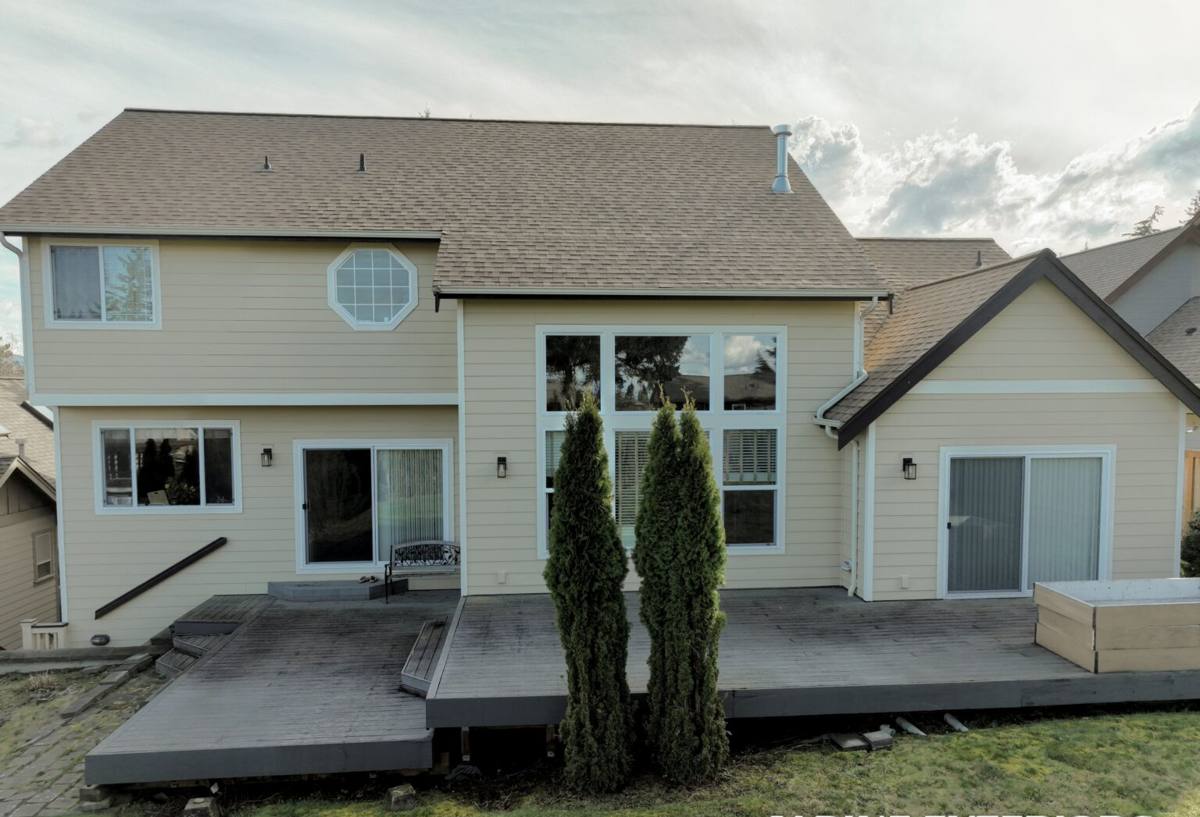
How Deck Damage Shows Up Locally
Wood Decks
Pressure-treated pine is still the most common decking and framing material in this part of St. Petersburg, and it's a reasonable choice — but it's not maintenance-free. Under this sun and rain cycle, exposed wood dries out, cups, and splits faster than the same board would in a milder climate. Fasteners work loose as the wood moves seasonally, and any spot where water pools or drains slowly — around post bases, near the house, under planters — becomes a rot starting point within a few years, not a few decades.
Composite and PVC Decking
Composite boards handle rot better than wood, but they're not immune to sun damage. Older or lower-grade composite can fade, chalk, or become brittle after years of direct Florida UV exposure, and boards installed with too little expansion gap will buckle when they heat up. PVC decking resists moisture well but still depends entirely on the metal fasteners, joist hangers, and framing underneath — and that hidden structure is where most of the real problems live, regardless of what the walking surface is made of.
The Structure You Don't See
Most deck failures aren't the boards — they're the ledger board connection to the house, the joist hangers, the post bases, and the fasteners holding it all together. Salt air corrodes standard steel hardware faster than most homeowners expect, and a ledger board that wasn't properly flashed when it was attached will let water into the house rim joist for years before it becomes visible from the outside. This is the part of a deck that determines whether it's actually safe, and it's the part a surface-level repair often ignores.
Signs Your Deck Needs Repair, Not Just a Cosmetic Fix
- Boards that feel spongy, springy, or noticeably flex when you walk on them
- Visible gaps opening up between the deck and the house at the ledger board
- Rust streaks running down from fasteners, joist hangers, or railing brackets
- Wood that's gray, splintering, or soft enough to probe with a screwdriver
- Railings or stair stringers that wobble or have any side-to-side movement
- Standing water on the deck surface after rain instead of proper runoff
- Posts that look fine above the surface but feel loose or spongy at the base
Any one of these can be a simple, contained fix. Several together — especially anything involving the ledger board or post bases — usually means the problem has been developing for a while and needs a proper structural look before we talk about boards and finish.
What a Correct Repair Actually Involves
A deck repair that holds up in St. Petersburg's climate isn't just swapping bad boards for new ones. We start by identifying whether the damage is isolated or connected to a bigger structural issue — a few rotted boards near a downspout are a different job than boards failing across the whole deck, which usually points to drainage or ledger problems underneath.
From there, the work generally breaks down into a few categories:
- Surface repair — replacing individual boards, sanding and refinishing wood, or re-securing loose composite planks
- Fastener and hardware repair — swapping corroded screws, nails, and brackets for corrosion-resistant hardware rated for coastal use
- Structural repair — addressing rotted or cracked joists, failing post bases, or a ledger board that's pulling away from the house
- Flashing and drainage correction — fixing the water management details that caused the damage, not just the damage itself
- Railing and stair repair — a code and safety item as much as a cosmetic one, since these take the most direct abuse
Skipping the flashing and drainage step is the most common shortcut we see on decks that were "repaired" before and failed again within a couple of years. Replacing rotted boards without fixing why they rotted just buys a little time.
Repair vs. Replacement: How We Make the Call
| Condition | Usually Repairable | Usually Needs Replacement |
|---|---|---|
| Decking boards | Isolated soft or damaged boards, sun-faded but structurally sound composite | Widespread rot, boards failing across most of the deck |
| Framing (joists) | One or two joists with localized rot or damage | Rot at multiple joists, or damage near the ledger connection |
| Ledger board | Minor gap with sound wood behind it, correctable with proper flashing | Soft or rotted ledger, or evidence of water intrusion into the house |
| Posts and footings | Surface weathering, minor hardware corrosion | Soft wood at the base, undersized or heaved footings |
| Railings | Loose balusters, minor hardware fatigue | Rotted posts, structural movement under normal load |
As a rule of thumb: if the damage is contained and the underlying frame is sound, repair is the honest recommendation, and it's usually the right one financially too. If the ledger, footings, or a large share of the framing is compromised, patching around it isn't a real fix — it's a deferred replacement, and we'll tell you that directly instead of billing you for a repair that won't last.
Material Choices When Boards Are Being Replaced
If part of your repair includes replacing sections of decking, it's worth matching materials thoughtfully rather than just grabbing whatever's closest to the existing color.
| Material | Strengths in This Climate | Trade-offs |
|---|---|---|
| Pressure-treated pine | Lowest cost, widely available, easy to match to existing decks | Needs periodic sealing/staining; shorter lifespan without upkeep |
| Tropical hardwoods | Naturally dense and rot-resistant, holds up well to moisture | Higher cost, requires periodic oiling to prevent graying |
| Composite decking | Low maintenance, resists rot, consistent appearance | Higher upfront cost; quality varies significantly by product grade |
| PVC decking | Fully moisture-resistant, doesn't absorb water at cut ends | Highest cost tier; can run hotter underfoot in direct sun |
We don't push one material as universally "best" — we'll walk you through what makes sense for your budget, how much sun exposure your deck actually gets, and how it needs to blend with the rest of the house.
Our Deck Repair Process
- On-site assessment. We inspect the surface, framing, ledger connection, posts, and footings — not just what's visibly damaged, but what's likely to fail next.
- Honest scope and estimate. You get a clear breakdown of what needs repair now, what's borderline, and what can reasonably wait.
- Repair, not just patch. We correct the underlying cause — drainage, flashing, corroded hardware — alongside the visible damage.
- Code-appropriate hardware. Fasteners and connectors are matched to coastal, corrosion-prone conditions, not generic interior-grade hardware.
- Final walkthrough. We check that boards are secure, railings are solid, and drainage is doing what it's supposed to before we call it done.
Permits and Older Homes in This Part of St. Petersburg
Structural deck work — anything touching framing, footings, or railings — typically requires a permit in St. Petersburg and Pinellas County, and that's true even for repairs, not just new construction. Homeowners are sometimes surprised by this on a "simple" repair, but it protects you: permitted work gets inspected, which matters a lot when you're dealing with a structure attached directly to your house and holding up people standing several feet off the ground. On established neighborhoods like this one, where a deck may have been added or modified years after the original home was built, permitting also helps confirm the existing structure actually meets current code before we build on top of it.
We handle the permitting process as part of the job rather than leaving it on the homeowner to sort out.
Maintaining a Deck Once It's Repaired
A repaired deck will last a lot longer with a little seasonal attention, especially given how hard the sun and rain cycle here work against exposed wood and hardware.
- Sweep debris off the surface regularly so it doesn't trap moisture against boards
- Check and reseal or re-stain wood decking every 1–2 years, depending on sun exposure
- Inspect fasteners and hardware annually for early rust or corrosion, especially after storm season
- Keep gutters and downspouts clear so runoff isn't draining directly onto or under the deck
- Trim back vegetation touching the deck to reduce trapped moisture and airflow blockage
- After any major storm, do a quick visual check of railings, stairs, and post bases before heavy use
Why Hire a Crew That Already Works This Neighborhood
Euclid-St. Paul has enough of a mix of home ages and prior construction quality that "standard" deck repair advice doesn't always apply cleanly. A crew that's already worked on decks in this part of St. Petersburg has seen how the local mix of pressure-treated framing, coastal humidity, and older ledger attachments tends to fail, and knows what to check beyond the obviously damaged board. That familiarity means a more accurate first estimate, fewer surprises once we open things up, and repair work that's built for Pinellas County conditions rather than a generic climate assumption.
If your deck has soft spots, loose railings, corroded hardware, or you're just not sure whether it needs a repair or something bigger, we're happy to take a look and give you a straight answer. Reach out for a free, no-pressure estimate — the form below gets you started.