 St. Petersburg Window
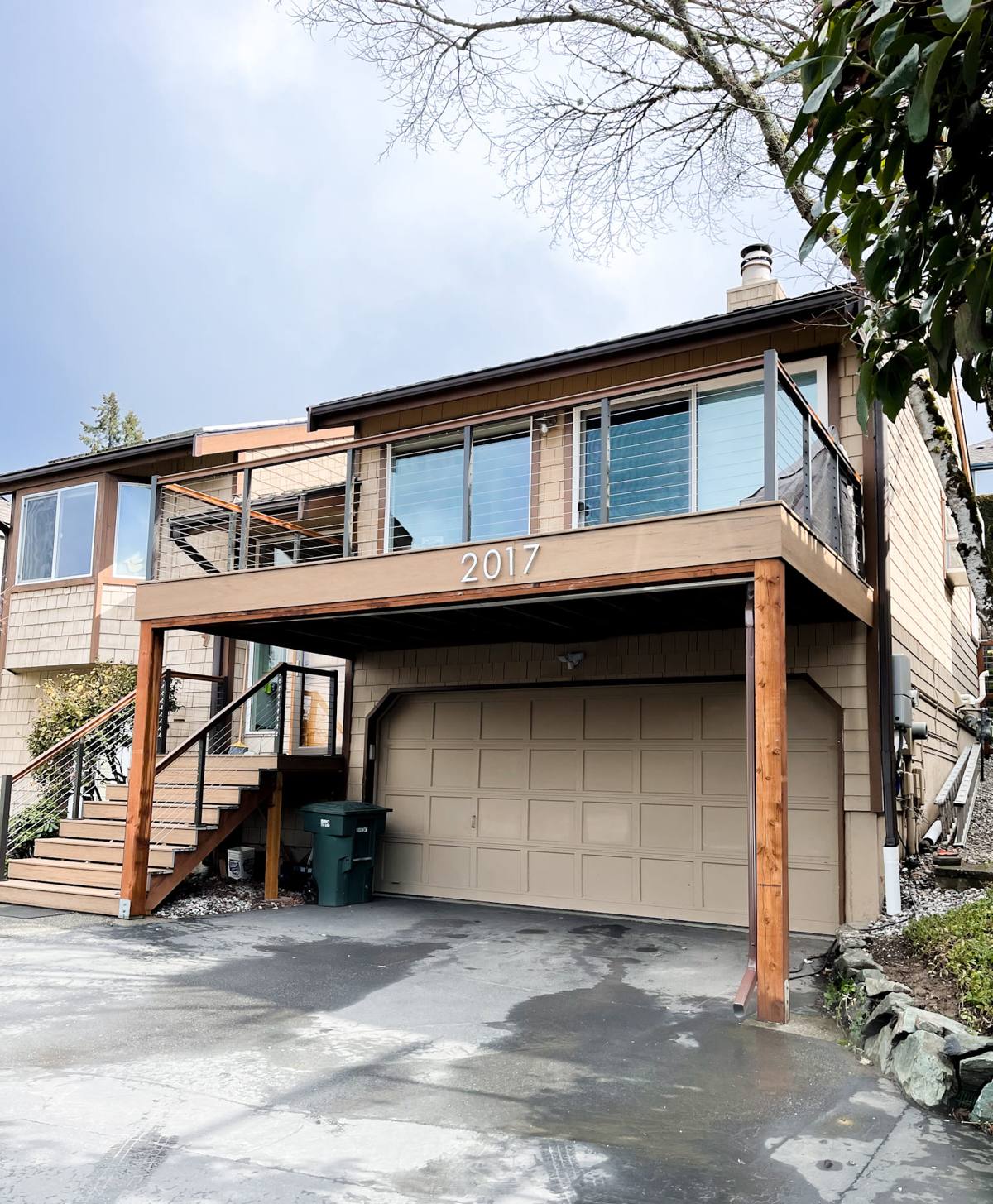
 Decks Built for Kenwood's Historic Character
Historic Kenwood is one of St. Petersburg's older platted neighborhoods, known for its Craftsman bungalows, four-square homes, and canopy of mature oaks over narrow lots. A deck on a home like this has to do two jobs at once: look like it belongs on a house built decades before composite decking existed, and hold up to a Pinellas County climate that's much harder on outdoor structures than most homeowners expect. We build custom decks for homes throughout Kenwood with both of those requirements in mind, not just one.
A deck that's designed for a new-construction subdivision home rarely translates well to a bungalow. Proportions, railing profiles, fastener finishes, and even board width all read differently against original wood siding, low-pitched rooflines, and older trim details. Getting that right takes more than a stock design pulled off a shelf.
What St. Petersburg's Climate Asks of a Deck
Outdoor structures in this part of Florida take a beating year-round, and a deck is more exposed than almost anything else on a property. Hurricane-force wind events put real load on framing and connections. Intense, near-constant UV breaks down finishes and dries out wood fiber faster than in most of the country. Wind-driven rain forces water sideways into joints, fastener holes, and ledger connections that a vertical-rain climate would never test. And salt air, even well inland from the water, slowly corrodes any hardware that isn't rated for it.
Sun and Moisture Cycling
Florida decking doesn't just get hot — it goes through constant cycles of soaking rain and intense sun, sometimes in the same day. Wood swells and shrinks with that cycling, which is what eventually causes cupping, checking, and loose fasteners if the material and installation method weren't chosen for it.
Wind and Storm Loads
A deck attached to a house has to transfer wind and structural loads safely into the framing, and that means every connection — ledger bolts, joist hangers, post bases — has to be sized and fastened correctly, not just nailed on. This matters more in storm season, but it's really a year-round requirement.
Choosing the Right Decking Material for a Kenwood Home
There's no single "best" decking material — there's a best fit for your home's style, your budget, and how much upkeep you want to take on. Here's how the common options compare for a coastal historic-neighborhood application:
| Material | Relative Cost | Maintenance | Coastal Durability | Fit for Bungalow/Craftsman Style |
|---|---|---|---|---|
| Pressure-treated pine | $ | Regular sealing/staining | Fair — needs upkeep to resist moisture and UV damage | Good, traditional look |
| Tropical hardwood (e.g. ipe) | $$$ | Periodic oiling to hold color | Excellent natural density and rot resistance | Very good, rich traditional appearance |
| Composite decking | $$ | Low — washing, no staining | Good, resists rot and insects | Depends on color/profile chosen |
| PVC decking | $$-$$$ | Lowest — no staining or sealing | Very good, unaffected by moisture | Can look modern unless detailed carefully |
For homes in Kenwood, we often lean toward traditional wood tones or composite boards with narrower profiles and muted colors that read closer to painted or stained wood than to a modern composite look. The right choice really comes down to how much time you want to spend maintaining it versus how much of the original material character you want to keep.
Designing a Deck That Respects the House
The details that make a deck look like it was always part of the house are usually the ones homeowners don't think to ask for: railing baluster spacing and profile that match the era of the home, post caps and trim that echo existing porch or column details, and paint or stain colors pulled from the house's existing palette rather than a standard composite color chip.
Scale Matters More Than People Expect
Bungalow-style homes tend to have modest footprints and low rooflines. An oversized deck, or one with heavy, boxy railing systems designed for larger modern homes, can visually overwhelm a smaller historic house. We size and detail decks to sit proportionally with the home rather than defaulting to a standard commercial railing kit.
Historic District Considerations
If your property falls within a designated historic district, there may be local design review requirements that apply to visible additions like a deck, particularly ones facing the street. We can help you understand what applies to your specific property and build a design that's likely to move through that process smoothly, rather than finding out after the fact that something needs to be redone.
Structural Work Most Homeowners Never See
The parts of a deck that actually determine whether it lasts are almost entirely hidden once the boards go down. This is where a lot of corner-cutting happens on lower-quality builds, and it's also where an older home needs more judgment than a new one.
Ledger Attachment on Older Framing
Many Kenwood homes have original framing that wasn't built with a modern ledger-attached deck in mind. Depending on the condition and type of framing at the attachment point, sometimes the right call is a properly flashed and bolted ledger connection, and sometimes it's a freestanding deck structure that doesn't rely on the house's band board or rim joist at all. Attaching to old or deteriorated framing incorrectly is one of the more common causes of deck failures and water intrusion into the house itself.
Footings in Local Soil
Pinellas County's sandy soil behaves differently than clay or loam when it comes to footing depth, diameter, and bearing capacity. Footings sized by guesswork, or copied from a plan built for a different soil type, can settle unevenly over time. We size footings for the actual soil conditions on your lot, not a generic assumption.
Fasteners and Hardware
Salt air corrodes standard hardware faster than most homeowners realize, even at some distance from the water. We use stainless steel or coated fasteners and connectors rated for coastal exposure, because a deck that looks fine on the surface but is held together with corroding hardware underneath is a problem waiting to surface a few years down the road.
Permitting in St. Petersburg and Pinellas County
Most attached and elevated decks require a permit, structural plan review, and inspections, and framing has to meet Florida Building Code wind provisions for our region. On top of standard permitting, a historic-district property may have an added layer of design approval before a permit is even issued. We handle the permitting and inspection process as part of the job so you're not the one tracking down requirements or scheduling inspections.
Our Process for a Kenwood Deck Project
- Site visit and assessment — we look at the existing structure, framing condition, soil, drainage, and how the deck will connect to the house.
- Design and material selection — sized and detailed to match your home's style, with material options laid out honestly on cost and maintenance.
- Permitting — we prepare and submit what's required, including any historic district review, and handle inspection scheduling.
- Construction — built with attention to protecting existing landscaping and root systems around mature trees on the lot.
- Final inspection and walkthrough — we confirm the work passes inspection and walk the finished deck with you before calling the job done.
Maintaining a Deck in a Coastal Historic Neighborhood
Even the best-built deck needs some ongoing attention in this climate. A little regular upkeep goes a long way toward avoiding early repairs:
- Rinse salt residue and pollen off the deck surface periodically, especially after storms
- Reseal or restain wood decking on a schedule appropriate to the product, before the finish fully breaks down
- Check fasteners and metal connectors yearly for early signs of corrosion
- Inspect the ledger connection and framing near the house for softness or water staining
- Clear leaves and debris from under and between boards so moisture doesn't stay trapped
- Keep nearby vegetation trimmed back enough to allow airflow and sun exposure to dry the deck between rains
Why Hire a Crew That Already Works in Kenwood
A crew that's already familiar with Kenwood's older homes isn't guessing at how the original framing was built, how narrow lots and mature oak root systems affect where footings can go, or what a historic district review actually expects from a submitted design. That familiarity shows up as fewer surprises during construction and a design that fits the house the first time, instead of a generic deck that happens to be attached to a historic home.
If you're thinking about a custom deck for your Kenwood home, we're glad to take a look and talk through what makes sense for your house and budget. Fill out the form below for a free, no-pressure estimate.