 St. Petersburg Window
 Why Old Southeast Roofs Need a Different Approach
Old Southeast is one of St. Petersburg's older residential neighborhoods, with a housing stock that leans heavily toward homes built in the early-to-mid 1900s — bungalows, Mediterranean Revival cottages, and a mix of additions and updates layered on over the decades. That history is part of what makes the neighborhood desirable, but it also means the roofs sitting on top of these homes are rarely simple. You'll find original hip-and-gable framing paired with later flat or low-slope additions, dormers, and roof-to-wall transitions that a standard tract-home crew isn't used to reading correctly.
An asphalt shingle roof on a home like this has to do two jobs at once: perform like a modern roofing system and respect a roofline that was built to a different standard. That means the deck underneath may have irregular spacing or old lumber sizing, the eaves may be narrower than current builds, and the transitions between original roof and add-on sections need extra attention to flashing and slope. Getting this right on the first pass matters more here than on a newer, simpler home — mistakes get expensive to unwind later.
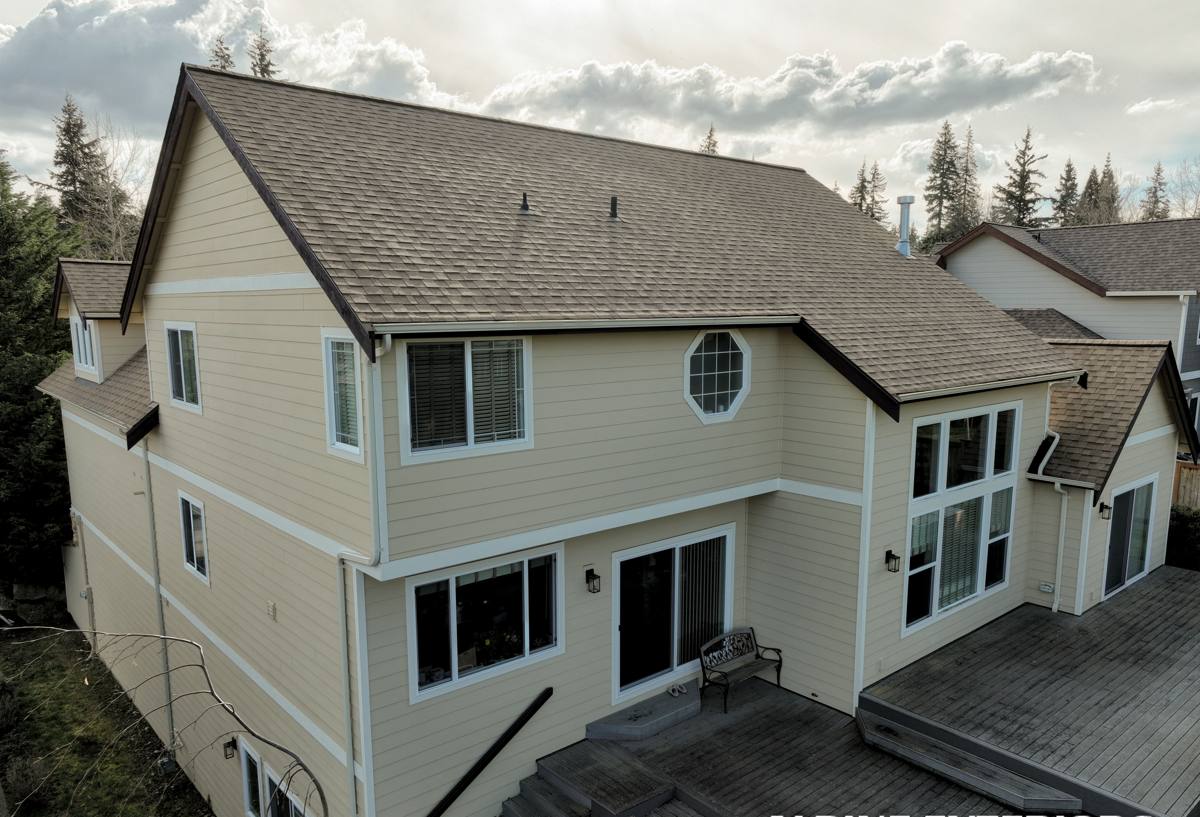
What St. Petersburg's Climate Does to a Shingle Roof
Every roof in Pinellas County is working against the same set of conditions, and Old Southeast's proximity to Tampa Bay adds a layer on top of that. Four things drive most of the wear we see on shingle roofs in this area:
- Hurricane-force wind: Even roofs that never take a direct hurricane hit see repeated high-wind events that stress shingle tabs, ridge caps, and flashing over time.
- Year-round UV exposure: Florida sun is more intense and more constant than in most of the country, which accelerates the breakdown of asphalt and granule loss well ahead of a shingle's rated lifespan.
- Wind-driven rain: Storms here rarely fall straight down. Rain gets pushed sideways under shingle edges, into valleys, and around penetrations — which is why underlayment and flashing details matter as much as the shingles themselves.
- Salt air: Being close to the bay means airborne salt reaches roofing metal — nails, flashing, vents, and fasteners — and speeds up corrosion compared to inland installations.
None of these forces is unique to Old Southeast, but combined with the neighborhood's older roof geometry, they add up faster than they would on a newer, simpler roof.
What a Correctly Installed Shingle Roof Actually Includes
A shingle roof is a system, not a single product. Shingles get the attention, but most leaks and premature failures we're called out for trace back to something underneath or around them, not the shingles themselves.
Deck and Substrate
Before anything goes down, the decking underneath needs to be sound — no soft spots, no delamination, proper fastening. On older Old Southeast homes this step often turns up sections that need to be replaced or re-secured before the new roof goes on. Skipping this inspection is the single most common shortcut that leads to problems years later.
Underlayment and Water Barrier
A synthetic or felt underlayment goes over the deck as the roof's backup water barrier. In wind-driven rain conditions like ours, self-adhering membrane at eaves, valleys, and around penetrations gives extra protection where water is most likely to find a way in.
Edges, Flashing, and Ventilation
Drip edge and starter strip at the eaves and rakes, proper step and counter-flashing at walls and chimneys, and correctly sized ridge or roof vents all matter as much as the shingle layer. Poor ventilation shortens shingle life by trapping heat and moisture in the attic — a real issue given how hot St. Petersburg attics get for most of the year.
Fastening and Wind Compliance
Nailing pattern and fastener count are governed by Florida Building Code wind requirements, which are stricter here than in most of the country for good reason. Correct nail placement, count, and shingle overlap are what actually keep a roof on the house during a wind event — not the brand of shingle alone.
Choosing Shingles for Wind, Heat, and Salt Air
Architectural vs. Three-Tab
Most homes we work on in this part of St. Petersburg are better served by architectural (laminated) shingles rather than older-style three-tab. Architectural shingles are heavier, carry higher wind ratings, and hold up better to the UV and wind load this area sees. Three-tab shingles are lighter-weight and typically carry a lower wind rating and shorter service life in coastal conditions, which is why we don't recommend them as the default choice here — it's a durability trade-off, not a quality judgment on the product itself.
Granules, Color, and Heat
Algae-resistant granules are worth the small upcharge in this humidity — without them, dark streaking from airborne algae shows up faster than most homeowners expect. Lighter shingle colors also reflect more heat, which can modestly ease attic temperatures and cooling load, something worth weighing against the roof tones common in the neighborhood.
| Factor | Three-Tab | Architectural |
|---|---|---|
| Typical wind rating | Lower | Higher |
| Expected coastal lifespan | Shorter | Longer |
| Appearance | Flat, uniform | Dimensional, shadow-line |
| Upfront cost | Lower | Higher |
| Fit for Old Southeast roof lines | Adequate on simple sections | Better match for complex, older rooflines |
Our Process, Start to Finish
- Inspection and assessment: We walk the roof (or use a lift where the pitch or roof condition calls for it), check the deck, flashing, ventilation, and note any age-related issues specific to the home.
- Straightforward proposal: You get a clear scope of what's being replaced or repaired, the materials involved, and what it will cost — no vague allowances that turn into surprises mid-job.
- Tear-off and deck check: Old material comes off down to the deck so we can actually see what's underneath, rather than covering up problems with an overlay.
- Underlayment, flashing, and shingle install: Installed in the sequence and fastening pattern the manufacturer and Florida code require, not a shortcut version of it.
- Ventilation check: We confirm intake and exhaust venting is adequate for the attic space, adjusting where the existing setup falls short.
- Cleanup and magnetic sweep: Job site and yard cleared of debris and stray fasteners before we consider the job done.
- Final walkthrough: We go over the finished roof with you before wrapping up, so you know what was done and why.
Why Local Old Southeast Experience Matters
A roofing crew that regularly works this neighborhood knows things that don't show up in a generic estimate. Lots on these streets often have mature tree canopy, which affects how material staging, debris removal, and equipment access get planned so we're not damaging landscaping or driveways to get the job done. Roof lines here frequently mix an original structure with later additions at different pitches and framing ages, so a crew needs to actually recognize those transitions rather than treating the whole roof as one uniform surface.
There's also the permitting side. Roofing work in the City of St. Petersburg and Pinellas County requires permits and inspections, and older homes occasionally surface additional questions during that process — deck condition, prior undocumented work, or structural quirks tied to the home's age. A crew that pulls permits here regularly knows how that process runs locally and doesn't treat it as an afterthought.
Homeowner Maintenance Checklist
Between installs, a little regular attention keeps a shingle roof performing closer to its full expected lifespan in this climate:
- Have the roof visually inspected after any major wind event, even if you don't see obvious damage from the ground.
- Keep gutters and valleys clear of leaves and debris so wind-driven rain has a clear path off the roof.
- Trim back overhanging branches that scrape shingles or dump excess debris and shade that promotes algae growth.
- Watch for granule buildup in gutters or downspouts — a sign of accelerating shingle wear.
- Check attic ventilation isn't blocked by insulation or storage, especially after any attic work.
- Address small flashing or sealant issues promptly rather than waiting for an active leak.
What Affects the Cost of a Shingle Roof Replacement
Every roof is priced on its own specifics, but the same handful of factors drive most of the variation we see on Old Southeast homes:
| Cost Factor | Why It Matters |
|---|---|
| Roof size and number of facets | More square footage and more complex roof lines mean more material and labor time. |
| Roof pitch and access | Steeper pitches and tighter lot access slow the job and affect safety equipment needs. |
| Existing layers to remove | Tearing off multiple old layers takes longer and generates more debris to haul away. |
| Deck repair needed | Rotten or undersized decking found during tear-off adds material and labor beyond the base roofing scope. |
| Ventilation upgrades | Bringing an older attic's venting up to a proper intake/exhaust balance can add scope but pays off in shingle life. |
| Shingle class chosen | Architectural shingles cost more upfront than three-tab but generally outperform them in this climate. |
If a contractor quotes a shingle roof without ever getting on the roof or opening up a test section of the deck, treat that number as a placeholder, not a real estimate.
If you're weighing a repair, a full replacement, or just want an honest read on where your roof stands, we're happy to take a look and walk you through what we find. Use the form below to request a free, no-pressure estimate for your Old Southeast home.