 St. Petersburg Window
 What Crescent Lake Homes Are Up Against
Crescent Lake is one of St. Petersburg's older, established in-town neighborhoods, built up around the lake and park that give the area its name. Homes here carry mature tree canopy, a mix of construction ages, and the kind of close-set lots typical of St. Petersburg's historic core. That's a great place to live, but it's also a tough environment for exterior building materials. Pinellas County sits on a peninsula between Tampa Bay and the Gulf of Mexico, which means every home in the area deals with the same basic combination of stresses: hurricane-force wind events, wind-driven rain that gets pushed sideways into wall assemblies, near-constant UV exposure that most of the country never sees, and a steady dose of salt-laden air moving in off the water.
None of those stresses show up as a single dramatic failure. They show up slowly — a south or west wall that fades and chalks years before the others, a bottom edge of siding that stays damp after every storm and eventually softens, fasteners that corrode from the inside out, seams that open up and let water behind the cladding. By the time it's visible from the street, the damage has usually been building for a while. Siding for a Crescent Lake home has to be chosen and installed with all of that in mind from day one, not treated as an afterthought.
Why We Only Install James Hardie Here
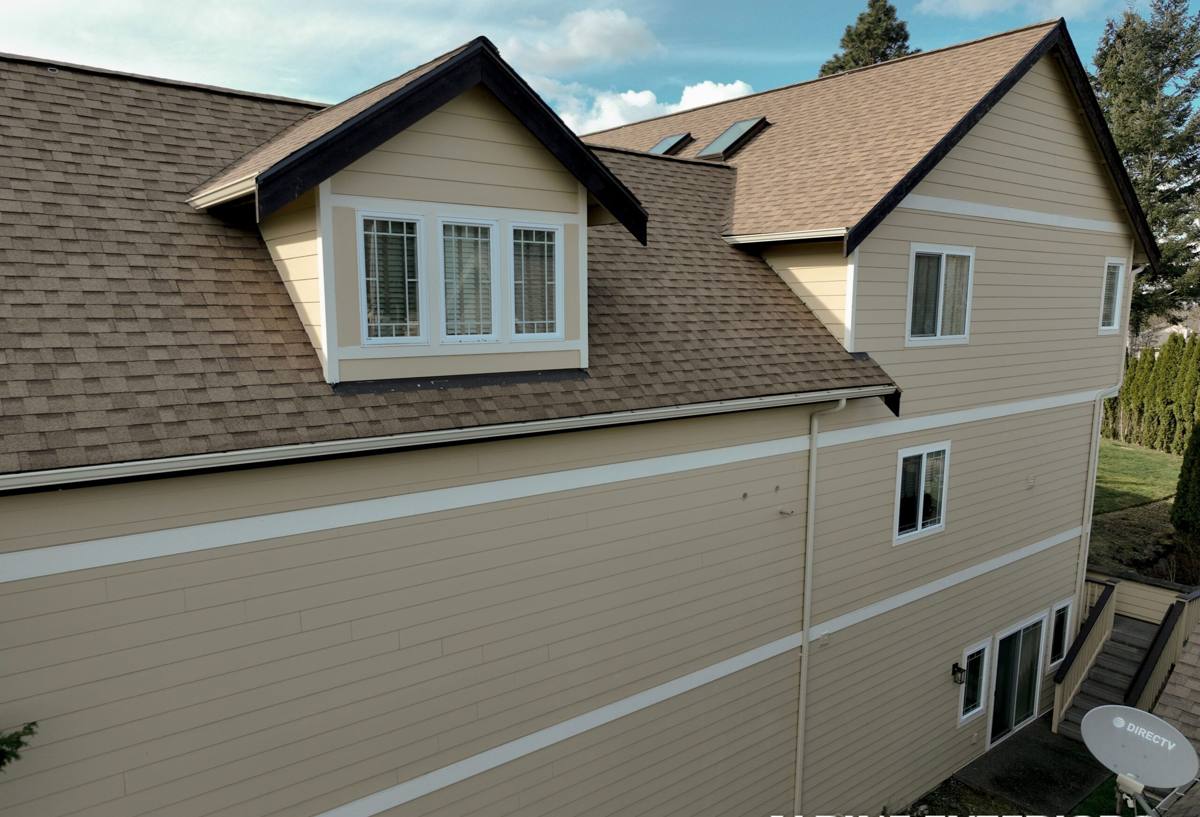
We install James Hardie fiber cement siding exclusively — no vinyl, no LP SmartSide, no primed wood or cedar. That's a deliberate standard, not a sales preference. Vinyl softens and can distort in sustained high heat and direct sun, and it's a product that ultimately depends on the wall behind it for structural integrity in wind events. Wood-based and OSB-core siding products are engineered wood — they perform well when kept dry and installed exactly to spec, but they're more sensitive to sustained moisture exposure than a cement-based product, and Florida's humidity and rain patterns don't offer a lot of margin for error. We'd rather put one product on every home, know it cold, and stand behind it, than juggle several products with different failure modes and different installation rules.
James Hardie fiber cement is made from cement, sand, and cellulose fiber. It doesn't support flame spread the way wood-based sidings can, it doesn't rot, and it isn't a food source for termites or other wood-boring insects — a real consideration in a humid, insect-active climate like ours. It's also heavy and rigid compared to vinyl, which matters directly for wind performance once it's properly fastened to the wall.
The Right Hardie Product Line for This Climate
HZ5 Engineering
James Hardie doesn't make one generic siding for the whole country — the company engineers its formulations by climate zone under what it calls the HardieZone system. Homes in humid, high-moisture regions like the Gulf Coast use the HZ5 formulation, which is built to resist moisture-related damage and to hold up in freeze-free, high-humidity conditions. That's the product line we specify for Crescent Lake homes, not a generic version pulled from a national catalog.
ColorPlus Factory Finish
Most of what we install carries James Hardie's ColorPlus Technology — a finish that's baked on at the factory in multiple coats, rather than field-painted after installation. It holds color and resists fading better than a job-site paint job, and it comes with its own finish warranty separate from the substrate warranty. It doesn't make the siding maintenance-free, but it substantially cuts down on the touch-up painting that field-finished siding needs in a climate that's this hard on exterior coatings.
Trim, Soffit, and Accessories
A full siding job is more than the lap boards. HardieTrim around windows, doors, and corners, and HardieSoffit at the eaves, are part of a correctly detailed system — mixing in wood or composite trim at those transitions reintroduces exactly the moisture-prone joints that fiber cement is meant to eliminate. On a Crescent Lake home, we spec the trim and soffit pieces alongside the field siding so the whole envelope is working the same way.
What a Correct Installation Involves
Substrate First
Siding is only as good as what's underneath it. Before anything new goes up, the old siding comes off and the sheathing gets inspected for rot, delamination, or hidden water damage — common in a coastal climate where a small gap or failed caulk joint can let moisture in for years without anyone noticing from outside. Any compromised sheathing gets repaired or replaced before the new siding goes on. Skipping this step is one of the most common ways a siding job fails early, regardless of what product is used.
Weather Barrier and Flashing
A code-compliant weather-resistive barrier goes over the sheathing, lapped correctly so water sheds downward and out rather than in. Flashing goes at every window head, door head, and roof-to-wall transition — the places wind-driven rain actually finds its way in during a storm. This layer does the real waterproofing work; the siding itself is the second line of defense, not the only one.
Fastening for Wind
James Hardie publishes fastening schedules tied to local wind exposure, and in a coastal Pinellas County wind zone, that means the right fastener type, spacing, and pattern — not the minimum the box allows. We use corrosion-resistant fasteners suited to salt air exposure, since standard fasteners can corrode well before the siding itself shows any wear.
Joints and Clearances
Butt joints, corners, and the gaps where siding meets trim, roofing, and decking all get detailed per Hardie's installation requirements so water can't wick into the cut edges of the boards, which are the most vulnerable part of any fiber cement installation. Field-cut edges also get sealed as specified, since an unsealed cut edge is one of the few places moisture can get into the board itself.
- Old siding and any damaged trim fully removed, not sided over
- Sheathing inspected and repaired before new siding is installed
- Weather-resistive barrier installed with correct laps
- Flashing at every window, door, and roof-to-wall transition
- HZ5-rated James Hardie product, correctly fastened for local wind exposure
- Corrosion-resistant fasteners appropriate for salt air exposure
- Cut edges and joints sealed per manufacturer specification
- Trim, soffit, and accessories from the same integrated Hardie system
Hardie Compared to Other Siding Options in This Climate
We don't install the alternatives below, but homeowners comparing options deserve an honest look at how they hold up under the same conditions a Crescent Lake home faces.
| Factor | James Hardie Fiber Cement | Vinyl | Engineered Wood (e.g. LP SmartSide) |
|---|---|---|---|
| Sustained heat and direct sun | Dimensionally stable; ColorPlus finish resists fading | Can soften, warp, or distort in prolonged high heat | Stable, but painted finish fades and chalks over time |
| Wind-driven rain and moisture | Engineered for humid climates (HZ5); doesn't rot | Sheds water but relies on the wall assembly for wind resistance | Wood-based core sensitive to sustained moisture exposure |
| Salt air exposure | Non-organic, doesn't corrode | Generally stable but can become brittle over time | Fasteners and exposed cut edges are corrosion/moisture-prone |
| Fire resistance | Non-combustible | Combustible | Combustible (wood-based) |
What Affects the Cost of a Siding Job in Crescent Lake
Every home is different, so we don't quote off a flat per-square-foot number until we've actually looked at the house. These are the factors that move the number up or down.
| Factor | Why It Matters |
|---|---|
| Total siding area and home shape | More linear footage, corners, and cut-outs mean more material and labor |
| Condition of the existing siding and sheathing | Hidden rot or water damage found during tear-off requires repair before install |
| Product selection | Lap profile, panel width, and smooth versus textured finish carry different costs |
| Trim and accessory scope | Full trim, soffit, and fascia replacement adds material and detail work |
| Site access | Multi-story sections, tight lot lines, and mature landscaping affect labor time |
| Color and finish | Factory ColorPlus finishes versus field-painted options price differently |
As a general rule, a full tear-off and re-side costs meaningfully more than siding installed over sound, well-prepped existing material — but on an older Crescent Lake home, we'd rather find out what's actually behind the old siding than guess.
Our Process, Start to Finish
We start with an on-site inspection and measurement, and we'll walk the exterior with you and point out anything we see — soft spots, failed caulk joints, areas of visible moisture damage — before any work is scoped. From there we put together a written estimate that spells out the product line, scope, and timeline.
Once a project is approved, we handle the permitting that the City of St. Petersburg requires for exterior siding work, schedule the tear-off, and inspect the sheathing before anything new goes up. Installation follows James Hardie's published specifications for fastening, flashing, and clearances for our wind exposure, and we do a final walk-through with you before we consider the job finished. Site cleanup and haul-away of old material are part of the job, not an add-on.
Why a Crew That Already Works in Crescent Lake Matters
Siding installation isn't one-size-fits-all, and a crew that has worked other homes in this neighborhood already knows what to expect before the tear-off starts: the age range of the housing stock, the kinds of substrate issues that tend to show up on older St. Petersburg homes, and the permitting process the city uses. That familiarity shortens the surprises during a project and means fewer change orders once the old siding comes off.
It also matters after the fact. A local crew that's still doing business in Pinellas County next year, and the year after, is the crew that answers the phone if a fastener works loose after a storm or a corner detail needs a look. That kind of accountability is hard to get from an out-of-area company that showed up for one job and moved on.
If you're weighing a siding project for a Crescent Lake home, we're happy to take a look and give you a straight, no-pressure estimate — no obligation, and no pressure to sign anything on the spot. Use the form below to get started.