 St. Petersburg Window
 Roser Park's Older Homes Face a Newer Climate Problem
Roser Park is one of St. Petersburg's older, established neighborhoods, built out mostly in the early decades of the 1900s with bungalow and Craftsman-style homes, mature tree canopy, and a hillier lay of the land than most of flat Pinellas County. That age and character are exactly why siding decisions here carry more weight than they do on a newer subdivision home. A lot of these houses have already been resided once or twice over the decades, and whatever went up last time is now facing a Gulf Coast climate that doesn't give exterior materials much rest.
Hurricane-force winds test every seam, joint, and fastener on a home's exterior, sometimes several times in a single season. Intense, nearly year-round UV breaks down paint, caulk, and unstabilized finishes faster here than almost anywhere else in the country. Wind-driven rain gets pushed sideways into laps and trim lines that were only ever designed to shed water falling straight down. And because Pinellas County is a narrow peninsula, salt-laden air off Tampa Bay and the Gulf reaches homes well inland from the water, not just the ones with a view of it — Roser Park included. None of that is unique to this one neighborhood, but on a housing stock this age, with original framing and decades of prior repairs layered underneath the current siding, the margin for a sloppy installation is thinner than it looks.
Why We Install Only James Hardie Fiber Cement
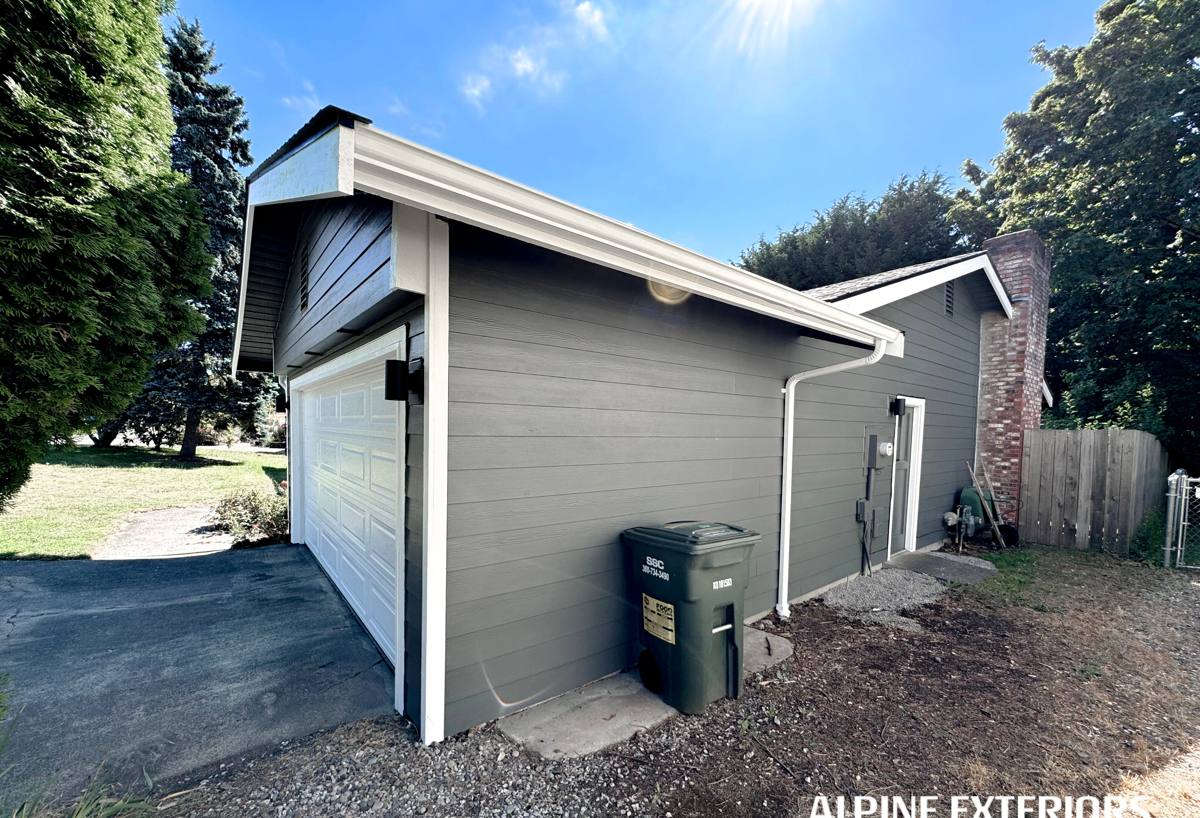
We're a single-product siding company, and that's a deliberate standard, not a limitation we apologize for. James Hardie fiber cement — Portland cement, sand, and cellulose fiber cured into a dense, stable board — doesn't burn, doesn't feed termites, and doesn't move with temperature and humidity the way other materials do. The specific line sold here, HZ5, is formulated for heat and humidity rather than northern freeze-thaw, which matters in a climate that stays warm and wet most of the year. Add a factory-applied ColorPlus finish that's cured before it ever meets Florida sun, and you get a wall system built for exactly the stresses Roser Park homes face.
We don't install vinyl siding, LP SmartSide or other engineered wood products, or bare cedar and primed spruce, and we're upfront about why. Vinyl expands and contracts noticeably in our heat, and that movement tends to show up over time as waviness or gapping at the seams. Engineered wood products carry a real, ongoing moisture-management burden — cut edges, seams, and any missed sealing step become entry points for water, and Florida's wet-dry cycling doesn't forgive that the way a milder climate would. Cedar and primed spruce are attractive but require a repaint-and-reseal commitment that's hard to keep up with in this UV and humidity, and both stay vulnerable to rot and insects if maintenance ever slips. None of that means those products can never work anywhere — it means we'd rather be excellent at one material engineered for this exact climate than spread ourselves across several we can't fully stand behind.
What Roser Park's Character Means for a Siding Project
Matching the Original Detail
Bungalow and Craftsman homes lean on trim as much as siding for their character — wide corner boards, substantial window and door casings, sometimes exposed rafter tails or knee braces under the eaves. A generic siding job that ignores those details can leave a historic-feeling home looking flattened out. We plan the trim package alongside the siding itself, using HardieTrim boards sized and profiled to read correctly against the home's existing architecture rather than defaulting to whatever's fastest to install.
Historic District Considerations
If your home sits within a locally designated historic district, exterior changes — including siding material, board profile, and color — may need to go through the City of St. Petersburg's historic preservation review before materials are ordered. This isn't a reason to avoid updating your siding; it's a step to plan for early so it doesn't stall a project mid-stream. We build that timeline into the estimate up front for any Roser Park home that may fall under review, rather than treating it as a surprise once tear-off has already started.
Choosing the Right Profile and Finish
HardiePlank comes in a few distinct textures and widths, and on a home with real architectural character, that choice matters more than it does on a plain box house.
| Profile | Look | Where It Fits Best |
|---|---|---|
| Select Cedarmill | Wood-grain texture, reads like well-painted cedar clapboard | Bungalows and Craftsman homes wanting a traditional, period-appropriate look |
| Smooth | Flat face, crisp shadow lines | Homes with a more contemporary or coastal update in mind |
| Beaded Cedarmill / Smooth | Rounded groove at each course, extra shadow detail | Cottage-style homes wanting more traditional rhythm without added ornament |
Exposure — the visible height of each course — is the other lever. Narrower exposures give a busier, more traditional wall with more lines; wider exposures read calmer and more current. On an older home, we generally recommend matching or staying close to whatever exposure the house has carried historically, since a mismatch is one of the fastest ways to make a period home look off, even to someone who can't quite say why.
On finish, ColorPlus factory paint holds up well against our UV load and carries its own finish warranty, but it comes in a fixed palette. Field-painted primed HardiePlank opens up any color, which matters if a historic review board or your own eye calls for a very specific, period-accurate shade. Either route works — the decision usually comes down to color flexibility versus long-term finish performance.
What Correct Installation Looks Like in This Climate
Fiber cement performs exactly as well as the installation behind it, and in a coastal, storm-exposed county, the details behind the wall matter as much as the boards themselves.
The Water-Resistive Barrier and Flashing
Siding sheds most of the water; the weather-resistive barrier underneath is what actually keeps the wall dry. That means a properly lapped and taped WRB, correctly integrated flashing at every window and door, and kick-out flashing wherever a roofline meets a wall — a detail that's easy to skip and one of the most common causes of hidden rot we find on older homes when we open up a wall.
Fastening for Wind and Salt Air
HardiePlank is blind-nailed at manufacturer-specified spacing into studs or approved sheathing, using corrosion-resistant fasteners suited to salt-influenced air. Florida product approvals for James Hardie siding include the fastening schedule as part of the approval itself — it isn't optional, and it's what lets the wall hold together under sustained, wind-driven rain instead of just looking fine until the next storm tests it.
Clearances That Prevent Rot
Bottom edges of the siding stay clear of grade, roofs, decks, and patios so they're never sitting in standing water or splash-back — a clearance rule that matters even more on older lots with established landscaping and mature trees that have crept closer to the house over the years than the original builder ever planned for.
Our Process for a Roser Park Home
- Walk the exterior with you, checking existing siding, trim, and any signs of moisture or rot at penetrations and roof-to-wall joints.
- Put together a proposal specifying profile, exposure, trim package, and finish — priced for your actual house, not a generic square-footage guess.
- Flag and schedule any historic district review the home may require before materials are ordered.
- Tear off the old siding, inspect the sheathing and framing underneath, and repair anything compromised before a single new plank goes up.
- Install the water-resistive barrier and flashing system first, then the HardiePlank and HardieTrim to the Florida-approved fastening schedule.
- Walk the finished job with you, touch up cut ends and fasteners, and go over care going forward.
What Drives the Cost of a Roser Park Siding Project
No honest contractor prices a full reside without seeing the house. As a general frame, expect a full HardiePlank reside on a typical Roser Park home to land in the mid-to-upper five figures, with the specifics moving on these factors:
| Cost Factor | Why It Matters |
|---|---|
| Wall area and home height | Square footage is the base driver; second stories add staging and labor time |
| Sheathing and framing condition | Older homes more often need hidden repairs once the old siding comes off |
| Trim scope and detail | Matching Craftsman or bungalow trim detail takes more material and labor than a plain trim package |
| ColorPlus vs. field paint | Factory finish raises material cost but removes a repaint down the line |
| Historic review requirements | Can add lead time to material selection and approval, not usually to labor cost |
| Site access and lot layout | Mature trees, hillside grading, and tight setbacks common in older neighborhoods can slow staging |
What to Check Before You Sign
Whether you hire us or someone else, a few checks protect you either way:
- Verify the contractor's Florida license on the DBPR website and confirm the name matches your contract exactly.
- Ask whether the crew has worked in Roser Park or similar historic-character neighborhoods before, and whether they understand the local historic review process if it applies to your home.
- Confirm the estimate specifies profile, exposure, and finish — not just "siding replacement" as a line item.
- Ask how the wall will be waterproofed: which WRB, how windows get flashed, and whether kick-out flashing goes in at every roof-to-wall joint.
- Get tear-off terms in writing, including how hidden sheathing or framing repairs are priced if they're found mid-job.
- Confirm the crew follows the Florida product approval's fastening schedule for James Hardie siding, not a generic nailing pattern.
Living With Fiber Cement in a Subtropical Climate
Once it's installed correctly, HardiePlank asks very little of you. Rinse the walls with a garden hose once or twice a year to clear pollen, dust, and the mildew film our humidity grows on every exterior surface — skip the pressure washer, which can drive water behind trim and caulk joints rather than just cleaning the surface. Keep sprinklers pointed away from the walls, keep mulch and dense plantings from piling against the siding, and glance at caulked joints every couple of years for cracking. On a neighborhood with this much mature landscaping, that last habit matters more than people expect, since overgrown shrubs holding moisture against a wall is a slow, quiet way for problems to start.
If you're weighing a full reside, a partial repair, or just want an honest read on what your Roser Park home's exterior actually needs, we're glad to walk the house with you and put together a free, no-pressure estimate. The form below is the easiest way to get started.