 St. Petersburg Window
 Kenneth City Sits in a Tough Climate for Siding
Kenneth City is a small, tucked-in community surrounded by St. Petersburg, and while it isn't directly on the water, it still sits well within reach of everything Pinellas County's climate throws at an exterior wall. Hurricane-force wind events, intense year-round UV exposure, wind-driven rain, and salt-laden air that moves across the peninsula all reach homes here, even ones several miles inland. Siding in this part of Florida isn't just a cosmetic layer — it's the first line of defense between the wood framing of a house and a climate that doesn't let up.
Wind, UV, and Salt Air Attack Siding in Different Ways
Each of those stressors does its own kind of damage. Sustained wind and gusts probe for any loose panel, weak fastener, or gap in flashing and use it as a starting point. UV breaks down pigments and surface coatings over years of exposure, which is why so many houses in this area show chalky, faded siding on their sun-facing walls well before the material is structurally worn out. Wind-driven rain doesn't just fall — it gets pushed sideways and upward under laps and around trim, so a siding system that isn't detailed correctly at the seams will eventually let water in no matter how good the panel itself is. Salt air adds a slow, corrosive element that shortens the life of fasteners, trim, and any material not built to handle it.
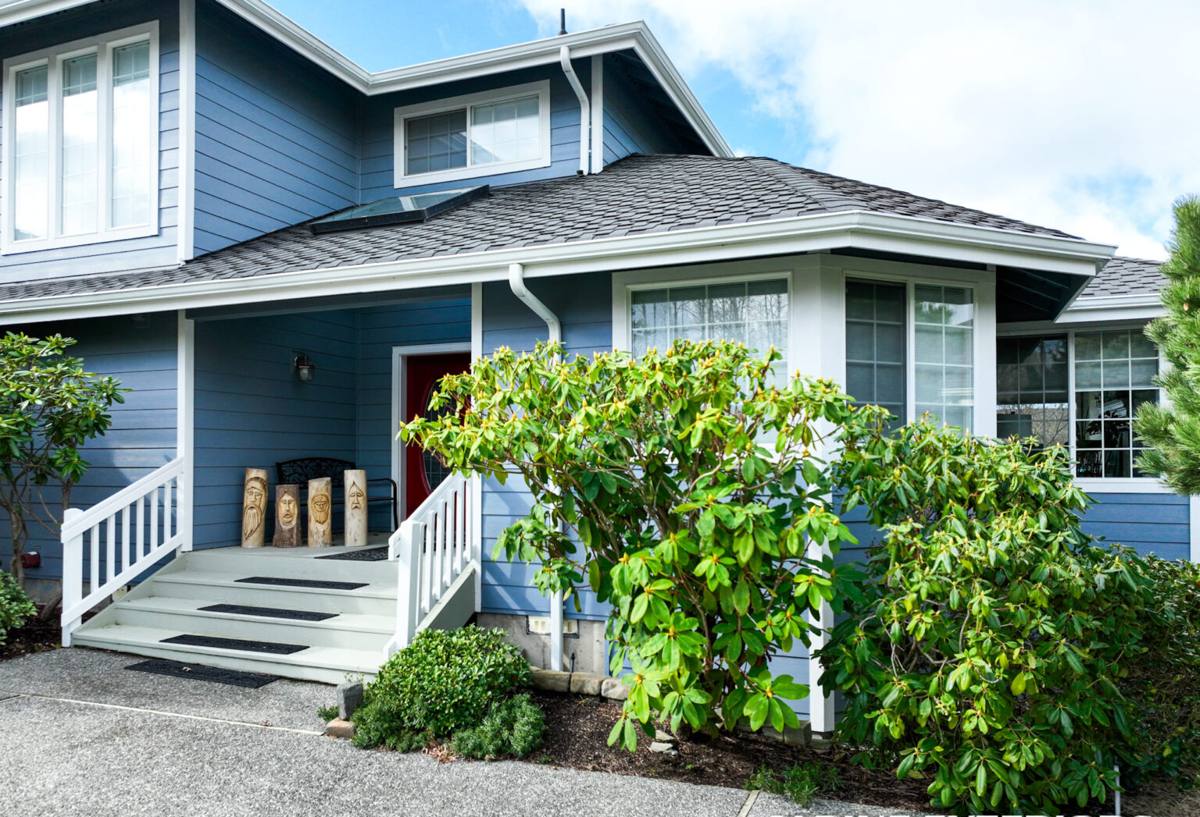
What Happens When Siding Isn't Built for This Environment
A lot of siding problems in Pinellas County don't show up as an obvious failure — they show up slowly, as fading, soft spots, or a slightly warped panel that homeowners assume is just cosmetic. By the time it's visibly wrong, moisture has usually already been getting behind the siding for a while, which is where the real damage happens: rotted sheathing, damaged framing, and interior mold that costs far more to fix than the siding itself.
Signs Your Current Siding Is Losing the Battle
- Panels that feel soft, spongy, or crumble slightly at the edges when pressed
- Visible warping, buckling, or gaps opening up between boards
- Paint that's peeling or blistering repeatedly in the same spots
- Chalky, faded color that wipes off on your hand when you touch it
- Staining or dark streaking near seams, corners, or under windows
- Any soft or discolored drywall or trim on interior walls that back up to exterior siding
Why We Only Install James Hardie Fiber Cement Siding
We install one siding system: James Hardie fiber cement. We don't install vinyl, LP SmartSide, Cemplank, Allura, or primed wood, and that's a deliberate standard, not a lack of options. Each of those products has legitimate uses and reasonable homeowners choose them — but after years of doing exterior work in this climate, we don't think they hold up the way fiber cement does under sustained Gulf Coast sun, salt air, and storm-driven wind and rain, and we'd rather stand behind one system we trust completely than offer several we have reservations about.
The Trade-Offs of the Alternatives
Vinyl siding is affordable and low-maintenance in mild climates, but it's a thin plastic product that can soften, warp, or crack under intense heat and strong wind loads, and it has real limits on how dark a color it can safely be finished in before heat distortion becomes a concern. Wood siding, whether cedar or primed spruce, looks great when it's new but is organic material in a humid climate — it needs consistent repainting and caulking to keep moisture out, and it's the most attractive option in the neighborhood to wood-boring insects and rot once maintenance slips. LP SmartSide and similar engineered-wood products use an OSB substrate with a resin-treated surface; it performs well in many climates, but an OSB core is still wood fiber, and wood fiber's relationship with sustained humidity and water exposure is fundamentally different from a cement-based product's.
| Material | Core Composition | Sun/Heat Behavior | Moisture Behavior | Typical Maintenance |
|---|---|---|---|---|
| James Hardie fiber cement | Cement, sand, cellulose fiber | Won't warp or soften in heat | Doesn't absorb and swell like wood-based products | Occasional wash; ColorPlus finish doesn't need repainting on the manufacturer's cycle |
| Vinyl | PVC plastic | Can warp, sag, or distort in high heat | Sheds water on the surface but seams and channels can trap it | Low, but panels can crack or fade and are hard to spot-repair invisibly |
| Wood (cedar/primed spruce) | Solid wood | UV dries and checks the surface over time | Absorbs moisture; prone to rot without diligent upkeep | Regular repainting/staining and caulking |
| LP SmartSide / engineered wood | Resin-treated OSB (wood strand) | Generally stable, coating can fade | Edge and cut-end swelling if moisture gets past the coating | Repainting on a set cycle; careful caulking maintenance |
James Hardie's Climate-Engineered Line for Florida
James Hardie builds its products in different formulations for different climate zones, and homes here fall into the zone engineered for hot, humid, moisture-heavy conditions like the Gulf Coast. That's a meaningful distinction — it means the product going on a Kenneth City home is formulated for exactly this kind of exposure, not a generic version built for a drier or colder part of the country. On top of that, James Hardie's ColorPlus finish is baked on at the factory in a controlled multi-coat process, which holds color and resists the fading and chalking that plain field-painted siding shows first in Florida's UV, and the company backs the product with a strong limited warranty that's transferable if the home sells.
What a Correct Siding Installation Actually Involves
The siding itself only performs as well as the installation behind it. Most siding failures we're called out to inspect aren't a defect in the panel — they're a detail that was skipped or rushed during installation.
Tear-Off and Substrate Inspection
Old siding comes off down to the sheathing, and that sheathing gets inspected before anything new goes up. Any rot, soft spots, or storm damage found underneath gets repaired first — installing new siding over a compromised substrate just hides the problem for a while longer.
Weather-Resistive Barrier and Flashing
A correctly lapped weather-resistive barrier and properly integrated flashing around every window, door, and penetration is what actually keeps wind-driven rain out, not the siding surface alone. This is the step that matters most in a climate where rain regularly comes in sideways.
Fastening, Clearances, and Caulking to Manufacturer Spec
James Hardie publishes specific fastener types, spacing, and clearance requirements — including gaps at grade, roofing, and other transitions — and following them isn't optional if you want the warranty to mean anything. Correct joint treatment and caulking at seams and trim keeps water from tracking behind the panels during heavy wind-driven storms.
Our Process, Start to Finish
- On-site estimate: we walk the exterior with you, look at the current siding and substrate condition, and talk through product lines and colors.
- Detailed proposal: a written scope covering tear-off, any substrate repair anticipated, the specific Hardie product and finish, and a firm price.
- Permitting: siding replacement typically requires a permit pulled through the local building department before work starts.
- Tear-off and inspection: old siding removed, sheathing checked and repaired as needed.
- Installation to spec: weather barrier, flashing, and Hardie panels installed following manufacturer fastening and clearance requirements.
- Final walkthrough: we inspect the finished job with you and address anything before we consider it done.
- Cleanup: site cleared of old materials and debris.
Cost Factors for a Kenneth City Siding Project
Every home is different, so we don't quote pricing without seeing the house, but a few factors consistently drive the cost of a project up or down.
| Factor | Why It Matters |
|---|---|
| Home size and wall area | More square footage means more material and labor |
| Condition of the existing sheathing | Rot or storm damage found during tear-off adds repair scope |
| Number of stories and access | Second-story and hard-to-access walls take more time and equipment |
| Trim and detail work | Corner boards, window trim, and accent details add labor |
| Product line and finish | Plank profile, panel style, and ColorPlus color selection affect material cost |
Why Hiring a Crew That Already Works in Kenneth City Matters
A crew that regularly works in and around St. Petersburg already understands what this climate does to a house over time, without having to guess or learn on your project. That means knowing how to detail flashing for wind-driven rain, understanding which fastening and clearance details actually hold up through hurricane season, and having a realistic sense of how a permit and inspection process runs in Pinellas County. It also means being reachable afterward — for a warranty question, a follow-up on a detail, or simply because the same company is still doing work in the area next year.
What to Check Before You Hire
- Active Florida contractor license and current liability insurance
- Manufacturer-specific installation experience with the product they're proposing, not just "siding experience" in general
- A written scope of work and firm price, not a verbal estimate
- Willingness to pull the required permit rather than skip it
- A real local presence and references from work in the St. Petersburg area
Maintenance and What to Expect Long-Term
Correctly installed James Hardie siding is a low-maintenance product, not a no-maintenance one. Periodic washing to clear salt residue and organic buildup, prompt attention to any caulking that dries out or cracks at seams and trim, and a visual check after major storms are enough to keep the system performing the way it's designed to. Because the ColorPlus finish is factory-applied rather than field-painted, it holds up to Pinellas County's UV load far longer than a repainted surface, which is one of the main reasons homeowners here choose it over materials that depend on an ongoing paint cycle.
If your siding in Kenneth City is showing its age, took storm damage, or you're planning ahead for hurricane season, we're happy to take a look and walk you through what we'd recommend — with no pressure to decide on the spot. Fill out the form below for a free estimate.