 St. Petersburg Window
 Why Siding Choice Matters More in Shore Acres
Shore Acres sits close to the water, and that proximity shapes everything about how a home's exterior ages. Homes here face a combination most inland Pinellas County neighborhoods don't see at the same intensity: near-constant salt air drifting off Tampa Bay, sun exposure that runs strong essentially year-round, wind-driven rain that gets forced sideways into siding seams and trim during storms, and the occasional hurricane-force wind event that tests every fastener and joint on the exterior. Any one of these factors will wear down a mediocre siding job. Together, they will find the weak point fast.
That's the lens we use when we talk about siding installation in this neighborhood. It's not just about picking a color and nailing up boards. It's about specifying a product and an installation method that were built for exactly this combination of conditions, and installing it the way the manufacturer actually engineered it to be installed — not the fast way.
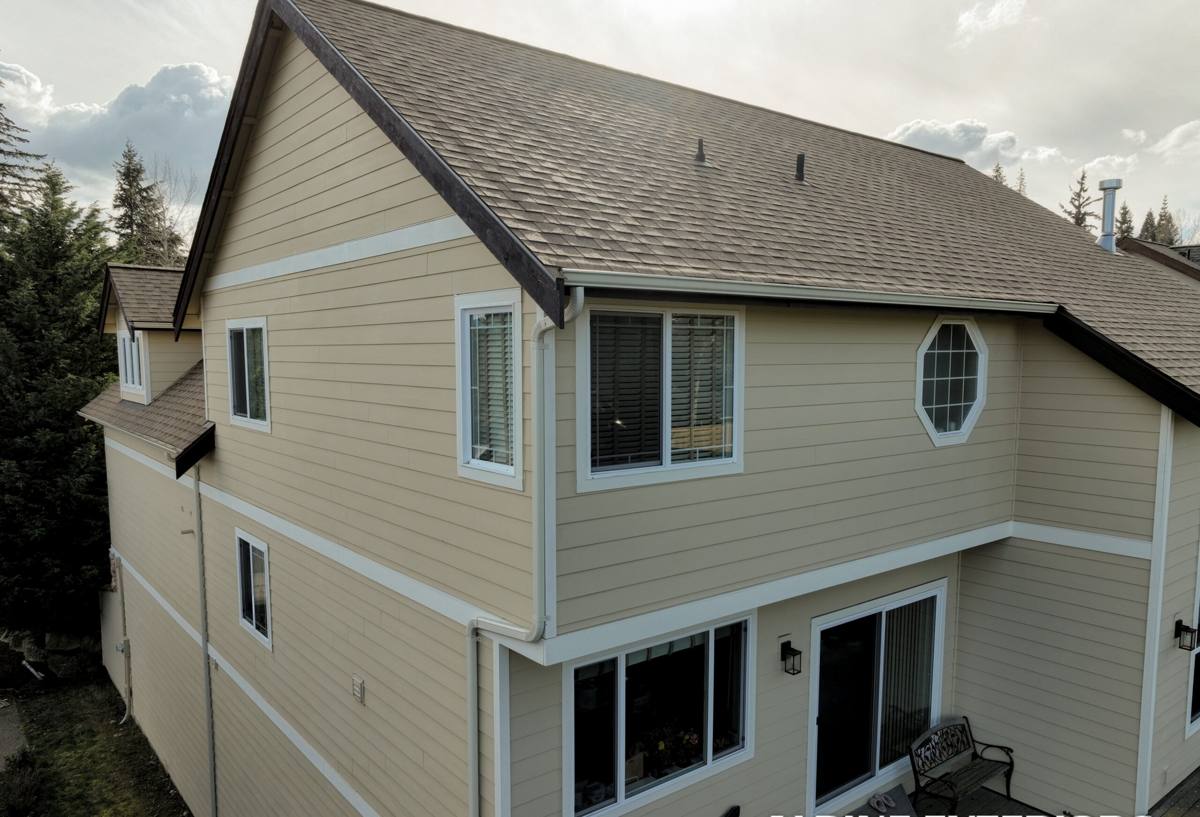
What Shore Acres Homes Actually Need From Their Siding
Moisture Management, Not Just Moisture Resistance
Wind-driven rain doesn't fall straight down — in a coastal storm it comes in at an angle and gets pushed into laps, corners, and penetrations. Siding that isn't installed with proper flashing, weep paths, and clearances will trap that moisture behind the cladding rather than shedding it, and that's where rot, mold, and sheathing damage start. The siding material matters, but the installation details around windows, doors, and butt joints matter just as much.
Salt Air Durability
Salt in the air accelerates corrosion of fasteners and metal trim, and it degrades paint finishes faster than in inland areas. A siding product with a weak factory finish, or a job that used the wrong fastener type, will show chalking, fading, and rust streaking well ahead of schedule in a neighborhood this close to the bay.
UV Stability
Florida sun is intense for most of the year. Siding finishes that aren't formulated for sustained UV exposure fade unevenly, especially on south- and west-facing walls, and that uneven fading is one of the most common complaints we hear about older siding jobs in this area.
Wind Performance
Pinellas County construction has to account for hurricane-force wind loads, and siding is part of that equation. Fastener count, fastener placement, and the siding's own wind rating all factor into whether it stays put in a serious storm or ends up in the yard next door.
Why We Install Only James Hardie Fiber Cement
We made a decision a long time ago to standardize on James Hardie fiber cement siding and stop installing vinyl, LP SmartSide, or other engineered-wood products, even though we get asked about them regularly. That's not a marketing position — it's a practical one, based on what actually holds up in a climate like this one.
Vinyl softens and can warp under sustained heat, and in a storm it's held on with clips rather than a rigid attachment, which limits how well it resists high wind. Engineered wood products use a wood-based substrate that, however well-treated, is still more vulnerable to sustained moisture exposure than a cement-based product, and any breach in the factory coating opens the door to swelling and rot faster than most homeowners expect. Fiber cement doesn't have that vulnerability — it's non-combustible, dimensionally stable in heat and humidity, and doesn't feed rot or insects the way wood-based sidings can.
James Hardie also engineers specific product lines for specific climates. Their HardieZone system exists because siding that performs well in Ohio doesn't necessarily perform well in coastal Florida, and vice versa. Pinellas County falls in the HZ10 zone, built for hot, humid, moisture-heavy conditions — which is the version we install here.
Coastal Siding Options Compared
| Factor | Vinyl Siding | Engineered Wood | James Hardie Fiber Cement |
|---|---|---|---|
| Moisture behavior | Doesn't absorb, but seams and clips can allow water intrusion | Vulnerable if the factory coating is breached | Cement-based, doesn't swell or rot |
| Salt air / coastal exposure | Can chalk and become brittle over time | Coating wears faster in salt air | ColorPlus finish engineered for coastal UV and salt exposure |
| High-wind attachment | Clip-hung; limited wind resistance | Nailed, but substrate can weaken over time | Rigid, direct-fastened installation |
| Fire performance | Combustible | Combustible (wood-based) | Non-combustible |
| Typical repaint/refinish need | Fades, rarely repainted well | Needs recoating as finish wears | Factory finish designed to hold color for years before repaint is needed |
What a Correct Hardie Installation Involves
The product only performs as well as the installation. A rushed or generic install will underperform even the best siding material, and in a climate this demanding, the details are where jobs succeed or fail.
- A water-resistive barrier installed correctly behind the siding, with proper overlaps and no gaps at penetrations
- Flashing at every window, door, and roofline intersection, integrated with the barrier — not just caulked over
- Correct minimum clearance between the bottom of the siding and grade, decks, or roof lines to prevent wicking
- Fastener type, length, and spacing that match Hardie's published specifications for this wind zone, not a generic nailing pattern
- Proper joint treatment at butt seams, using Hardie-approved caulk and technique rather than gapping and hoping paint covers it
- Correct HardieZone product line (HZ10 for this region) and factory ColorPlus finish, so field-painting isn't relied on for long-term color performance
- Attention to inside and outside corners, trim boards, and soffit transitions, since these are common leak points if rushed
None of these steps are optional if you want the siding to perform the way it's designed to. Skipping even one — especially clearance or flashing details — is how a Hardie job ends up with the same moisture problems people install fiber cement specifically to avoid.
How Our Process Works in Shore Acres
1. On-Site Assessment
We walk the home, check the condition of the existing siding and the sheathing underneath where accessible, and look specifically for signs of past moisture intrusion — soft spots, staining, or areas where prior trim work wasn't properly flashed. Waterfront and canal-adjacent lots sometimes need extra attention at the lowest courses of siding, given their exposure.
2. Removal and Substrate Check
Old siding comes off in sections so we can inspect the sheathing as we go rather than covering up a problem that's already there. Any damaged sheathing gets addressed before new material goes up — installing new siding over compromised sheathing just delays a bigger repair.
3. Weather Barrier and Flashing
This is the step that matters most for long-term performance and the one that's easiest to shortcut. We install the water-resistive barrier and integrate flashing at every penetration before a single piece of siding goes up.
4. Hardie Installation to Spec
Panels or planks go up following James Hardie's fastening and clearance requirements for our wind zone, with attention to joint treatment, corners, and trim integration.
5. Final Inspection and Cleanup
We walk the finished exterior looking for anything that needs tightening up — caulking, trim alignment, fastener finish — before we consider the job done, and the site is cleared of old material and debris.
Cost Factors for Shore Acres Homes
Every home is different, but the variables that most often move the price on a siding project in this neighborhood are consistent. We'll always give you an itemized, honest number after a site visit rather than a phone estimate, but this is what tends to matter most:
| Factor | Why It Affects Cost |
|---|---|
| Home size and number of stories | More surface area and access complexity (ladders, lifts) on multi-story homes |
| Existing siding removal | Tear-off and disposal of old material adds labor beyond a straightforward re-side |
| Sheathing or framing repair | Moisture damage found during removal has to be corrected before new siding goes on |
| HardieZone product line and profile | Lap, shingle, and panel profiles vary in material and labor cost |
| Trim, corners, and architectural detail | Homes with more corners, dormers, or trim work take more time to finish correctly |
| Site access | Tight waterfront or canal-front lots can limit equipment access and add labor time |
Maintenance and Warranty Expectations
One reason we standardized on James Hardie is what happens after installation. The ColorPlus factory finish is engineered to resist fading in sustained sun exposure, which matters in a market where UV is strong most of the year, and it carries a manufacturer finish warranty that's transferable if you sell the home. The substrate itself carries a long-term product warranty as well. Compare that to a wood-based product that typically needs re-coating on a shorter cycle, or vinyl that has no real finish warranty once it starts to chalk or fade — the maintenance math favors fiber cement over the life of the home, especially in a coastal setting like this one.
Ongoing maintenance is minimal: periodic rinsing to clear salt residue, keeping an eye on caulked joints over the years, and addressing any impact damage promptly rather than letting a chip sit exposed. That's a much shorter list than what wood-based or vinyl siding typically requires here.
Why It Matters to Hire a Crew That Already Works This Neighborhood
Siding installation isn't uniform across St. Petersburg. A crew that mostly works inland neighborhoods may not default to the flashing details, clearances, and fastening patterns that matter most a few blocks from Tampa Bay. A crew that regularly works Shore Acres and similar waterfront neighborhoods already knows to check for prior water intrusion at specific spots, to size up how much salt exposure a given elevation gets, and to treat flashing and clearance details as non-negotiable rather than optional line items.
That local pattern-recognition doesn't show up on a quote, but it shows up ten years later in whether the siding is still doing its job.
Questions to Ask Before You Hire
- Are you a James Hardie certified or preferred installer, and can you explain why you chose this product?
- Will you inspect and address sheathing condition before installing new siding, not just cover it up?
- What HardieZone product line do you install in this area, and why?
- How do you handle flashing at windows, doors, and roof intersections?
- Do you carry current licensing and insurance, and can you provide proof before work starts?
- Will you pull the required permits for the job?
If your Shore Acres home needs new siding — or you're just trying to figure out whether repair or replacement makes more sense — we're happy to take a look and walk you through it honestly. Reach out for a free, no-pressure estimate using the form below.