 St. Petersburg Window
 Why Decks Fail Faster in Snell Isle
Snell Isle is one of St. Petersburg's waterfront neighborhoods, and that proximity to Tampa Bay is exactly what makes deck construction here different from a typical inland build. Salt-laden air, near-constant UV exposure, and wind-driven rain off the water don't just make a deck look tired faster — they attack the parts of the structure you can't see until something gives. A deck that would hold up for two decades in a drier, inland climate can show serious structural problems in half that time here if it wasn't built with the right materials and hardware from the start.
Salt Air and Corrosion
Airborne salt from the bay settles on every exposed surface, including the fasteners, brackets, and ledger connections holding a deck together. Standard hardware corrodes from the inside of the wood outward, which means a deck can look sound on the surface while its structural connections are quietly failing underneath. This is the single biggest difference between building a deck in a waterfront Pinellas County neighborhood and building one a few miles inland.
UV Exposure
Florida sun is intense and consistent nearly year-round, not seasonal like it is farther north. UV breaks down the lignin in wood fibers and degrades the surface resins in composite and PVC boards over time, leading to graying, fading, splintering, or chalking depending on the material. Decking that isn't rated for this level of sun exposure ages visibly within a few years.
Wind-Driven Rain and Moisture Cycling
St. Petersburg sees heavy, wind-driven rain during storms and hurricane season, and Snell Isle's open waterfront exposure means decks here take that weather more directly than homes further from the bay. Water gets pushed sideways into ledger connections, board gaps, and post bases in a way that vertical rainfall doesn't cause. Combined with Florida humidity, wood framing goes through constant wet-dry cycling that accelerates rot at joints and fastener points if moisture isn't managed correctly.
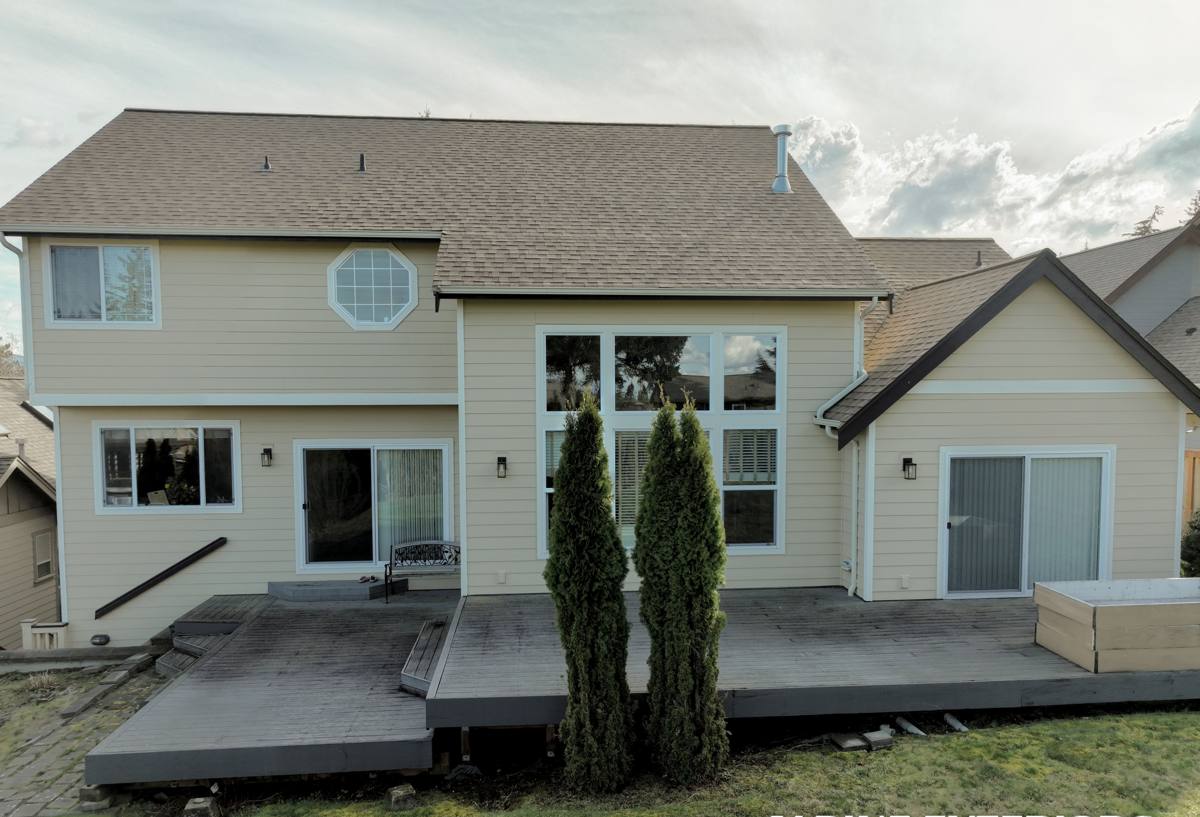
Signs a Deck Needs Replacement, Not Just Repair
Not every aging deck needs a full rebuild — sometimes targeted repairs to a board or a railing section are enough. But when the underlying structure is compromised, patching individual boards just delays a problem that's already spreading. Here's what tells us a deck has moved past the point where repair makes sense:
- Soft, spongy, or visibly rotted spots in the decking or framing, especially near the ledger board or post bases
- Rusted, streaking, or popped fasteners — a sign hardware is corroding and losing grip
- Noticeable bounce, sway, or movement when walking across the deck
- Separation or gaps between the ledger board and the house, which can signal a failing attachment
- Cracked, heaving, or shifting footings and posts
- Graying, splintering, or cupping across most of the decking that sanding and refinishing won't fix
- Code or safety issues flagged during a home sale, insurance inspection, or refinance appraisal
What a Correct Deck Replacement Involves
A deck replacement done right in a coastal Pinellas County setting isn't just swapping old boards for new ones. The materials and details that matter most are largely invisible once the project is finished, which is exactly why they're worth understanding before you hire anyone.
Framing and Fasteners
Framing lumber should be rated for ground contact and coastal exposure, and every fastener — screws, joist hangers, post bases, structural connectors — should be stainless steel or a coating rated for corrosive, high-salt environments. Standard galvanized hardware that's fine inland is often the first thing to fail on a waterfront property like Snell Isle. This is one of the few places on a deck project where cutting corners saves money up front and costs far more later.
Ledger Board and Flashing
The ledger board — where the deck attaches to the house — is the most common point of structural failure on any deck, and it's even more critical in a climate with heavy wind-driven rain. Correct flashing keeps water from working its way behind the ledger and into the house's rim joist or wall framing. This detail gets rushed on budget jobs more than almost any other part of a deck, and it's usually the one that causes the most expensive damage down the line.
Footings Sized for Wind Load
St. Petersburg and the surrounding Pinellas County area fall under Florida's high-wind building code requirements, and open waterfront lots like those on Snell Isle see less wind buffering than inland properties. Footings, post connections, and railing systems need to be sized and anchored to hold up under hurricane-force wind loads, not just support the deck's static weight. This affects footing depth, post spacing, and how railings are attached — details that a generic, one-size-fits-all deck build often skips.
Decking Material Comparison
Material choice matters more here than in a lot of the country, because sun and salt exposure push weaker materials to fail faster. Here's an honest comparison of the main options for this climate:
| Material | Typical Lifespan Here | Maintenance | Salt/UV Resistance |
|---|---|---|---|
| Pressure-treated pine | 10–15 years | Regular sealing/staining needed | Fair — prone to graying, splintering, and fastener corrosion staining without upkeep |
| Tropical hardwoods (e.g., ipe) | 20–25+ years | Periodic oiling to maintain color; low rot risk | Good — naturally dense and rot-resistant, but still grays under UV without maintenance |
| Composite decking | 25–30 years | Low — occasional cleaning | Good — resists rot and splintering, but quality varies by product and cap type |
| PVC/synthetic decking | 30+ years | Very low — cleaning only | Very good — fully resistant to rot, doesn't absorb moisture, holds color well in intense UV |
We don't push one material on every homeowner. Wood costs less up front but demands ongoing maintenance to hold up in this climate. Composite and PVC cost more initially but largely eliminate the sanding, sealing, and re-staining cycle that waterfront sun and salt make necessary with wood. The right call usually comes down to your budget, how much upkeep you want to do, and how the deck fits the look of the house.
Permitting and Code Considerations for Snell Isle Properties
Deck replacements in St. Petersburg require a building permit, and Pinellas County's high-wind zone means plans need to meet current structural and wind-load standards — not just match what was there before. This matters more on a rebuild than most homeowners expect, because a deck built decades ago often doesn't meet today's code for footing depth, railing height, guard spacing, or connection hardware. On waterfront and canal-adjacent lots like those on Snell Isle, setback rules and flood zone considerations can also come into play depending on the property's location relative to the water. We handle the permitting and inspection process as part of the job, so you're not left guessing whether the new deck actually meets code.
Our Deck Replacement Process
- On-site assessment — we look at the existing deck's framing, ledger attachment, footings, and overall condition to confirm replacement is the right call.
- Material and design walkthrough — we go over decking options, railing styles, and layout, with honest trade-offs for your budget and how you use the space.
- Permitting — plans are prepared and submitted to meet current Pinellas County wind-load and building code requirements.
- Demolition and disposal — the old deck is removed and hauled away, with attention to protecting landscaping and the surrounding property.
- Framing and structural work — corrosion-resistant hardware, properly flashed ledger connections, and footings sized for coastal wind loads.
- Decking and railing installation — installed to manufacturer spec so warranties stay valid.
- Final inspection and walkthrough — we confirm the permit inspection passes and walk the finished deck with you before calling the job done.
Why Hire a Crew That Already Works Snell Isle
Waterfront neighborhoods like Snell Isle come with details a crew only learns by working them repeatedly: tighter lot access on canal-front properties, foundation and dock proximity considerations, the specific way wind and salt exposure hits homes closer to open water versus those set back from it, and how St. Petersburg's permitting process handles waterfront and flood-zone properties. A contractor who's done this work in the neighborhood before isn't guessing at footing depth or hardware specs — they already know what holds up here and what doesn't. That local familiarity translates into fewer surprises during the permit process and a deck that's actually built for the conditions it's going to face, not just a generic spec pulled from an inland job.
What Replacement Typically Costs
Cost depends heavily on deck size, material choice, framing complexity, and site access — a straightforward wood rebuild and a large multi-level composite or PVC deck with built-in railings and lighting sit at very different price points. As a broad guide, many full deck replacements in this area run from the lower thousands for a smaller wood deck up to well over $20,000 for a large synthetic-decking project with custom features. We'll give you an itemized number specific to your property rather than a generic estimate, since site access, framing condition, and material choice all move the final price meaningfully.
If your deck is showing its age or you're not sure whether it needs repair or full replacement, we're happy to take a look. We offer free, no-pressure estimates for Snell Isle homeowners — no obligation, just an honest read on where your deck stands and what it would take to get it right for this climate.