 St. Petersburg Window
 Siding Built for Historic Kenwood's Bungalows and Cottages
Historic Kenwood is one of St. Petersburg's older residential neighborhoods, known for its concentration of Craftsman bungalows, Mediterranean Revival cottages, and early-20th-century frame construction. Homes like these were built long before modern wind codes, house wraps, or engineered siding products existed, which means the siding on a Kenwood home is doing more than covering the walls — it's often the last line of defense for framing and sheathing that is decades older than anything you'd find in a new subdivision. When that siding fails or was installed wrong to begin with, the damage underneath is usually further along than it looks from the curb.
This page is about one job, done right, in one neighborhood: siding installation for Historic Kenwood homes. Not a general overview of siding, not a citywide pitch — the specific realities of installing siding correctly on the kind of house you'll actually find in this part of St. Petersburg.
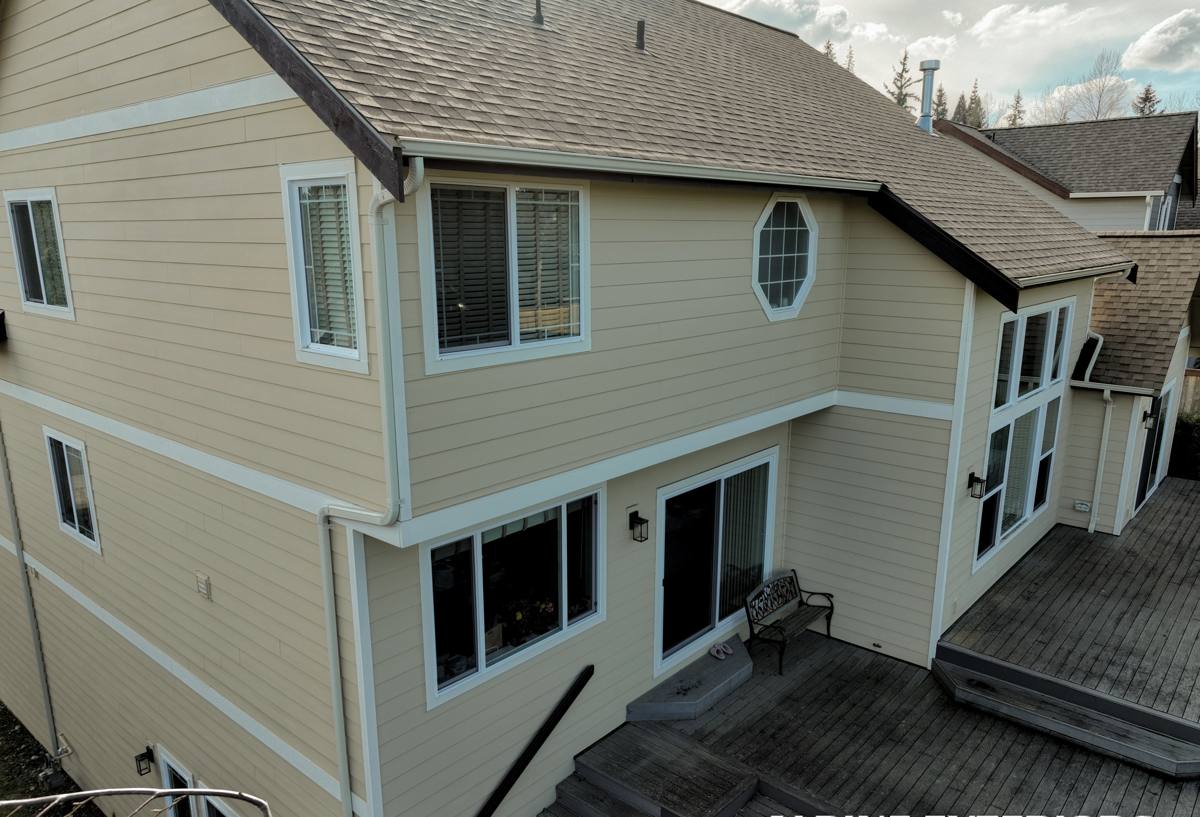
What Pinellas County's Climate Does to Siding Over Time
Every siding product sold in Florida is marketed as being able to handle "Florida weather." In practice, four separate stresses hit a Kenwood home's exterior year-round, and most siding failures trace back to one of them.
Hurricane-Force Wind
Pinellas County sits on a peninsula, and wind exposure here isn't limited to named storms — sustained coastal wind and gusts load siding and its fasteners constantly. Siding that isn't fastened to the manufacturer's wind-zone spec can loosen, crack at the nail line, or blow off outright, and older homes with original or long-since-modified sheathing are especially exposed if the substrate underneath wasn't checked before the new siding went up.
Intense, Year-Round UV
St. Petersburg gets sun exposure most of the country doesn't see even in peak summer, and it doesn't let up in winter the way it does further north. Paint film breaks down faster here, and siding finishes that aren't factory-cured for UV resistance chalk, fade, and need repainting far sooner than their rated lifespan suggests.
Wind-Driven Rain
Rain in this region rarely falls straight down. Wind pushes it sideways and up under laps, around trim, and into any gap in the flashing or caulk joints. On a house with original wood trim and additions built at different times, wind-driven rain finds every seam where materials meet — which is exactly where a siding installer's attention to detail either pays off or doesn't.
Salt Air
St. Petersburg isn't directly oceanfront in most areas, but Kenwood is close enough to Tampa Bay and the Gulf that salt-laden air is a constant, low-grade corrosive. It accelerates the breakdown of fasteners, metal flashing, and paint film, and it's part of why fastener selection and flashing material matter as much as the siding board itself.
The Historic District Factor
Kenwood's character comes from consistency: narrow lap reveals, deep eaves, decorative trim details, and a scale of home that newer siding products weren't designed to replicate convincingly. Replacing siding here isn't just a performance decision, it's a preservation-of-character decision, whether or not the property carries formal historic designation. A siding job that looks "fine" from the street but uses the wrong exposure width, the wrong trim profile, or a texture that reads as obviously modern can quietly work against the value of the home relative to its neighbors.
The other side of the historic-district factor is what's underneath the old siding. Homes of this era were often built with board sheathing, balloon framing, or additions stitched on over multiple decades. A contractor unfamiliar with that construction can misjudge fastening, miss rot hidden behind old trim, or assume modern spacing and clearances where none exist. Getting this right takes more than a crew that installs siding well in general — it takes a crew that has actually opened up walls on houses this age and knows what to expect before they start.
Why We Install Only James Hardie Fiber Cement
We made a deliberate decision not to install vinyl, LP SmartSide, or other engineered wood and composite sidings, even though all of them have a place in the market. In a climate that combines hurricane wind exposure, constant UV, wind-driven rain, and salt air, the trade-offs of those products — heat distortion in vinyl, moisture sensitivity at cut edges and seams in wood-based composites, shorter field-applied paint life — show up faster here than in milder climates. James Hardie fiber cement is non-combustible, doesn't expand and contract with heat the way vinyl does, and its ColorPlus factory finish is baked on and warrantied against fading and peeling, which matters enormously under Pinellas County sun. Hardie's HZ5 product line is engineered specifically for high-humidity, high-moisture climates like Florida's, which is the formulation we use here. It's also backed by a strong transferable limited warranty when installed to Hardie's specifications — which is the other half of the equation, because a great product installed wrong doesn't perform like a great product.
What a Correct Siding Installation Actually Involves
Fiber cement siding is only as good as the work that happens before the first board goes up and the details that get handled at every seam. On a Kenwood home, that means:
Substrate Inspection and Repair
Every removal exposes the sheathing, framing, and any prior water damage. On homes this age, we expect to find at least some soft or compromised wood, especially around old window and door openings. That gets repaired or replaced before anything new goes on — covering a rotten substrate with new siding just hides the problem for a few more years.
Moisture Barrier and Flashing
A weather-resistant barrier goes over the sheathing, and flashing gets installed at every window, door, and roofline intersection — the exact spots where wind-driven rain gets pushed. This is also where older additions and roof tie-ins need the most attention, since those transitions are rarely straightforward on a house that's been modified over the decades.
Fastening to Manufacturer Spec
Hardie publishes specific fastener type, spacing, and placement requirements, and those requirements shift based on wind exposure. We fasten to spec for this coastal wind zone, not a generic national default — this is one of the most common places corners get cut, and it's invisible until a storm tests it.
Trim, Joints, and Clearance
Proper clearance from grade, roofing, and decking; correctly caulked or flashed joints; and trim profiles that suit the home's original lines rather than a generic modern reveal. These details are what separate a job that looks right and performs right for decades from one that looks fine at closeout and starts showing problems in two or three years.
Our Process, Start to Finish
- Inspection and estimate — we walk the exterior, check for soft sheathing or trim from the ground and any accessible points, and discuss what your specific home needs.
- Scope and product selection — plank style, exposure width, trim profile, and ColorPlus color selected to suit the home's character, with a written scope before anything is signed.
- Tear-off and substrate assessment — old siding comes off, and we stop to address any rot or damage found before continuing.
- Weather barrier, flashing, and installation — installed to Hardie's specification for this climate and wind zone, not a generic national default.
- Trim, caulking, and final detailing — the joints, corners, and transitions that determine how the job performs in wind-driven rain.
- Final walkthrough — we go over the finished work with you before calling the job done.
What Drives the Cost of a Kenwood Siding Job
| Cost Factor | Why It Matters Here |
|---|---|
| Home size and number of stories | More surface area and higher elevations mean more material, labor, and equipment |
| Substrate condition | Rot or damaged sheathing on older homes adds repair scope that isn't visible until tear-off |
| Architectural detail | Gables, dormers, and decorative trim common on bungalows take more time to fit correctly |
| Trim and reveal matching | Matching original lap exposure and trim profile takes more planning than a standard install |
| Access and lot constraints | Mature landscaping, narrow side yards, and close neighboring structures affect staging and labor |
| Color selection | Custom or historic-appropriate ColorPlus finishes may involve different lead times than stock colors |
Why a Crew That Already Works Historic Kenwood Matters
A siding crew that hasn't worked on homes this age in this neighborhood is guessing at things a local crew already knows: what the framing typically looks like once you open the wall, how the county's wind and building code requirements apply to older structures, what permitting looks like for exterior work in St. Petersburg, and what a Kenwood home's proportions call for so the finished product doesn't look out of place next to its neighbors. That familiarity shows up in fewer surprises during the job and a finished result that respects the character of the block, not just the performance specs of the product.
Questions Worth Asking Before You Hire
- Will you inspect and repair the sheathing before installing new siding, and is that spelled out in the written scope?
- What fastener type and spacing will you use, and is it matched to this area's wind exposure?
- What flashing details will you use at windows, doors, and roof intersections?
- Can you match a trim profile and lap exposure that suits a bungalow rather than a generic modern look?
- Is the manufacturer's warranty backed by proper installation, and what happens if that's ever in question later?
- Have you worked on homes of this age and construction type before, and what did you find once walls were opened?
If your Historic Kenwood home needs new siding — whether it's failing, storm-damaged, or just due — we're happy to take a look and give you a straight answer about what your home actually needs. Reach out for a free, no-pressure estimate using the form below.