 St. Petersburg Window
 Historic Old Southeast sits close enough to Tampa Bay that its roofs live a harder life than roofs a few miles inland. Between the salt-laden air rolling off the water, the UV load Pinellas County gets almost every day of the year, and the wind-driven rain that comes with our hurricane season, roofing materials here age faster and fail in different ways than they would in a drier, cooler climate. Add in the age and architectural character of many homes in this neighborhood — bungalows, Mediterranean Revivals, and mid-century houses with original or older re-roofs — and roof repair in this part of St. Petersburg calls for someone who understands both the climate and the housing stock.
This page covers what roof repair actually involves for homes in Historic Old Southeast, what tends to go wrong here specifically, and how we approach the work.
Why Roofs in This Neighborhood Wear Differently
Every roof in Pinellas County deals with sun, rain, and wind. What changes block to block is the mix and the intensity. Historic Old Southeast's proximity to the water means salt air is a constant, low-grade factor working on metal fasteners, flashing, and any exposed hardware. Combine that with intense year-round UV exposure and you get shingles, underlayment, and sealants that break down faster than the manufacturer's stated lifespan would suggest — especially on roofs that were installed with standard-grade materials rather than anything upgraded for coastal exposure.
Wind-driven rain is the other piece. It's not just about how hard it rains — it's the angle. During tropical storms and hurricanes, rain gets pushed sideways and upward under normal roof edges, ridge caps, and around penetrations like vent pipes and chimneys. A roof that would shed water fine in a straight-down rainstorm can still let water in during a wind event if flashing details and seals aren't right. That's a big part of why repair work here isn't just "patch the hole" — it's making sure the roof holds up when wind and rain hit at the same time.
What This Means for Older Roof Structures
Many homes in this neighborhood have roof decking and framing that predates current building codes. That's not automatically a problem, but it does change what a repair crew needs to check. Older decking can have different nailing patterns, different spacing, and in some cases past patch jobs stacked on top of each other over the decades. A repair that only addresses the visible symptom — a stain on the ceiling, a lifted shingle — without checking what's underneath can leave hidden damage to keep spreading.
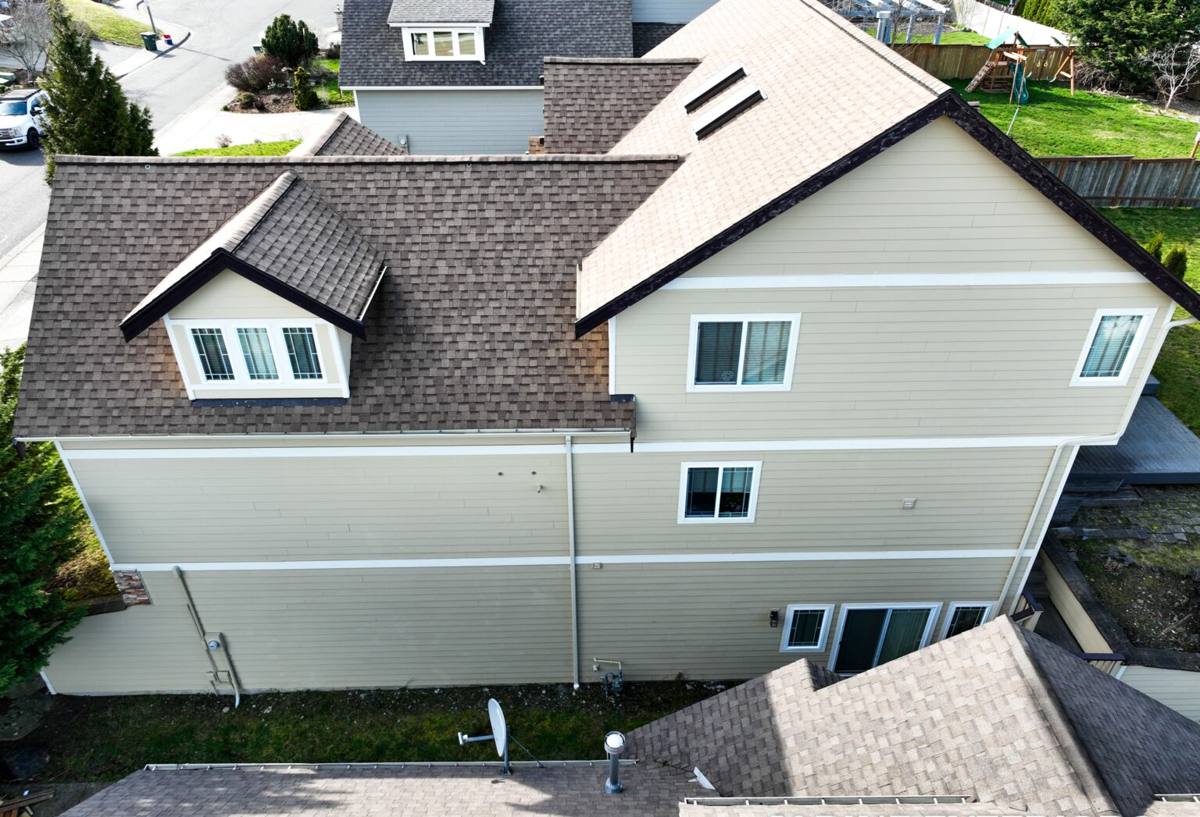
Common Roof Repair Issues We See in This Area
- Flashing failure around chimneys, vent stacks, and roof-to-wall transitions — often the actual source of a leak that looks like it's coming from somewhere else
- Cracked or lifted shingles from UV embrittlement — shingles that have gone brittle from years of intense sun no longer flex, they crack
- Corroded fasteners and metal flashing — salt air accelerates rust on nails, screws, and exposed metal, weakening the roof's grip on itself
- Wind-lifted shingle tabs and ridge caps — a common aftermath of tropical storm winds, sometimes not visible from the ground
- Deteriorated pipe boots and sealant — rubber and sealant around plumbing vents break down from UV and heat faster than the shingles around them
- Soft or delaminated decking — usually found once we're up on the roof, from long-term slow leaks that went unnoticed
- Granule loss on aging shingles — a sign the shingle's protective layer is wearing thin and its remaining service life is shorter than it looks from the street
What a Correct Roof Repair Actually Involves
A roof repair done right starts with figuring out where the water is actually getting in — not just where it's showing up inside the house. Water can travel along rafters or decking for several feet before it drips through a ceiling, so the interior stain and the exterior entry point are often not in the same spot. That's the first job: trace it back to the source.
Assessment
We inspect the roof surface, flashing points, and any visible penetrations, and where there's evidence of a leak, we check the attic or roof deck from underneath when accessible. This tells us whether we're dealing with a contained, single-point failure or something that's been slowly spreading.
Repair Scope
Depending on what we find, repair work might involve:
- Replacing damaged or missing shingles and matching them as closely as possible to the surrounding roof
- Re-flashing chimneys, walls, or roof valleys where the original flashing has failed or was installed incorrectly
- Resealing and, where needed, replacing pipe boots and vent collars
- Repairing or replacing sections of decking that have gone soft from water intrusion
- Securing or replacing wind-lifted shingle tabs and ridge cap sections
Verification
Once repairs are made, we check that the repaired section ties in properly with the surrounding roof — a patch that isn't integrated correctly with adjacent shingles and flashing can just create a new leak point somewhere else down the line.
Repair vs. Replacement: How We Help You Decide
Not every roof problem calls for a full replacement, and not every leak can be permanently fixed with a patch. The honest answer depends on the roof's age, how widespread the damage is, and how many past repairs have already been layered onto it.
| Factor | Leans Toward Repair | Leans Toward Replacement |
|---|---|---|
| Roof age | Under 15 years, no major storm history | Approaching or past typical shingle lifespan |
| Damage extent | Isolated to one section or penetration | Spread across multiple areas of the roof |
| Decking condition | Solid, dry decking under the damaged area | Soft or delaminated decking in multiple spots |
| Repair history | First or second repair on this roof | Long history of patches in different areas |
| Granule/shingle condition elsewhere | Rest of roof still has good granule coverage | Widespread granule loss and brittleness |
We'll tell you plainly which side of that table your roof falls on. If a repair will genuinely hold up, we're not going to push a replacement — but if the roof is close to the end of its service life, we'd rather tell you that up front than have you pay for a repair that buys you six months.
Timing Repairs Around Florida's Storm Season
In Pinellas County, roof repair timing matters more than it might elsewhere. If you've spotted a leak or storm damage during hurricane season, getting it addressed before the next system comes through is worth prioritizing — a small, contained leak can turn into a much bigger problem if wind-driven rain gets into the same weak point during a stronger storm. Outside of storm season, it's also a good window to catch and fix UV and age-related wear before it becomes an active leak.
Why Local Experience in Historic Old Southeast Matters
A crew that regularly works in this neighborhood has already seen how its housing stock ages under coastal Florida conditions — what flashing details tend to fail first, where salt air does the most damage, and how older decking typically holds up. That familiarity means less time spent guessing and more time spent fixing the actual problem. It also means we're not applying a one-size-fits-all repair approach that ignores the specific conditions a St. Petersburg roof faces versus a roof somewhere inland or in a different climate entirely.
What to Expect From Our Process
- A straightforward roof assessment, including checking for the true source of any leak, not just the visible symptom
- A clear explanation of what we found, in plain language, including whether repair or replacement makes more sense
- An honest, written estimate before any work begins — no pressure, no scare tactics
- Repair work using materials and techniques suited to coastal Pinellas County conditions, not generic minimum-standard fixes
- A final check to confirm the repair is properly tied into the surrounding roof system
A Practical Checklist Before You Call a Roofer
- Note where and when you first saw the leak or damage (during a storm, after high winds, gradually over time)
- Check your attic, if accessible, for staining, damp insulation, or daylight coming through the decking
- Take note of the roof's approximate age or installation date if you know it
- Avoid climbing onto the roof yourself to inspect it — leave that to someone with the right equipment and experience
- Don't ignore small stains or missing shingles — they rarely stay small, especially heading into storm season
Get an Honest Assessment
If you're seeing signs of roof damage — a stain on the ceiling, missing or lifted shingles, or storm damage from a recent system — we're happy to take a look and give you a straight answer about what's going on and what it'll take to fix it. Reach out for a free, no-pressure estimate using the form below.