 St. Petersburg Window
 Why Decks Age Faster in Old Northeast
Old Northeast is one of St. Petersburg's older, more established neighborhoods, and that history shows up in ways that matter to a deck. Mature tree canopy keeps yards shaded and cooler, but it also means more leaf litter, more standing moisture on deck boards after a storm, and slower drying between rain events. Add in the home stock — many houses in this part of Pinellas County were built well before today's deck framing and fastening standards existed — and it's common to find decks that were added or rebuilt over the years without a full permit, proper footings, or corrosion-rated hardware.
Layer on the regional climate and the wear accelerates. St. Petersburg sits close enough to the water that salt-laden air reaches inland neighborhoods like this one, attacking any fastener, bracket, or nail that isn't rated for it. Intense, near-constant UV breaks down wood fibers and degrades lower-grade composite decking over time. Wind-driven rain during summer storms and hurricane season pushes moisture into joints and connections that were never meant to get wet. None of this is unique to any one yard — it's the baseline every deck in this area is working against.
Signs a Deck Needs Replacement, Not Just Repair
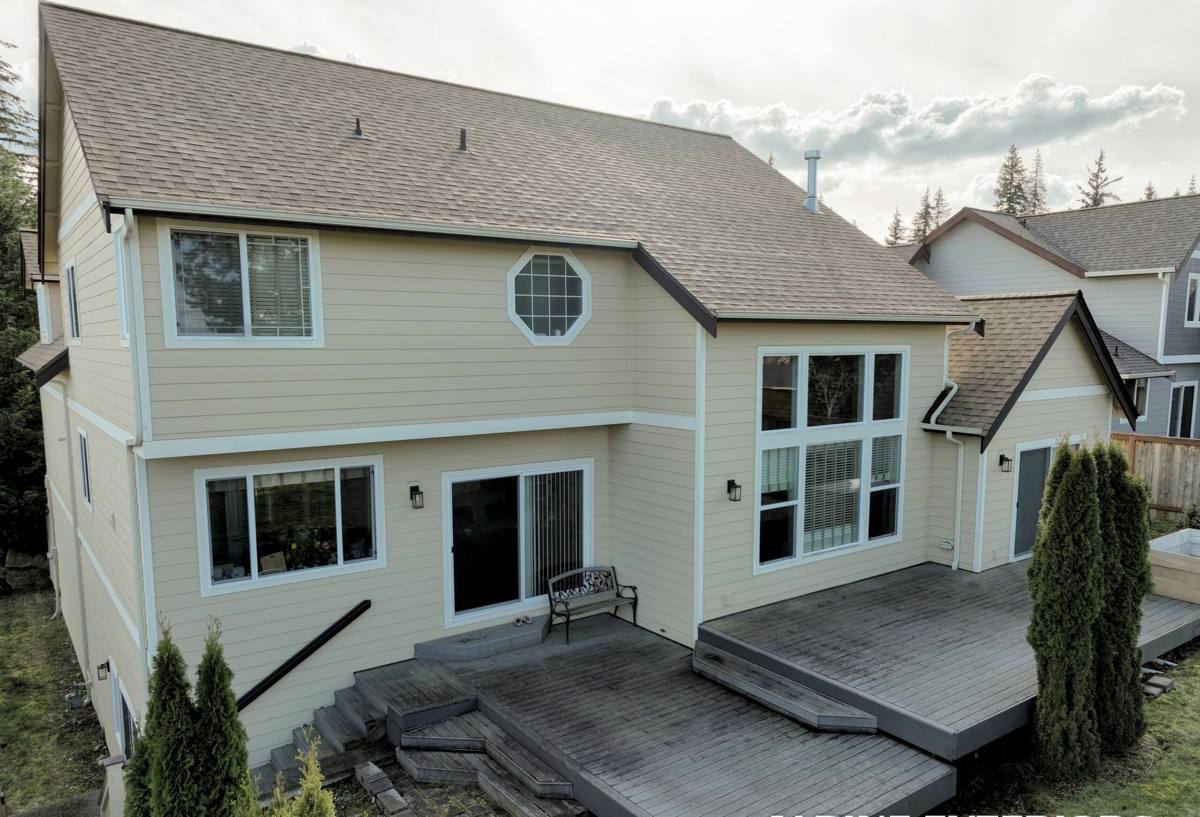
Not every tired-looking deck needs to come out. But there's a real difference between a deck that needs a few boards swapped and one that's a liability. The most reliable way to tell is to look past the surface and check the structure underneath.
- Soft, spongy, or bouncy spots when you walk across the deck
- Ledger board pulling away from the house, or visible gaps at the house connection
- Rust streaks running down from screws, nails, or brackets
- Wood that's gray, splintering, or soft enough to push a screwdriver into
- Wobbly railings or posts that move when pushed
- Footings that are cracked, heaving, or clearly undersized for the deck above them
- No visible permit history or structural upgrades despite the deck being decades old
If it's just a handful of surface boards showing UV wear, repair can make sense. If the framing, ledger connection, or footings are compromised, patching the surface just hides the problem — it doesn't fix it.
What a Correct Deck Replacement Actually Involves
It Starts Below the Boards
A deck is only as good as what you can't see. A correct replacement means removing the old structure down to (and often including) the footings, then rebuilding with framing sized for the actual load the deck will carry — furniture, grills, hot tubs if applicable, and the number of people who'll realistically be on it at once. In Florida, that framing also has to account for wind uplift, not just weight bearing down.
The Ledger Connection
The ledger board — where the deck attaches to the house — is the single most common failure point on older decks. It needs proper flashing to keep water from tracking behind it into the house structure, and it needs to be through-bolted with hardware rated for the fastening, not just nailed or lag-screwed on the cheap. A deck that's structurally attached wrong is a deck that can fail catastrophically, not gradually.
Footings and Posts
Footings need to be sized and set to local frost-free and load requirements (Florida's advantage is no real frost line, but soil type and drainage still matter), and posts need proper post bases that keep wood off standing water — a real issue in shaded, poorly draining yards common to this neighborhood.
Fasteners and Hardware
This is where salt air punishes shortcuts. Every screw, joist hanger, hurricane tie, and bolt should be rated for coastal or exterior exposure — stainless steel or a heavy-duty coated fastener designed to resist corrosion, not standard galvanized hardware that starts rusting within a season or two this close to the coast.
Material Options for St. Petersburg's Climate
There's no single "best" decking material — there's a best fit for how the deck is used, how much upkeep the homeowner wants to do, and what budget makes sense. Here's how the common options hold up under Pinellas County sun, humidity, and salt air.
| Material | UV / Sun Resistance | Moisture Behavior | Maintenance |
|---|---|---|---|
| Pressure-treated wood | Fades and grays without regular sealing | Absorbs moisture; prone to warping and rot at connections if not sealed | Annual cleaning and resealing recommended |
| Composite decking | Generally strong, though quality varies by product line | Resists rot; some older or lower-grade composites can absorb moisture at cut ends | Periodic washing; no sealing or staining |
| Capped/PVC decking | Very strong UV resistance from the cap layer | Fully resists moisture absorption | Lowest — occasional washing only |
| Tropical hardwoods | Naturally dense and durable if maintained | Good moisture resistance but needs oiling to prevent graying | Higher — periodic oiling to maintain appearance |
We don't push any one material on every homeowner. Wood costs less upfront but demands the most upkeep in this climate. Capped composite or PVC decking costs more initially but holds up better against sun and moisture with far less maintenance over the life of the deck — for a lot of Old Northeast homeowners who want to actually enjoy the deck instead of maintaining it, that trade-off is worth discussing honestly before you decide.
Our Deck Replacement Process
- On-site assessment — we inspect the existing deck's framing, ledger connection, footings, and hardware to determine what's actually driving the failure, not just what's visible from the top.
- Honest scope and estimate — you get a clear picture of what's being replaced, what materials are recommended and why, and a real cost range before any work starts.
- Permitting — we handle the permit application and inspections required for the city and county, so the finished deck is documented and code-compliant.
- Demolition and haul-away — the old structure comes out cleanly, including footings if they're undersized or damaged.
- Framing and structural build — new footings, posts, joists, and a properly flashed, through-bolted ledger connection.
- Decking, railing, and fastening — installed with corrosion-rated hardware appropriate for coastal exposure.
- Final walkthrough and inspection sign-off — you see and approve the finished work, and it passes the required inspections.
Permitting and Code in Pinellas County
Deck replacement in St. Petersburg generally requires a building permit, and for good reason — it's a structural project attached to your home, built to withstand wind loads that matter in a hurricane-prone part of Florida. Skipping the permit might save time up front, but it creates real problems later: unpermitted structural work can complicate a home sale, void insurance coverage in a claim, and leave you with no record that the framing was ever inspected. A licensed, local contractor pulls the permit, schedules the required inspections, and builds to the wind and load standards that apply in this county — not generic national minimums.
What Drives the Cost of a Deck Replacement
| Factor | Why It Matters |
|---|---|
| Deck size and shape | More square footage and complex angles mean more material and labor |
| Decking material chosen | Wood, composite, and PVC span a wide cost range, both upfront and over time |
| Height and stairs | Elevated decks and multi-run stairs add framing, railing, and code requirements |
| Condition of existing footings | Reusing sound footings costs less than removing and repouring undersized ones |
| Railing style | Cable, glass, and custom railing systems cost more than standard baluster railing |
| Site access | Tree canopy, tight side yards, or fencing can slow demolition and material staging |
We won't quote a number without seeing the deck — anyone who does is guessing. What we can tell you honestly is that the material choice and the condition of what's underneath the old boards are usually the two biggest swings in the final price.
Protecting a New Deck After Replacement
A well-built deck still needs some basic upkeep to get its full lifespan out of this climate.
- Rinse off leaf litter and debris regularly, especially under tree canopy where it collects and holds moisture
- Check fastener heads and railing connections once or twice a year for early rust or looseness
- Keep gutters and downspouts directing water away from the deck footings, not onto them
- If you chose wood decking, plan on resealing on a regular schedule to fight UV and moisture
- After major storms, do a quick visual check of the ledger connection and railing before heavy use
Why It Matters to Hire a Crew That Already Works Old Northeast
A deck built to a generic national code minimum isn't necessarily built for this yard. A contractor who regularly works in Old Northeast has already seen how tree canopy affects drainage on lots like yours, how salt air chews through the wrong hardware within a couple of years, and what the city and county actually look for at inspection — not just what's technically allowed. That local pattern recognition is the difference between a deck that needs attention again in five years and one that holds up through a decade of Gulf Coast sun, storms, and humidity.
If your current deck is showing its age — or you're not sure whether it needs repair or full replacement — we're happy to take a look and give you a straight answer. Reach out for a free, no-pressure estimate using the form below.