 St. Petersburg Window
 Board and batten is one of the most requested siding profiles we install in Seminole, and for good reason — the vertical lines and deep shadow lines give a home real architectural character, whether it's dressing up a full elevation or accenting a gable, porch, or garage face. But in Pinellas County, board and batten is also one of the profiles where the difference between a correct installation and a shortcut installation shows up fastest. The vertical battens create more seams, more fastener points, and more places for water to find a way in if the job isn't detailed right. This page covers what that correct installation actually looks like, and why it matters more here than almost anywhere else in Florida.
Why Seminole's Climate Is Hard on Board & Batten Siding
Seminole sits close enough to Boca Ciega Bay and the Gulf that salt-laden air is a constant, not an occasional event. Add in the summer stretch of intense, near-daily UV exposure, the wind-driven rain that comes with every seasonal thunderstorm, and the real risk of hurricane-force winds during storm season, and you've got a combination that stresses exterior siding on every axis at once: chemically (salt corrosion), physically (wind uplift and flying debris), and dimensionally (thermal cycling and moisture swings).
Board and batten amplifies whatever weaknesses a siding material already has, because of how it's built. A traditional lap siding panel is one continuous horizontal plane with overlapping courses shedding water downward. Board and batten is built from vertical boards with battens covering the seams between them — which means there are far more vertical joints running the full height of the wall, each one a potential water path if it isn't installed and caulked correctly. On a coastal, storm-exposed property like the ones we work on in Seminole, that detail work isn't optional — it's the entire ballgame.
What Happens When It's Installed Wrong
- Battens face-nailed without accounting for expansion and contraction, leading to cracked caulk lines and hairline gaps within a couple of seasons
- Insufficient or incorrect fastener spacing that can't hold against sustained hurricane-force gusts
- Butt joints that aren't backed or flashed, letting wind-driven rain track behind the cladding
- Bottom starter courses installed too close to grade or hardscape, wicking moisture during Florida's heavy rain events
- Caulk and paint systems that aren't rated for constant UV and salt exposure, chalking and failing years ahead of schedule
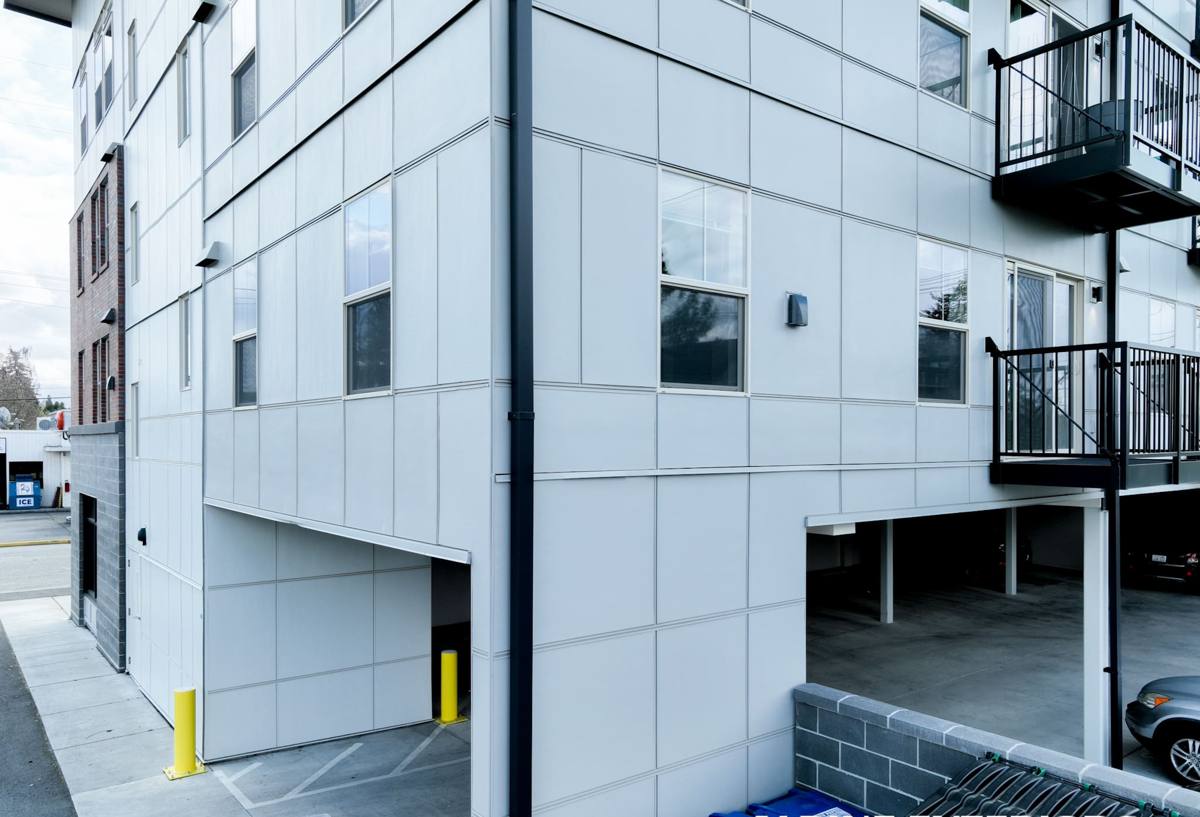
Why We Only Install James Hardie for This Profile
Board and batten is available in vinyl, engineered wood, and fiber cement, and we've made a deliberate call to install only James Hardie fiber cement on every home we side — this profile included. It comes down to how each material actually behaves once it's on a Seminole exterior for years, not just how it looks on day one.
Vinyl board and batten is lightweight and inexpensive, but it's also a poor match for our wind zone. Vinyl panels are engineered to flex, which is fine in mild climates but becomes a liability when gusts start pulling at fastener points; sun exposure here also accelerates fading and brittleness in vinyl faster than in cooler regions, so panels installed on a south or west elevation often look noticeably different from shaded ones within a few years. Engineered wood products get closer to the authentic board and batten look, but they carry a wood-based core that depends entirely on an intact factory coating and perfect field sealing at every cut edge — miss one spot in a caulking job, especially on a high-seam profile like this, and moisture has a direct path into the substrate.
James Hardie fiber cement is non-combustible, dimensionally stable in heat and humidity swings, and doesn't rely on an unbroken paint film to keep water out the way wood-based products do. Hardie's ColorPlus factory finish is baked on and warrantied against fading and peeling, which matters a great deal under Pinellas County's UV load. It's also simply heavier and stiffer than vinyl, which helps it perform better against wind loading when it's fastened correctly. We stopped installing everything else because we didn't want to keep telling homeowners we'd have to replace it sooner than they expected.
What a Correct Board & Batten Installation Involves
Substrate and Moisture Barrier
Before a single board goes up, the wall needs a code-compliant weather-resistant barrier, correctly lapped and taped at every seam, with all penetrations (outlets, hose bibs, vents) properly flashed. On a board and batten wall, this barrier is doing more work than it would under lap siding, simply because there are more vertical seams above it.
Layout and Fastening
Board and batten needs a fastening schedule that accounts for our wind zone, not a generic national spec. That means correct fastener type, spacing, and embedment into structural framing — not just into sheathing — at every board and every batten. We also plan board widths and starter placement before installation begins so seams land where they're least visible and best protected.
Joints, Caulking, and Sealants
Every vertical joint gets backed properly rather than simply caulked over a gap, and we use sealants rated for sustained sun and salt exposure — not a generic caulk that will start cracking within a season or two of Pinellas County summers.
Clearances
Proper clearance from roof lines, decks, and grade keeps the bottom of the siding from sitting in standing water after the area's frequent heavy rain. This is one of the most commonly skipped details on rushed jobs, and it's one of the first places we check on any home we're re-siding in Seminole.
Our Process on a Seminole Board & Batten Project
- On-site assessment — we walk the home, check the existing substrate condition, and identify problem areas like moisture-damaged sheathing before a plan is finalized
- Design and layout — board width, reveal, and batten spacing are planned to fit the home's proportions, not just applied generically
- Product and color selection — choosing the right Hardie panel line and ColorPlus finish for the home's exposure
- Tear-off and substrate repair — any compromised sheathing or framing is addressed before new siding goes up, never covered over
- Weather barrier installation — correctly lapped and taped, with all penetrations flashed
- Board and batten installation — fastened to manufacturer spec adapted for our wind zone, with proper joint treatment throughout
- Final detailing and walkthrough — trim, caulking, and a full inspection with the homeowner before we call the job done
Why a Crew That Already Works Seminole Matters
Board and batten installation isn't complicated in theory, but getting it right in this specific environment takes local judgment: knowing which elevations take the worst sun exposure, which lots sit low enough to need extra attention to grade clearance, and how the salt air off the bay accelerates fastener corrosion if the wrong hardware gets used. A crew that installs across Pinellas County regularly sees how different installations hold up over years, not just on install day — and that feedback loop shapes how we detail every new project.
We also know the permitting and wind-load requirements that apply to exterior work in this part of Florida, so inspections don't become a delay. A contractor unfamiliar with local code and climate specifics can still produce a siding job that looks fine at handoff and underperforms within a few storm seasons — the failures we described earlier don't usually show up until year two or three.
Board & Batten vs. Other Siding Profiles: What to Consider
| Factor | Board & Batten | Traditional Lap Siding |
|---|---|---|
| Visual style | Vertical, architectural, often used as an accent | Horizontal, traditional, whole-home coverage |
| Seam count | Higher — more vertical joints to detail | Lower — continuous overlapping courses |
| Best use | Accent walls, gables, porches, full modern/farmhouse exteriors | Full-home cladding, classic coastal look |
| Installation sensitivity | Higher — joint and fastener detail is critical | Moderate — still needs correct lap and flashing |
| Maintenance with Hardie ColorPlus | Low — factory finish resists Florida sun and salt | Low — same factory finish benefits apply |
What This Typically Involves Cost-Wise
Board and batten with James Hardie generally costs a bit more per square foot than standard lap siding, mainly because of the added board and batten labor and material count, and sometimes more trim work at corners and openings. Exact numbers depend on how much of the home is being covered (accent versus full elevation), the condition of the substrate underneath the existing siding, and the specific Hardie panel line selected. We give homeowners a firm, itemized number after the on-site assessment rather than a ballpark over the phone, because guessing before we've seen the substrate does nobody any favors.
Signs Your Current Siding Needs Attention
- Visible gaps or cracking along vertical seams or battens
- Soft or spongy spots when pressed near the base of the wall
- Paint or finish that's chalking, peeling, or fading unevenly by elevation
- Discoloration or staining that suggests water tracking behind the siding
- Siding that flexes or feels loose when pressed, especially after high winds
If your Seminole home has board and batten siding showing any of these signs, or you're planning new construction or a full re-side and want the profile done right the first time, we'd be glad to take a look. Fill out the form below for a free, no-pressure estimate.