 St. Petersburg Window
 Coquina Key sits on a peninsula on the southeast side of St. Petersburg, surrounded by open water on more sides than most St. Pete neighborhoods. That position is a big part of what makes the homes here comfortable to live in — and it's also exactly why so many of them run hot, run up the air conditioning bill, and feel drafty even when the windows look fine from the street. Energy-efficient windows aren't a one-size-fits-all product, and what actually performs well on a canal-front home exposed to Tampa Bay is not the same as what works fine a few miles inland. We install energy-efficient windows across Pinellas County, and Coquina Key is a neighborhood we know well.
Why Coquina Key Needs a Different Approach to Energy Efficiency
Two things set Coquina Key apart from a typical inland St. Petersburg block. First, the housing stock — many homes here date to the mid-20th century, with original or early-generation aluminum-frame windows that were never designed with modern energy performance in mind, plus later additions and Florida rooms with their own mix of window ages and types. Second, the exposure — being surrounded by open bay water on a low-lying peninsula means more direct sun on more sides of the house for more of the day, more constant humidity working against seals and frames, and fuller wind loads than a home set back from the water. That combination means a straightforward swap to whatever's on sale rarely solves the actual problem. The window package that makes sense here has to account for sun exposure, moisture, and wind together, not just glass that looks clear and new.
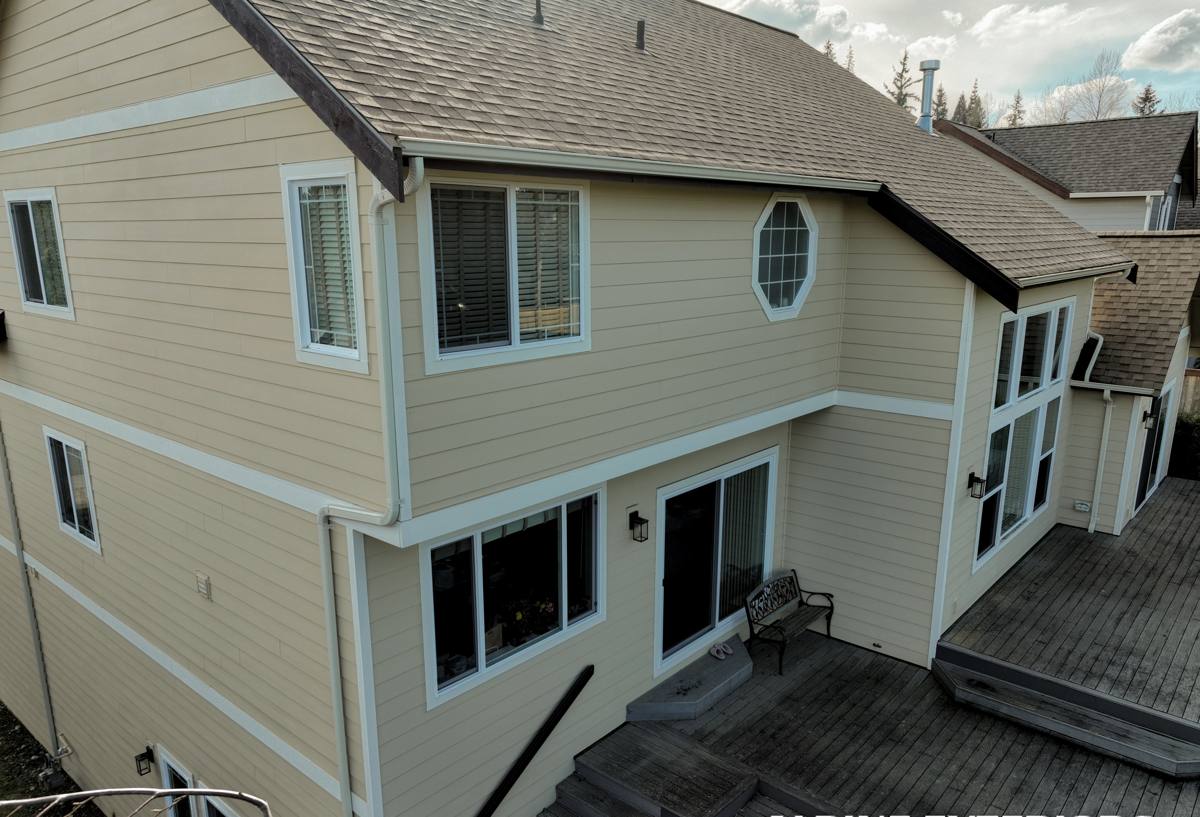
What the Climate Actually Costs You in Energy
Florida's year-round, intense UV does more than fade fabric and finishes — it breaks down lesser vinyl formulations, weatherstripping, and sealants faster than in a milder climate, and once those seals degrade, conditioned air leaks out and hot, humid air leaks in. On a home surrounded by water like Coquina Key, that sun exposure is close to constant on whichever elevation faces open water, so a window facing the bay works harder and ages faster than the same window on a shaded, inland lot. Salt air adds a second layer of wear, corroding hardware, weep systems, and fasteners over time — a slow process that keeps working on the house whether or not a storm ever comes through. And wind-driven rain during hurricane season and even routine summer squalls tests every seal and flashing detail a window has, which matters just as much for keeping conditioned air in as it does for keeping water out.
Where the Energy Actually Leaks Out
It's rarely the glass itself that's the weak point on an older Coquina Key window. It's the frame — aluminum conducts heat directly into the house, and older aluminum-frame windows typically have no thermal break at all. It's the weatherstripping, which gets brittle and stops sealing under constant UV. And it's the perimeter, where a sealant joint that was fine ten or fifteen years ago has since cracked and opened a path for both air and moisture. A homeowner often notices the symptom — a hot room, a musty smell, a jump in the summer power bill — without realizing which of those three is actually the cause.
What "Energy-Efficient" Actually Means for This Climate
Energy-efficient windows are rated on a few specific numbers, and for a home like this, two matter more than the rest. The U-factor measures how well the window resists heat transfer — lower is better for keeping the outside heat from working its way in. The Solar Heat Gain Coefficient (SHGC) measures how much solar heat actually passes through the glass — and in a climate where the cooling season runs most of the year, a lower SHGC is usually the priority, especially on west- and water-facing walls that take direct sun for hours at a stretch. Low-E coatings are what get you there: they're applied to the glass to reflect solar heat while still letting visible light through, and the specific coating and number of coatings can be tuned to the exposure of each wall rather than applied the same way on every window in the house.
Frame material matters just as much as the glass. A high-performance Low-E package installed in a frame that conducts heat or degrades in salt air undercuts the investment. And for Coquina Key specifically, impact-rated glass and energy efficiency aren't competing choices — laminated impact glass can carry Low-E coatings and insulated construction just like standard glass, so a homeowner near open water doesn't have to choose between storm protection and a lower cooling bill.
Frame & Glass Options for This Location
| Option | Energy Performance | Coastal Durability |
|---|---|---|
| Vinyl frame, standard double-pane | Good baseline efficiency at a lower cost | Holds up well to salt air with minimal maintenance |
| Vinyl or fiberglass frame, Low-E insulated glass | Noticeably better heat rejection on sun-exposed walls | Strong long-term performance; our standard recommendation for most Coquina Key homes |
| Fiberglass frame, Low-E impact glass | Same efficiency gains, plus wind-borne debris protection | Highest upfront cost, but combines two upgrades into one project |
| Older single-pane aluminum (existing) | Poor — minimal insulation, frame conducts heat directly | Hardware and weep systems corrode faster in salt air over time |
Signs Your Current Windows Are Costing You Money
Most homeowners don't think about their windows until something looks obviously wrong, but the signs of an inefficient window usually show up well before that.
- Rooms near water-facing windows feel noticeably hotter than the rest of the house in the afternoon
- You can feel air movement near the frame when the AC is running and the house is closed up
- Condensation or fogging shows up between panes on double-pane units, meaning the seal has failed
- Frames feel warm to the touch on the interior side during peak sun hours
- Hardware is stiff, corroded, or hard to operate smoothly
- Your cooling costs have crept up over the years without a clear reason
What a Correct Installation Involves
Assessment
We start by walking the house and looking at each elevation separately — a wall facing open water gets a different glass and coating recommendation than a shaded, inland-facing wall on the same house. We also check the condition of existing framing and substrate, since older Coquina Key homes sometimes have moisture or corrosion issues hidden behind the trim that need to be addressed before a new window goes in.
Product Selection
Based on that assessment, we spec the glass package, coating, and frame material for each opening rather than defaulting to one configuration for the whole house. Where wind-borne debris requirements apply, we factor that into the same recommendation instead of treating energy efficiency and impact resistance as two separate decisions.
Installation and Sealing
An energy-efficient window is only as good as its installation. Air sealing around the frame, correct flashing so wind-driven rain can't get behind the unit, and proper shimming so the frame isn't stressed out of square all directly affect how well the window actually performs once it's in the wall — a top-rated window installed poorly will still leak air and, eventually, water.
Finish and Corrosion Protection
We use corrosion-resistant hardware and fasteners as standard practice on installs this close to open water, and we finish trim and sealant joints to hold up under constant UV and salt exposure rather than just looking good on installation day.
Quick Checklist Before You Order
- Ask for U-factor and SHGC numbers for the specific glass package being proposed, not just a generic "energy-efficient" label
- Confirm whether the recommendation changes by wall or elevation, especially for water-facing rooms
- Ask whether impact-rated and Low-E can be combined in one unit if you're also concerned about storm protection
- Get the air-sealing and flashing plan explained, not just the product spec sheet
- Confirm hardware and fasteners are corrosion-resistant, not standard-grade
- Ask what the warranty covers separately for the glass, the frame, and the installation labor
Our Process, Start to Finish
- On-site assessment — we look at each elevation's sun exposure and check existing framing and substrate condition
- Honest recommendation — glass package, coating, and frame material matched to each wall's actual exposure, explained in plain terms
- Ordering — a realistic lead time for the units, longer for impact-rated or custom configurations
- Removal and prep — old units come out carefully, with any hidden moisture or corrosion issues addressed before the new window goes in
- Installation and sealing — set, shimmed, and air-sealed correctly, with flashing detailed for the specific opening
- Finish and walkthrough — trim finished, hardware checked, and the whole job reviewed with you before we call it done
Costs and What Drives Them
| Factor | What Changes the Price |
|---|---|
| Glass package | Standard Low-E costs less than a higher-performance coated or impact-rated package |
| Frame material | Vinyl generally costs less upfront than fiberglass; both outperform bare aluminum in this climate |
| Exposure | Water-facing walls with more direct sun sometimes justify a higher-performance coating than a shaded wall on the same house |
| Existing condition | Corrosion, rot, or prior sealant failures on older openings add repair work before the new unit goes in |
| Number of units | A full-house replacement typically has better per-unit economics than replacing one or two windows at a time |
Why Hiring a Crew That Works Coquina Key Regularly Matters
A window's published performance numbers assume a correct installation, and a crew that doesn't regularly work homes surrounded by open water can get the product selection right and still miss the details that make it perform that way in practice — how the flashing needs to be sequenced on a water-facing wall, which sealant actually holds up to constant salt cycling instead of just the first season, when an older home's substrate needs attention before a new window goes in rather than after. Those are judgment calls made on-site, not something a spec sheet decides for you.
We work this part of St. Petersburg and the surrounding Pinellas County coastline regularly, so we're not guessing at how a particular exposure or wall type tends to hold up over time. That's the difference between windows that are still sealed tight and performing after several Florida summers, and ones that start leaking air — or water — within a couple of years.
Ready When You Are
If your windows are original to the house, feel drafty, or you're just tired of watching the cooling bill climb every summer, it's worth having someone look at each elevation before you start pricing units. We offer free, no-pressure estimates for energy-efficient window projects in Coquina Key and the rest of St. Petersburg — use the form below to get a time on the schedule.