 St. Petersburg Window
 Siding in Crescent Lake: A Different Kind of Climate Test
Crescent Lake sits close to downtown St. Petersburg, in a part of Pinellas County where the housing stock skews older and the tree canopy is thicker than in newer subdivisions further out. That combination changes what siding has to deal with. Mature oaks mean more shade, more leaf and pollen buildup against exterior walls, and slower drying after rain. Older homes mean the wall assemblies behind the siding were often built to a different standard than what current Florida building code requires, so whatever goes on the outside has to work harder to protect what's underneath.
Layer that on top of the regional climate every Pinellas County home deals with — hurricane-force wind events, sun exposure that runs nearly year-round instead of seasonal, wind-driven rain that gets pushed sideways into wall assemblies during storms, and a steady dose of salt air moving in off Tampa Bay and the Gulf — and you end up with siding conditions that are genuinely demanding, not just "Florida is hot" generic. A siding job that would hold up fine in a drier, cooler climate can fail here within a handful of years if it isn't installed correctly for these specific stresses.
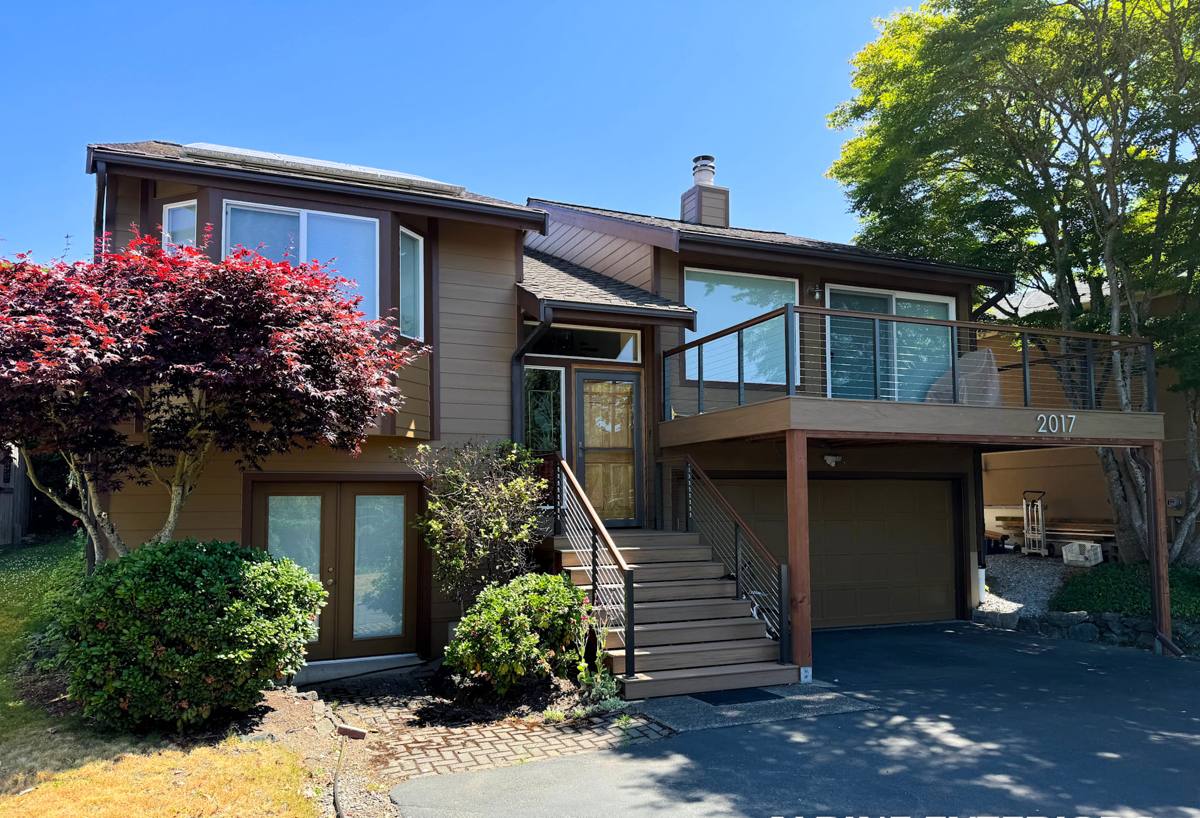
What This Climate Actually Does to Siding Over Time
It's worth being specific about the failure modes we're designing against, because "hot and humid" undersells it.
UV exposure
Constant sun breaks down pigments and surface coatings faster than in most of the country. Paint film chalks, fades, and eventually cracks; factory finishes that aren't formulated for this kind of UV load lose their color and their protective value years before a homeowner expects to repaint.
Wind-driven rain and moisture
During tropical storms and hurricanes, rain doesn't just fall — it's pushed horizontally into siding, seams, and trim. If the weather-resistive barrier, flashing, and joint detailing behind the siding aren't done right, water finds its way into the wall cavity. Under a heavy tree canopy like Crescent Lake's, walls also dry more slowly after normal rain, which extends how long moisture sits against the siding and any exposed edges.
Wind load
Pinellas County's building code reflects the real risk of hurricane-force winds, and siding is a wind-rated assembly, not just a cosmetic layer. Fastening pattern, fastener type, and how the siding is engineered to resist uplift all matter more here than in a low-wind-risk state.
Salt air
St. Petersburg's proximity to the Gulf and Tampa Bay means airborne salt is a constant, low-level presence even well inland from the water. Salt accelerates corrosion of fasteners and metal trim and can degrade materials that aren't built to resist it.
None of these stresses is unique to Crescent Lake, but the neighborhood's tree cover, older home construction, and closer-in location mean they show up in combination more often than they do on a newer, more open-lot property.
Why We Install James Hardie Fiber Cement — and Nothing Else
We standardized on James Hardie fiber cement siding for every job we do, including here in Crescent Lake, and we're upfront about why. Fiber cement is non-combustible, dimensionally stable in heat and humidity, and doesn't rot, delaminate, or attract termites the way wood-based products can. James Hardie's HZ5 product line is engineered specifically for high-humidity, storm-prone climates like ours, and the ColorPlus factory finish is baked on under controlled conditions and backed by a real finish warranty — a meaningfully different proposition than field-applied paint trying to survive year-round Florida sun.
We don't install vinyl siding, LP SmartSide, Cemplank, Allura, or primed wood siding, and that's a deliberate professional standard, not a marketing line. Vinyl can warp and become brittle under sustained heat and UV, and it isn't rated for the wind speeds Pinellas County design requirements call for in the same way fiber cement is. Engineered wood products like LP SmartSide use wood strand cores that are more moisture-sensitive than fiber cement, which matters in a climate with humidity and wind-driven rain working against the wall year-round. Other fiber cement brands may be reasonable products on paper, but we've built our installation training, flashing details, and warranty backing around one system, and we'd rather do one thing at the highest standard than several things at an average one.
What a Correct Siding Installation Actually Involves
Siding failures in this climate are almost never about the material choice alone — they're about installation details that get rushed or skipped. A correct job includes:
- A weather-resistive barrier installed over the sheathing, lapped correctly, with no gaps or tears
- Flashing at every window, door, and roof-to-wall intersection, integrated with the barrier so water sheds outward, not into the wall
- Manufacturer-specified clearances from the ground, roofline, decks, and other siding transitions so water can't wick upward into the material
- Correct fastener type, length, and spacing for the substrate and for local wind load requirements
- Proper joint treatment and caulking at butt joints, corners, and penetrations, using sealants rated for exterior exposure
- Field-cut edges primed or sealed before installation so raw material isn't left exposed to moisture
- Painted or factory-finished surfaces installed and touched up per the manufacturer's specification to preserve the warranty
Skip or shortcut any one of these and the siding can look fine for a year or two before the real problems — trapped moisture, wood rot in the sheathing behind it, fastener failure in a wind event — start to show up.
Our Process on a Crescent Lake Home
- On-site assessment — we look at the existing siding, sheathing condition, trim, window and door flashing, and any moisture or pest damage before quoting anything, since older Crescent Lake homes vary a lot in what's actually behind the current siding.
- Removal and substrate check — old siding comes off and we inspect the sheathing for rot or damage, repairing or replacing anything compromised before new siding goes on. This step is where problems from a prior installation usually surface.
- Weather barrier and flashing — a new weather-resistive barrier goes on, with flashing detailed at every penetration and transition point.
- Hardie installation to spec — panels or planks installed per James Hardie's fastening schedule and clearance requirements, with joints and corners treated correctly.
- Final inspection and cleanup — we walk the job checking caulking, paint touch-up, and clearances before we consider it done, and the site is cleaned of debris.
How Siding Options Compare in This Climate
| Factor | James Hardie Fiber Cement | Vinyl | Wood / LP SmartSide |
|---|---|---|---|
| Wind resistance | Engineered and rated for high-wind installation | Lower wind rating, can crack or blow off in storms | Depends on install; strand-based products can be more failure-prone at fasteners |
| UV/fade resistance | Factory ColorPlus finish, warrantied against fading | Color molded in but can chalk and fade over time | Field paint required; needs repainting on a shorter cycle |
| Moisture behavior | Dimensionally stable, doesn't rot | Doesn't rot but can trap moisture behind it if installed poorly | Wood-based cores are moisture-sensitive; can swell or delaminate |
| Salt air / corrosion | Material itself unaffected; use corrosion-resistant fasteners | Material unaffected; fasteners still a concern | Trim and fasteners vulnerable; wood-based cores more sensitive |
| Fire performance | Non-combustible | Combustible, can melt/deform near heat sources | Combustible |
Permitting and Local Code in St. Petersburg
Siding replacement in the City of St. Petersburg and unincorporated Pinellas County requires a permit, and inspectors are checking for wind-rated installation, not just that siding is on the wall. A contractor who pulls permits correctly, schedules inspections, and installs to the manufacturer's wind-rated specification is protecting you from problems that surface later — during a home sale, an insurance claim, or the next storm. Skipping the permit step to save time is one of the more common shortcuts we see on past work we're asked to fix, and it almost always costs the homeowner more down the line.
Why Hiring a Crew That Already Works in Crescent Lake Matters
Every neighborhood in the St. Petersburg area has its own quirks, and Crescent Lake's are real: an older mix of home ages and construction methods, mature tree cover that affects drying time and debris buildup against walls, and a closer-in, more established layout than newer developments. A crew that's worked in the neighborhood already knows to expect surprises behind old siding, understands how the tree canopy affects moisture and gutter/drainage decisions near the wall line, and isn't guessing at what Pinellas County inspectors want to see. That familiarity shows up in fewer change orders, fewer surprises mid-project, and a finished job that's actually built for the block it's on rather than a generic installation dropped into a demanding climate.
Signs Your Crescent Lake Home May Need Siding Attention
- Visible warping, cracking, or soft spots when you press on the siding
- Paint that's peeling, bubbling, or chalking heavily
- Staining or streaking that keeps returning after cleaning, especially near tree-shaded walls
- Gaps opening up at trim, corners, or window and door edges
- Musty smells or visible mold on interior walls that share an exterior wall
- Siding that's noticeably older than the rest of the home's exterior updates
If any of those sound familiar, it's worth having someone look at the wall assembly, not just the surface — by the time siding shows visible damage, the sheathing behind it has often been dealing with moisture for a while.
If you're weighing a siding replacement for a Crescent Lake home, we're happy to walk the property, look at what's there now, and give you a straight assessment of what a correct James Hardie installation would involve for your house — no pressure, no upsell, just an honest estimate based on what we see.