 St. Petersburg Window
 Why Gulfport's Coastal Climate Is Hard on Roofs
Gulfport sits right on Boca Ciega Bay, just west of downtown St. Petersburg, and that waterfront setting is part of what makes it such a nice place to live — and part of what wears a roof out faster than it would somewhere inland. Between hurricane-season winds, near-constant UV exposure, wind-driven rain, and salt air rolling off the water, a Gulfport roof works harder than most people realize. Roof repair here isn't just about patching a leak; it's about understanding which of these forces caused the damage so the repair actually holds.
Salt Air and Metal Components
Every roof has metal somewhere — nail heads, flashing around chimneys and skylights, drip edge, vent boots, screws holding down ridge caps. Salt-laden air speeds up corrosion on all of it. On a Gulfport roof, we pay close attention to fastener condition and flashing metal, because a corroded nail or a pinholed flashing seam is one of the most common hidden causes of a "mystery" leak.
UV Breakdown of Shingles and Sealants
Florida sun is intense and nearly year-round. UV exposure dries out asphalt shingles, making them brittle and prone to cracking, and it breaks down roofing sealants and pipe boot rubber years before a manufacturer's warranty would suggest. A repair that ignores UV-aged materials around the damaged area often fails again within a season or two.
Wind-Driven Rain and Flashing Failures
St. Petersburg and Pinellas County see tropical storms and hurricane-strength wind gusts most years, and wind-driven rain finds every weakness in a roof system. Rain that's being pushed sideways can work its way under lifted shingle edges, around loose flashing, or through hairline cracks in tile that would never leak in a straight-down rain. This is why a repair crew has to think about wind direction and water path, not just the spot where a stain showed up on the ceiling.
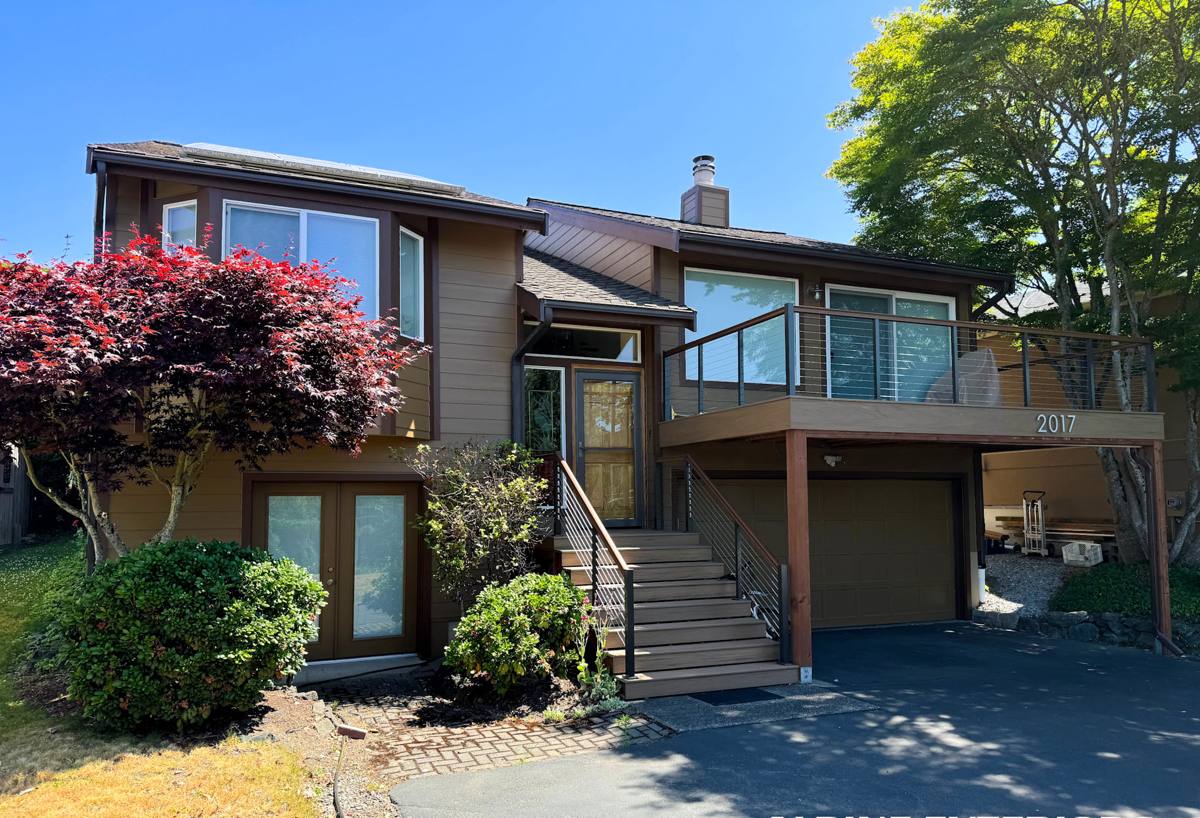
Common Roof Problems We See on Gulfport Homes
Every roof and every storm is different, but a handful of issues show up again and again on homes in this part of Pinellas County:
- Shingles lifted or torn loose at ridges and edges after high wind
- Cracked or slipped tiles, especially near valleys and roof penetrations
- Flashing leaks around chimneys, skylights, and wall-to-roof transitions
- Soffit and fascia rot from long-term moisture intrusion at the eaves
- Ponding water on flat or low-slope sections common on additions and porches
- Nail pops and popped fasteners that back out as decking expands and contracts in the heat
- Sealant failure around pipe boots and vents, letting small amounts of water in over time
Many of these start small. A handful of lifted shingles or a hairline crack in a tile doesn't look urgent, but once water finds a way under the roof covering, it can travel a surprising distance before it shows up as a stain on a ceiling — which is why the repair location and the leak's actual origin point are often not the same spot.
What a Correct Roof Repair Actually Involves
A roof repair done right is more than caulking a crack or nailing down a loose shingle. It starts with figuring out why the damage happened, then fixing it in a way that matches how the rest of the roof is built and holds up to the same conditions that caused the original problem. That typically means:
- Inspecting beyond the visible damage to check surrounding shingles, tile, flashing, and decking
- Matching replacement material as closely as possible to the existing roof covering
- Rebuilding or replacing flashing rather than just resealing it, when the metal itself has failed
- Checking underlayment condition where shingles or tile are removed, and replacing it if it's degraded
- Sealing with products rated for exterior, UV, and salt-air exposure — not general-purpose caulk
Repair Considerations by Roof Type
Pinellas County homes are roofed in a mix of asphalt shingle, concrete or clay tile, and metal, and each one gets repaired a little differently. Asphalt shingle repairs are usually the most straightforward — matching color and style is the main challenge, since sun-faded existing shingles won't perfectly match a fresh bundle. Tile repairs take more care: walking on tile to reach a damaged section risks cracking tiles that were fine to begin with, so foot traffic and staging have to be planned carefully. Metal roof repairs are often less about the panels themselves and more about the fasteners and seams — screws back out over time from expansion and contraction in the heat, and that's frequently the real source of a leak rather than the panel material failing.
What Drives the Cost of a Repair
Homeowners often ask why one repair quote is a simple flat fee and another is described as a range. The honest answer is that repair cost depends on a few specific factors that aren't always visible from the ground:
| Factor | Why It Matters |
|---|---|
| Roofing material | Tile and metal repairs generally take more time and specialized handling than asphalt shingle repairs |
| Extent of hidden damage | Rotted decking or saturated underlayment found once the surface is opened up adds material and labor |
| Roof pitch and access | Steep or hard-to-reach sections take longer to work safely and may require extra equipment |
| Age and condition of surrounding roof | Older, sun-brittled shingles or tile nearby can crack during the repair itself and need replacing too |
| Permit requirements | Some repair scopes in Pinellas County require a permit and inspection, which adds time but protects the homeowner |
Our Roof Repair Process for Gulfport Homeowners
We keep the process straightforward so homeowners know what to expect from the first call to the final walk-through:
- Inspection. We look at the reported problem area plus the rest of the roof, since storm and sun damage rarely stay in one spot.
- Diagnosis. We identify the actual cause — wind lift, cracked tile, failed flashing, worn sealant — not just the symptom.
- Written estimate. You get a clear scope of work and price range before anything is touched, including what happens if we find hidden damage once we open things up.
- Repair. We complete the work with materials matched to your existing roof and rated for coastal exposure.
- Cleanup and walk-through. We clear debris and walk you through what was done and what to keep an eye on going forward.
Repair or Replace? How We Help You Decide
Not every roof problem calls for a full replacement, and not every repair is a good long-term investment. A few things factor into that conversation:
Roof age. A localized repair on a roof that's still within its expected service life is usually the right call. A roof nearing the end of its typical lifespan may be a better candidate for replacement, especially if repairs are becoming frequent.
Extent of damage. Storm damage isolated to one section of the roof is often repairable. Widespread wind damage, or damage that turns up rot across multiple areas of decking, tips the math toward replacement.
Pattern of repairs. If a roof has needed several repairs in the past couple of years, that's usually a sign of underlying material failure rather than isolated storm damage, and it's worth having an honest conversation about long-term cost.
We'll always tell you plainly which situation you're in — we don't push a replacement when a repair will genuinely hold up, and we won't recommend patching a roof that's past the point where repair makes financial sense.
Insurance and Storm Damage: What Gulfport Homeowners Should Know
Wind and storm damage claims are common in Pinellas County, and insurers generally want clear documentation of the damage and its cause before approving repair work. We document what we find — photos, notes on the likely cause, and a written scope of repair — which homeowners can provide to their insurance company or adjuster. We're not insurance adjusters and we don't handle the claim itself, but a clear, honest damage assessment from a contractor who actually inspected the roof makes that process go more smoothly. It also helps to have that documentation on file before the next storm season, rather than trying to reconstruct what happened after the fact.
Why Hire a Crew That Already Works in Gulfport
Roofing realities are local. A crew that regularly works in Gulfport and the surrounding St. Petersburg area already knows the kind of roofs common here — many homes are several decades old, with original decking and framing that a repair has to work around rather than assume is current-code. That local experience also means familiarity with Pinellas County permitting requirements, realistic expectations about how coastal salt air ages materials over time, and enough of a local reputation at stake that a rushed or corner-cut repair simply isn't worth the risk to us.
It also means faster response after a storm. When wind or heavy rain damages roofs across the area at once, a crew that's already local and organized around this market can get to a temporary tarp or emergency repair sooner than one dispatching from well outside the county.
Between Repairs: Simple Roof Maintenance for Coastal Homes
A repair lasts longer when the rest of the roof is kept in reasonable shape. Homeowners can catch a lot of early warning signs without climbing on the roof themselves:
- Check gutters and downspouts for granule buildup, which signals shingle wear
- Look up after any strong storm for obviously missing, lifted, or displaced shingles or tile
- Watch ceilings and top-floor closets for new stains, especially after wind-driven rain
- Have a musty smell in the attic checked promptly — it often means moisture intrusion before a visible leak appears
- Keep overhanging tree limbs trimmed back so they can't scrape or drop debris on the roof during wind
- Schedule a roof check-up after any named storm that produced sustained high winds in the area
None of this replaces a professional inspection, but catching a problem early is usually the difference between a small repair and a much larger one.
If you're dealing with a leak, storm damage, or just want an honest read on your roof's condition, we're glad to take a look. Reach out for a free, no-pressure estimate using the form below.