 St. Petersburg Window
 A Barrier Island Puts More Stress on Siding Than Most Homes Ever See
St. Pete Beach sits on a barrier island in Pinellas County, with the Gulf of Mexico on one side and Boca Ciega Bay on the other. That location is why people live here, and it's also why the exterior of a home takes more punishment here than it would a few miles inland in St. Petersburg proper. Salt-laden air moves across the island constantly, not just during storms. Sun exposure is intense and close to year-round. Wind-driven rain during summer thunderstorms and hurricane season pushes water sideways into walls that were never designed to shed water moving in that direction. None of that is unique to any one house on the island — it's the baseline every exterior material and every installation detail has to survive here.
Siding that would hold up fine in a drier, calmer climate can fail early on a barrier island simply because it wasn't built or installed with that combination of stresses in mind. That's the lens we bring to every fiber cement job in St. Pete Beach: not "will this siding look good going up," but "will this wall assembly still be doing its job in fifteen years of salt air, sun, and storms."
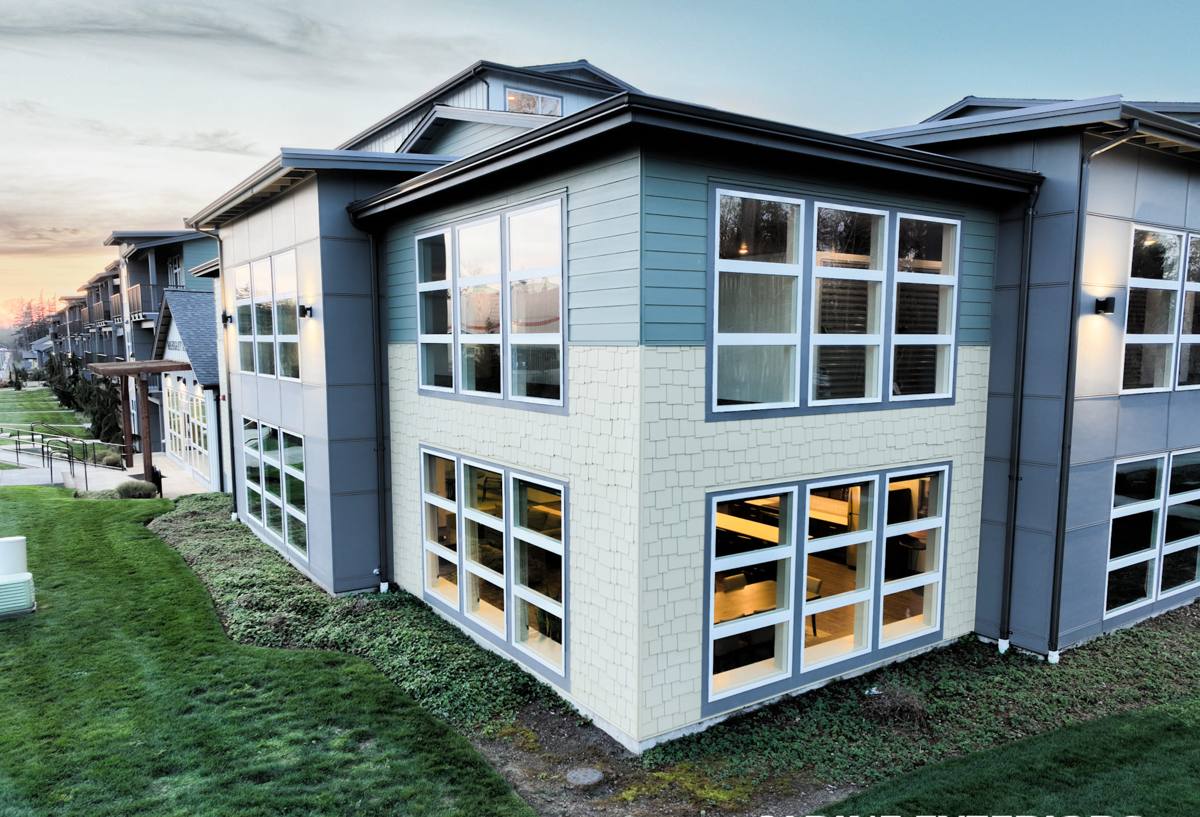
Why Fiber Cement, and Why Only James Hardie
Fiber cement — a blend of Portland cement, sand, cellulose fiber, and water, cured into a dense, stable board — doesn't behave like the materials it replaced. It doesn't absorb and release water the way solid or engineered wood does, so it doesn't cup, swell, or rot at cut edges from repeated wet-dry cycling. It's dimensionally stable across temperature swings, so it doesn't warp or gap the way vinyl can in direct summer sun. And it's non-combustible, which matters to insurers and to homeowners alike.
We install James Hardie exclusively — not vinyl, not LP SmartSide or other engineered wood, not primed spruce or cedar. That's a professional standard, not a claim that every other product is unusable everywhere. It's what years of working on Gulf Coast homes has taught us: this environment doesn't leave much room for a material's weak points. James Hardie's HZ5 formulation is engineered specifically for hot, humid, storm-exposed climates like ours, its ColorPlus factory finish is built to hold color under sustained UV, and its installation system and fastening requirements are documented in enough detail that a correctly trained crew can install to spec every time. We'd rather be excellent at one material system we trust completely than offer a menu of products with different failure modes.
What Correct Installation Looks Like on a Coastal Home
The Water-Resistive Barrier and Flashing Come First
Siding is the visible layer, but it's not the only layer keeping water out. Behind every board, a properly lapped water-resistive barrier has to be in place, and flashing has to be installed in the right sequence at every window, door, roof-to-wall intersection, and penetration — before the siding goes up, not patched around it afterward. On a barrier island home taking wind-driven rain from multiple directions over a hurricane season, a flashing detail that's slightly out of sequence is exactly the kind of thing that turns into a hidden leak two or three years down the road.
Fastening and Clearance
James Hardie publishes specific fastener types, spacing, and penetration depth requirements, and those requirements exist for a reason — under-fastened siding moves in high wind, and that movement is what eventually cracks caulk joints and works fasteners loose. Clearance matters just as much: siding needs proper separation from grade, roof lines, and hard surfaces like pool decks or paver patios so it never sits in standing water or wicks moisture from below. On barrier island lots, where landscaping and hardscape often sit close to the house, getting that clearance right takes deliberate planning, not just running the siding down to whatever height is convenient.
Joints, Caulk, and Cut Ends
Every cut end and every butt joint is a potential entry point for water if it isn't sealed correctly with the right sealant, and in a climate with this much UV and salt exposure, sealant quality and application matter more than they would elsewhere. We factory-seal and field-treat cut ends as part of the standard process, not as an upsell.
Wind, Salt, and Fasteners: The Three Coastal Multipliers
Three conditions specific to a barrier island location do most of the work of aging siding faster here than inland. Understanding them is useful whether you're planning a full re-side or just trying to figure out why a previous installation is failing early.
| Coastal Stress | What It Does Over Time | How We Address It |
|---|---|---|
| Hurricane-force and sustained coastal wind | Tests every fastener, joint, and flashing detail at once; loose fastening shows up as movement, cracked caulk, and lifted edges | Fastening schedule and spacing per James Hardie's published requirements, verified against current local code and wind zone |
| Wind-driven, sideways rain | Drives water into laps and seams designed for straight-down rain; finds any gap in the water-resistive barrier | Correctly sequenced flashing and WRB installed before siding, with extra attention at every roof-to-wall joint and penetration |
| Salt air off the Gulf and the bay | Accelerates corrosion in exposed metal fasteners, flashing, and trim hardware | Corrosion-resistant fastener and flashing specifications suited to direct salt exposure, not generic inland minimums |
| Intense, near year-round UV | Breaks down sealants and unprotected finishes faster than milder climates | ColorPlus factory finish rated for sustained UV, plus quality sealant application at every joint |
Wind Zones, Permitting, and Building Code on the Island
St. Pete Beach, like the rest of coastal Pinellas County, falls under wind-pressure and construction requirements that are more demanding than what inland Florida communities deal with, and those requirements are enforced through the local permitting process. A siding job here isn't just a materials swap — it's a permitted exterior modification that has to meet the wind-load and fastening standards that apply to this specific location. Pulling the correct permit, using products with valid Florida product approval documentation, and installing to the fastening schedule that documentation specifies isn't optional paperwork; it's what keeps the siding performing in the wind events it's actually going to face, and what keeps a homeowner's insurance and resale process clean later. We handle that permitting as a standard part of the job, not as something the homeowner has to chase down separately.
Color and Finish Choices for a Salt-Air Environment
ColorPlus Technology
ColorPlus is James Hardie's factory-applied finish, baked on in a controlled environment across multiple coats. For a barrier island home, the appeal is straightforward: it's cured before it ever meets Gulf sun and salt air, it holds color evenly under sustained UV, and it carries a 15-year finish warranty against peeling, chipping, and cracking. Cut edges and fastener heads get color-matched touch-up on site.
Primed for Field Painting
Primed HardiePlank and panel products can also be field-painted, which opens up any paint color rather than a fixed factory palette. The trade-off in this environment is maintenance: a field-applied finish will need repainting sooner than ColorPlus under this much UV and salt exposure, and the quality of that first paint job matters enormously. Most homeowners here choose ColorPlus for that reason, but if you have an HOA-specified color outside the ColorPlus palette, primed and field-painted is the way to match it exactly.
Our Process, Start to Finish
The process is the same discipline whether it's a full re-side after storm damage or a planned replacement on a home that's simply reached the end of its old siding's life.
- On-site inspection of the existing exterior, including a check of the sheathing and framing underneath wherever siding is coming off, not just the visible surface
- A written scope covering profile, exposure, trim package, finish (ColorPlus or field paint), and how the water-resistive barrier and flashing will be handled
- Permitting through the appropriate local process, including confirmation the specified products carry valid Florida product approval for this wind zone
- Tear-off and disposal of the old siding, with any hidden sheathing or framing damage priced and discussed before work continues, not discovered as a surprise on the invoice
- Installation of the water-resistive barrier and flashing in the correct sequence, followed by the fiber cement siding to James Hardie's fastening and clearance specifications
- A final walkthrough with the homeowner before the job is called complete
Why Hiring a Crew That Already Works St. Pete Beach Matters
Barrier island jobs have logistics that inland jobs don't. Staging materials and equipment on a smaller island lot, working around causeway traffic patterns to get crews and deliveries on and off the island efficiently, and knowing the local permitting office's specific requirements for coastal exterior work all take real, repeated experience — not just a general contracting license. A crew that already works St. Pete Beach and the surrounding Pinellas County barrier islands has already worked through those logistics on other jobs nearby, which shows up as fewer delays and fewer surprises on yours. It also means we've seen how different details hold up over years in this exact salt-air, high-wind environment, not just in a manufacturer's general climate guidance.
Before hiring anyone for a fiber cement job on the island, it's worth confirming a few basics:
- Active Florida contractor license, verified directly through the state license lookup, matching the name on the contract
- Current general liability and workers' compensation insurance, not just a certificate that's expired
- Direct, specific experience with coastal Pinellas County installations, not just general siding work
- A clear answer on how flashing, the water-resistive barrier, and fastening will be handled — vague answers here are the biggest red flag
- Willingness to pull the required permit rather than suggesting you skip it
Living With Fiber Cement Siding on the Island
Fiber cement installed correctly is a low-maintenance material, but "low" isn't "none," especially with this much salt air moving across the property. Rinsing the exterior with fresh water periodically helps clear salt residue and the pollen and mildew film that builds up in Florida's humidity — a garden hose and soft brush is usually enough, and a pressure washer should be avoided since it can drive water into joints and damage the finish. Keeping sprinklers pointed away from the walls, keeping shrubs and mulch from crowding the siding, and having caulked joints checked every few years are the small habits that keep a well-installed fiber cement exterior performing for decades rather than years. Those habits matter more on a barrier island than almost anywhere else in the county, simply because the salt and sun never really let up.
If you're weighing a re-side, replacing storm-damaged siding, or just want a straight assessment of what your St. Pete Beach home's exterior actually needs, we're glad to take a look and put together a free, no-pressure estimate — the form below is the easiest way to get started.